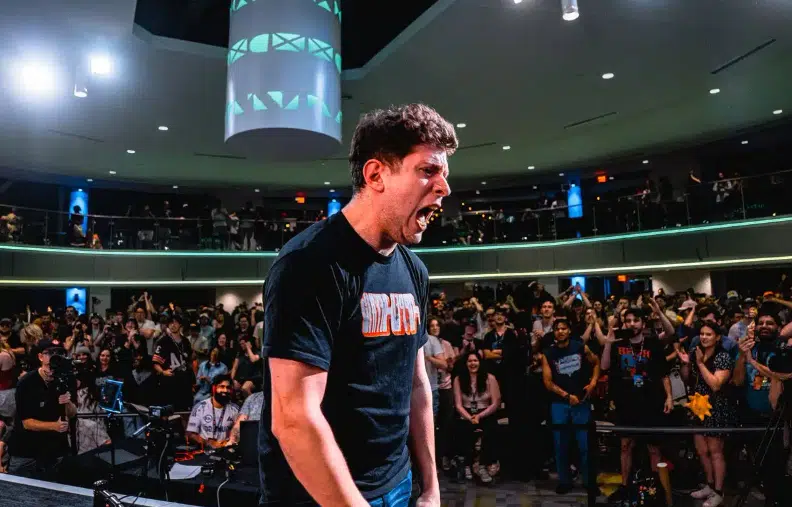
The Super Smash Bros. esports scene is unique. In many ways. One way? It’s not really for money at all. The pros are fighting for a rank.
Without Nintendo’s support, the grassroots scene has survived for decades with little to no prize pools. Most are around a few thousand bucks, just enough to break even after buying a hotel and flight ticket. Well, if you place first.
The real battle has always been with each other and themselves. Rivalries. Passion. Sweat. Tears. Pop-offs. And making it to the Top 100 of the SSBMRank or UltRank charts.
Well, until now.
The SSBMRank Drama Unfolds
On May 22nd, Melee Stats announced that the ranking period for Summer would end on July 12th, the weekend of the Garden Brawl and Krewe 2 events. However, the SSBMRank Summer 2026 would only be a Top 30 rather than a Top 50. The end-of-year ranking would still be a Top 100.
This is due to a lack of events so far, leading up to July 12th. To qualify for a spot, pro players must participate in one major and two regionals.
It’s definitely true that Smash is losing events left and right. Tournament organizers have been withdrawing from hosting majors over the past few years due to funding constraints. Big House and Beyond the Summit are big names that are no longer with us, and the Smash World Tour is a huge loss, with the Smash scene forced to put an end to the first-ever organized circuit.
However, is a Top 30 the answer? Melee pros are saying no.
“If you were actually trying to change with the landscape of the game, maybe listen to one of the many players dissatisfied with your product for the last five years instead of unfollowing them all and making decisions like this that negatively impact the community, in my opinion,” noted Kurtis “moky” Pratt on X.
He also posted a massive response on his own X, stating those landscape changes. This included counting online results during the pandemic when there weren’t any LANs for a few years as well as allowing top players to fight for the #1 rank when they were neck and neck after tournaments. He also pointed out that the ranking period shouldn’t have started with Genesis and ended in the winter, when there are not many events.
While moky wrote the most in-depth reaction to the Top 30, he wasn’t the only one. The replies to the original post were filled with frustration from Smash players on all levels. I saw plenty of simple “booooo” replies. One person even expressed sadness for those ranked 31-50, saying they were still good enough to deserve recognition.
Generally, it’s tough to take a ranking seriously when it doesn’t reflect the game’s changing landscape.
Brendan “Wheat” Malone, who voluntarily organizes the SSBMRank, responded to the ongoing criticisms. When it came to the Top 30 for Summer, he said the Smash scene doesn’t have to agree with them, but he wanted to clarify why it was reduced.
“I think it’s clear to anyone who follows the Melee scene that 2026 hasn’t had as many big events,” Wheat noted.
A total of 1,816 Melee players competed in big events in 2026 so far, which is far lower than 2025 (3,334), 2024 (4,377), and 2023 (4,387). That’s because 2026 only had four big events: GENESIS X3, Out of the Blue 5, Pat’s House 5, and Battle of BC 8.
“We’ve had a few big regionals such as Altitude Sickness and Creed,” Wheat explained, “but even with those, nearly half of the current Top 50 have not gone to enough tournaments to hit the eligibility requirements of one major and two regional or bigger level events.
“And not even 50 eligible players have a single win on a 2025 Top 50 player.”

In response, the Smash community still felt frustrated. It’s difficult for players to travel to so many events (and place at some of them) due to financial issues. And it’s not like they will see any of the money back even if they placed first. And most won’t. Rather than reduce to Top 30, players wanted to see the Top 50 have fewer requirements to reflect the touch state of the economy and its impact on the shrinking Smash scene.
Does the SSBMRank Still Matter?
While there is clear backlash to the reduced Top 30 for Summer, the SSBMRank still matters. Why? It’s all Melee pros have.
The real issue is that it’s not accurately reflecting the current scene. Reducing the qualification requirements and maybe adding locals into the mix would allow competitive players to feel more hope and passion for the scene. It’s tough when most are unable to afford competing and have no chance of making it onto the ranking no matter how talented they are.
This isn’t a game with big money on the line. There are no sponsorships. Top players aren’t even surviving on Twitch streams. The only thing Melee has that keeps the scene thriving? The ranking. Pros compete with themselves to climb the ranks and prove they can do it. There are heated rivalries as players fight for top spots. It’s all about reputation, passion, and raw skill.
With the SSBMRank reducing to Top 30, it feels unfair, yes. Players in that mid-range are going to feel discouraged. Why even travel to that one remaining tournament if they can’t break into the Top 30?
However, it does create even more tension for those at the top. The walls are closing in. There are fewer tournaments. Fewer opportunities to fight for their spot. And there are fewer spots. They have to fight even harder to survive.
The SSBMRank most definitely matters. But it’s tough to know what the true answer is to the shrinking Melee scene.
As Wheat said, Melee isn’t dying. However, what’s the solution to adapting to the new normal, then? If there will always be fewer events going forward, the SSBMRank may need to change to reflect this to keep the ranking fair and exciting.