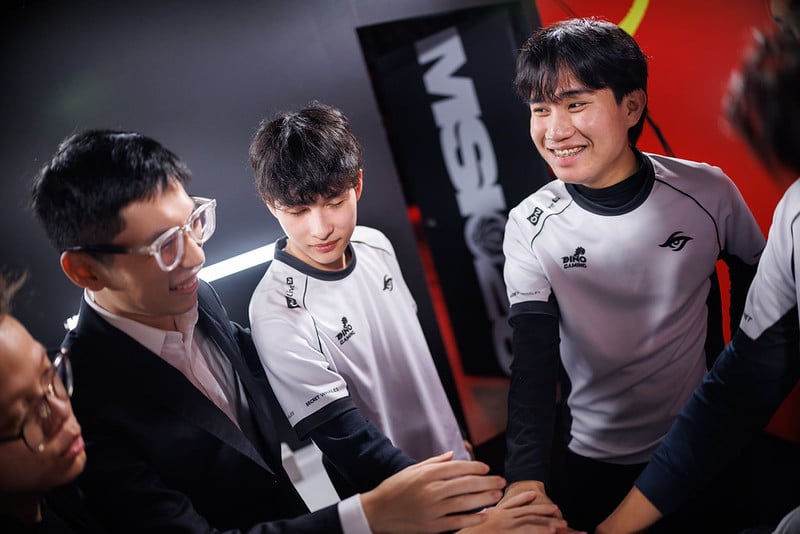
Underdog stories aren’t built on random happenstance. Rather, they are fostered through the unseen moments that fly under the radar.
League of Legends isn’t any different from any other form of competition. Teams are bracketed into their specific roles, similar to other sports.
China’s LPL is making a run at the dominant LCK, Korea’s top league. North America’s LCS and Europe’s LEC have a long-standing rivalry for who can claim to be the best in the Western Hemisphere.
At the bottom are Brazil’s CBLOL and the wide-ranging, five-country region known as the LCP.
Naturally, when the regions converge at international events, the LCP and CBLOL are widely viewed as the teams that would have the happy-to-be-stints.
But ask the region’s players about their aspirations during these tournaments, and they’ll reveal something more nuanced.
There is no false bravado in the teams. Instead, they view each opportunity to play outside of their regions as a chance to learn something valuable.
“I mean, definitely win probably against anything that’s not Asian would be like a good expectation,” FURIA midlaner Arthur “Tutsz” Machado said to Esports Insider. “Asian, I mean LCK or LPL. I think we, if we lose to [LCP], it’s kind of a little bit upsetting for us. So I think we’re definitely looking forward to beating G2 or Team Secret Whales. … I think we have a lot of strengths, and I think if we get good drafts and understand what we need to do, I think we’re going to be fine.”
For LCP champion Team Secret Whales and CBLOL champion FURIA, the Mid-Season Invitational 2026 served as a reminder of how far each region has come, but also offered a stern reminder that growth isn’t going to be linear.
CBLOL: A reward still waiting to be earned

The CBLOL Cup was the event that would send a team from Brazil to First Stand for the first international in South America.
FURIA did not make it to First Stand, finishing third. They did, however, manage to earn a spot in the Americas Cup – a cross-region battle between the second- and third-place teams in the LCS and CBLOL.
While CBLOL had grown during the short-lived LTA experiment, much of the narrative was locked into the idea that, despite CBLOL’s strides toward competing, winning would remain difficult.
FURIA blew this expectation out of the water, going undefeated in the Americas Cup to secure a trophy for the region. They rode this momentum through the CBLOL Spring Split to book a trip to Korea for MSI.
“Super excited,” FURIA jungler Pedro “Tatu” Seixas said. “The next fight is about getting six spots for MSI, too. Because now we’re the only region without a second MSI spot. Let’s fight for it. Dude, let’s get some wins, enter some tournaments.”
Entering the tournament, expectations were high. Winning had already happened, but now it was a matter of doing it consistently against the West’s top teams like LYON and G2.
“I think LEC is one step ahead,” Tatu said.
FURIA got its wish – a matchup with LYON, the LCS’s champion, in the opening round of the bracket stage of MSI. FURIA matched up well, standing toe-to-toe with LYON in a lot of areas. The one area they lacked: discipline.
The lack of discipline reared its head in key spots against LYON. Instead of playing with a lead and slowing down, the team maintained an aggressive approach, allowing LYON to find the right moments to turn the game around due to FURIA’s hurried play.
“We were ahead,” FURIA coach Erick “furyz” Susin told me. “So I feel it’s… learning how to play our own game and slowly doing the things we want and not just responding to the enemies.”
With the LYON game lost, things weren’t going to get easier for FURIA. They drew the legendary team, T1, and its stacked roster that starts with the midlane icon Lee “Faker” Sang-hyeok.
So, while LYON was a missed opportunity to secure a series win, T1 marked a different realization – a feeling that while rungs have been climbed, the top is still a noticeable distance away.
T1 swept FURIA, marking the end of their tournament without winning a single game.
“We knew it wasn’t going to be an easy game, an easy BO5. We came with the mentality that, ‘Yeah, maybe if we play our best, we can beat them,'” FURIA support Gabriel “JoJo” Dzelme de Oliveira said. “We kind of wanted to show people that we can also play against them. But we didn’t win a single game. I think they’re just way better than us right now.”
Despite failure to secure a game, Furyz managed to see the big picture and what was accomplished, even without a win.
“Sometimes when Brazil plays against Korea, for example, you could see some games were impossible to play after 10 minutes,” furyz said. “It’s a little bit closer. It’s more about the consistency and the macro discipline, and I think those things are better than us. Today was pretty clear, but I have some hope because I feel like a lot of times our team is fighting, like we were playing stuff together, and we could beat them in team fights.
“There’s so much we can learn from those games.”
CBLOL didn’t get to send another team to MSI, the only region not to receive a second bid to the event. They did, however, own an extra Worlds spot, meaning there will be more opportunities for teams from the region to experience international play.
With the focus turning to Worlds in the United States in mid-October, you can be sure FURIA will be front and center, trying to move the region forward.
“We are improving a lot,” Tutsz said. “I’m not sure if we’re one of the best in the West or not. … [Playing against LYON was a] pretty good way to see how well we’re faring, because they’re a really good team. [It’s] a pretty good thermometer for us.”
LCP: Down, but never out
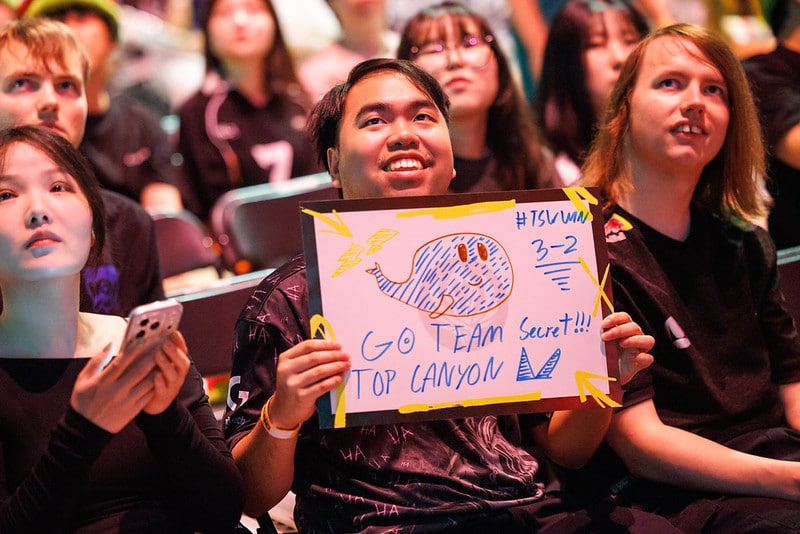
Brazil was established as a League of Legends region in 2014, giving it a strong head start in building a player base and developing an ecosystem capable of supporting a region of its own.
The same cannot be said for Vietnam. Vietnam has a strong interest in League of Legends, but the country lacks a deep player pool.
“When comparing VCS with another region, I feel like our VCS region doesn’t have a large player base, so making a comparison is quite difficult,” TSW jungler Lê “Hizto” Văn Hoàng Hải said. “Because their regions are very strong in every aspect, from media to the people themselves, they are very strong.”
The Vietnam Championship Series (VCS) is the domestic league, featuring five teams.
Team Secret Whales are not one of those teams. They are one of three Vietnamese teams in the LCP – a hodgepodge of five sub-regions (Vietnam, Taiwan, Australia, Japan, and Hong Kong) founded in 2025.
Team Secret Whales have appeared in three consecutive international events, starting with the World Championships in 2025. The team managed to earn one win at Worlds, defeating Brazilian side Vivo Keyd Stars, before failing to win another series for the event.
They went winless at First Stand in Brazil but dominated the LCP to earn a berth at MSI.
But things weren’t going to start off easy for them, drawing LCK side and hometown hosting Hanwha Life Esports. The game wasn’t close, as HLE cruised to an easy 3-0 sweep.
“I think the third time I am attending MSI, I think I will prove to everyone that I will show a different face on the international stage,” Hizto said. “But because we met team HLE, the LCK first seed, and they are too strong, I haven’t been able to show much.”
Many pundits predicted TSW would be the first team to be sent home. Yes, they were the LCP’s best, but they’re miles behind Asian squads and lack the legacy or experience to properly compete against established teams.
But in the moments after TSW stunned China’s Top Esports with a 3-1 victory, social media exploded in support. TSW wasn’t just an underdog story. They were a team that played the game in a refreshing manner with picks like Volibear and Sett against meta champions.
The team became instant favorites of the League of Legends fandom.
LCP caster Jim Pike had called it months earlier, before anyone outside Vietnam was watching closely.
“They’re down, but never out,” Pike said.
The magic ended with a loss to LYON, but TSW coach Chen “Warhorse” Ju-Chih is balancing the act of setting highly ambitious goals with time to properly grow into accomplishing them.
“I have been in LPL and LCK for quite a long time,” Warhorse said. “So I think this time coming to LCP, the key is I set a very high goal for my players and hope they can achieve it. I think what I learned from my previous experience is that although I set high goals, I also give myself enough time to gradually achieve them. Let them grow step by step.”
The question now becomes: Can Team Secret Whales continue their growth into the Summer Split and an all but inevitable (they lead the LCP in ranking points by a considerable margin) appearance at the World Championships?
“Going to the world stage helps us improve a lot for the future,” TSW bot-laner Hoàng “Eddie” Công Nghĩa said to ESI. “It gives us more experience to compete in even bigger tournaments. I think at the upcoming EWC, we will break through much more.”
Like FURIA, TSW are looking for consistency as they approach the next set of improvements.
The defeat of TES marked a milestone for the team and region. While it was sandwiched between two 3-0 defeats, the signs are there for a team and region ready to put another foot forward.
The verdict: Win or learn
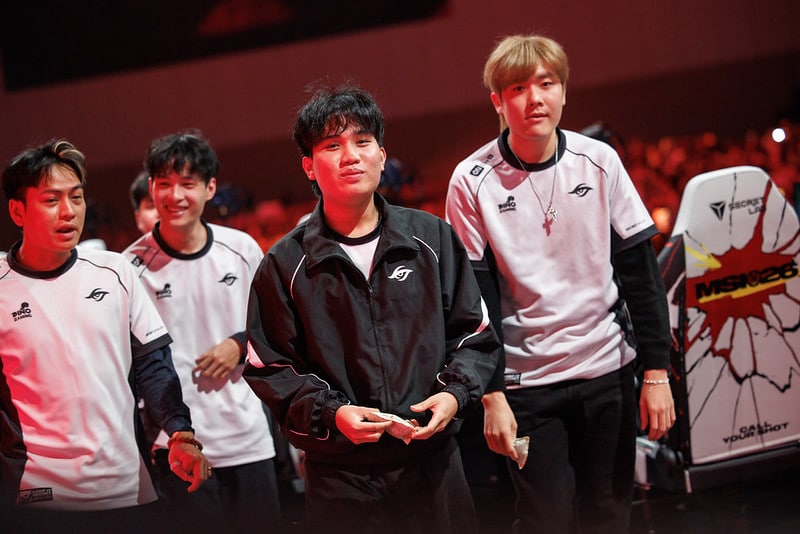
While the difference between Team Secret Whales and FURIA’s MSI experiences is a big one, the two regions still managed to leave with what they needed more than they wanted.
For FURIA, they left without taking a single game, but can look ahead to the teaching points and focus on what to improve on to take that next step. Their growth may feel stunted by a lack of wins, but winning isn’t the only way to truly see growth.
TSW managed to get their first series win against a Chinese side. They managed to get the best possible outcome – a win and learning points. Their growth may seem like it’s moving in the right direction, but only future series and matches will ultimately decide that.
FURIA will likely have a more stable road. The West is considerably growing together, and CBLOL will reap the benefit of a hemisphere looking to raise its tides to elevate all ships.
Meanwhile, TSW could see an accelerated but volatile growth curve. Their proximity to the power regions makes it easier for players to get high-quality games with less friction than in the West. With that, however, comes the potential of losing players to other leagues, primarily the LPL.
“It’s so hard to build a narrative on a player when the player plays one split, one year, and then buggers off somewhere else,” Pike said. “Now that narrative’s moved to them being in a completely different region. It’s hard to develop the players in that instance, especially for an English-speaking audience.”
Whether or not LPL teams try to acquire players like Hizto or Eddie to their league is beyond TSW’s control or even the LCP’s. The important thing is for the LCP to continue making strides to help the teams in the region grow.
For now, TSW and FURIA will enter most events as underdogs. The hope, however, is that one day they won’t be in that position, but rather in the same breath as the LEC or LCS, with hopes of going higher.
But regardless of how TSW or FURIA do moving forward, their performances at MSI prove one thing: you win, or you learn.
Growth will never be a straight line.