The question of how much freedom versus top-down control game publishers should implement in their respective esports ecosystems is often raised in discussions of esports sustainability and profitability.
However, as showcased by the recent disasterclass of a Grand Final during the VALORANT Challengers Americas Last Chance Qualifier (LCQ), this question also carries relevance in the context of competitive integrity, sportsmanship, and fairness – which are all core values of any sport.
Organized by Liga ACE, the Grand Final was plagued by numerous hours of tech pauses and near-constant in-game issues, all despite offering the winning Tier 2 team qualification for the VCT Americas Stage 2 Play-Ins.
On top of leaving the VALORANT community doubtful about the competitive integrity of the best-of-five (BO5) series, the debacle also heightens concerns regarding VCT’s updated open ecosystem next year.
Is VALORANT’s flagship league ready to rely on third-party tournament organizers?
Nothing is perfect, but standards matter
An LCQ grants the winning Tier 2 team a ticket to its region’s Tier-1 league via a Grand Final that spans two days, countless tech pauses, lags, and round rollbacks? Of course, the first concern that comes to mind is regarding the legitimacy of the LCQ.
As summarized by pro player Melanie “mel” Hoi-San Man on the VALORANT talkshow Plat Chat: “I cannot take this tournament seriously, I’m sorry. I just can’t sit here and pretend to like analyze this sh** cause like it’s just so unserious, bro. It’s just unacceptable. […]
“I cannot believe that this is the most important match for some of these players’ careers like that they’ve had up to this point, and they’re playing in unacceptable conditions.”
On the same Plat Chat episode, Shayan “ShyoWager” Shehryar shed light on the circumstances of the LCQ disaster. According to the VALORANT personality, Riot Games’ servers were experiencing issues on the day of the Grand Final. While ShyoWager emphasized that these issues were not Liga ACE’s fault, he criticized how the tournament organizer handled the situation for both players and broadcast talent.
“The matter of fact that they continue the game like six hours detached is bonkers to me,” commented the caster on Liga ACE’s decision to conclude the Grand Final one day after its kickoff on July 30th.
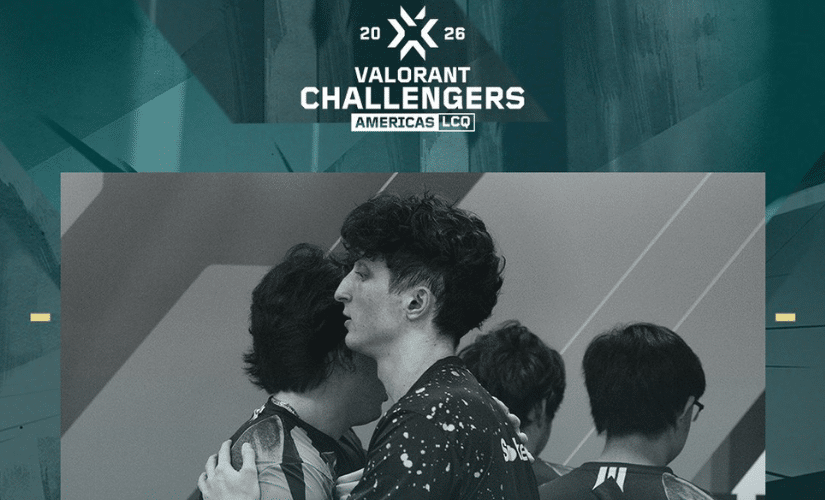
Even Jeremy Steeves, the Founder of one of the participating esports organizations, Shopify Rebellion, made a public statement on the LCQ Grand Final: “I unequivocally stand in support of our players in denouncing the conditions of this VCL Americas LCQ.
“Regardless of the outcome, this series was egregiously beyond the threshold of acceptable standards for competition. From network, to rulings, to on-site conduct – it was simply inexcusable.”
Now, Liga ACE is by no means not the only tournament organizer that has received negative community feedback concerning its management of game-breaking lags or round rollbacks. VCT Pacific was in a similar position after an unknown bug was discovered during a Stage 2 series. Such incidents are unavoidable to some degree.
But shouldn’t events of this caliber have certain standards and protocols, especially when it is not just one bug? I believe so.
Liga ACE is getting dragged ahead of VALORANT ecosystem changes
The Liga ACE case highlights that lackluster tournament protocols create issues beyond competitive integrity.
For example, Game Changers team Shopify Rebellion Gold also brought to light that a Liga ACE admin had participated in a misogynistic joke during a different tournament. The admin in question was later fired, but the damage had already been done.
If rules for staff recruitment and conduct aren’t thorough enough, marginalized members of our community are likely to be affected. This is the case for any organization, even though smaller tournament organizers might not be aware of the responsibility they carry.
Furthermore, the level of technical difficulties Liga ACE encountered during the LCQ final is a breeding ground for player uncertainty, even conflict, over admin decisions. Which round should get rolled back? Is my team being treated fairly compared to the opponent? Tournament organizers must have protocols in place for the most common issues, handle each incident with sufficient care, and communicate their final verdicts openly.
Finally, a tournament broadcast packed with interruptions and in-game lags is simply a bad entertainment product. Viewer retention and trust in Liga ACE have suffered greatly due to the LCQ disaster. This is even more disappointing, considering the stakes of this Grand Final and the fact that it was likely the final Americas Challengers match of all time due to next year’s ecosystem updates.
All potential for a banger series was snuffed out by the ridiculous and incredibly frustrating spectacle delivered.
“Zikz is talking about how a lot of these rounds were close. Now, one of the reasons for that is half these rounds – I wish I could show you the examples – brothers were playing on Microsoft PowerPoint/Microsoft Rewind if they ever came up with a program for that,” concluded ShyoWager on Plat Chat.
Riot must enforce guidelines for competitive integrity in 2027 and beyond
So, should Riot Games entrust third-party tournament organizers with the production of such crucial events?
Generally speaking, I welcome the ecosystem changes VALORANT will see during next year’s era where “everything is a tournament.” I think a less rigid Tier 1 structure is a necessary step to improve VCT’s entertainment value as well as player development in the scene.
I also believe that third-party tournament organizers need to play a role in such a structure. Riot Games can’t do it all by themselves, and they shouldn’t. Competition in that sense is healthy for elevating VCT production quality in the long term. And thankfully, there are plenty of reliable esports production companies out there.
BLAST and Hero Esports come to mind, but even smaller fish in the pond, like Raidiant and DivE, have already proven themselves through their Game Changers operations.
At the same time, concerns raised by the VALORANT community over the role of independent tournament operators in the 2027 ecosystem are very much valid.
“What’s going on right now in [VALORANT Challengers] should be genuinely concerning to everyone looking to participate in Valorant esports in 2027. Qualifiers are going to be run by companies like those that run the Challengers leagues,” pointed out Donnie “Elevated” Chell on social media.
In another post, the VALORANT coach stated: “Everyone should be mad that in 2026 in a multi-million dollar esport we are still having incredibly important tournaments completely ruined by technical issues. […] Companies, Orgs AND players are going to be justifiably hesitant to invest their time and money into Valorant if that investment can just go up in flames due to bad quality control.”
In my opinion, it is crucial that Riot Games enforces additional guidelines for VALORANT tournament organizers in anticipation of a 2027 season full of exciting changes and organizational challenges.
It might take Riot several seasons, several rounds of trial and error, to find the best balance between lenience and quality control within the VCT ecosystem. However, it’s an important balance to strike.
Otherwise, VALORANT esports risks losing legitimacy in the eyes of viewers, organizations, and players.