For 17 years, League of Legends has asked players to coordinate in-game solely on pings and hurried messages typed in between clicks. Now, this could all change.
Earlier this March, Riot Games confirmed that it was exploring the implementation of Team Voice to the game, extending communication beyond premade parties.
While the feature hasn’t been released just yet, recent leaks also reported that the dev team is working on a Voicemod integration, meaning that players can alter their natural voices to disguise themselves.
On paper, this is an important addition, as it would reduce potential harm caused by discriminatory behavior. That said, it still won’t address the underlying issue: the potential toxicity that comes with such a powerful tool.
The clear upsides of having Team Voice
The arguments in favor of Team Voice are pretty straightforward. Being able to share information, such as calling an enemy’s flash or coordinating on how a play should be executed, can make a huge difference in the outcomes of specific games, especially at a high level.
In a dynamic environment like League of Legends, voice communication can save hundreds of seconds, especially if players already share a strategic language.
Portuguese professional player Attila described Team Voice as “the best possible news for the game to continue developing in the right direction.”
“The worst thing is that so many people think it is negative for reasons that make absolutely no sense,” he added.
Challenger coach Sungod, who has been a longtime player on China’s Ionia server (where pros play), also shared in the positive sentiment.
“China has Voice Chat on Ionia for years now,” he said. “It’s a good addition. Mostly high-elo players use it anyway. [The] League community asks for the voice chat feature, then complains it gets added.”
Former coach and LCK caster LS also argued that better communication would reduce the value of chaos itself. “People will realize scaling and slower play is +EV and more correct,” LS wrote. “The game will become an arms race to keep pushing scaling [and] indirect advantages — draft and other things.”
He also predicts that specific class types, such as assassins, will see their win rate drop since those champions frequently create leads based on isolated plays and poorly coordinated opponents.
Voice would also reward the ability to persuade teammates. LS believes the game would “reward intelligence more than mechanics,” but equally ranked players often hold conflicting ideas about how League should be played.
The implementation can also have downsides
While communication can make a difference, too much of it can become noise. Challenger top lane player No Arm Whatley was one to voice his concerns about bot lane affecting his gameplay.
“The worst part of voice chat by far is that bot lane is a duo lane,” he wrote. “Ninety percent of the comms will just be flooded by them coordinating. If I’m top, I don’t want to hear my bot yapping for 15 minutes while I’m playing 1v1. [I’ll] probably be forced to unironically mute them until mid-game starts.”
Could Voice Skins make Team Voice safer?
Safety was one of the main reasons why Riot did not pursue full team communications earlier. Voice Skins could add a further layer of protection by concealing characteristics that attract abuse and simultaneously acting as a privacy tool.
Shifters mid laner nuc, who recently announced his break from competitive play, captured both sides of the trade-off.
“If it ever becomes real, there would certainly be a lot of negative aspects to address and minimize as quickly as possible, particularly for all the people who could be targeted and harassed in that environment by idiots in-game,” he said. “But the content it could create from a Twitch viewer’s perspective is insane.”
For streamers, every unusual call, discussion, or argument could become a clip, opening up unpredictable scenarios to thousands of people.
League personality Forest sees that entertainment value as part of the problem. “I stand by it, s**t’s gonna be ass for everyone [who is] not a content creator making content off it,” he wrote. “S**t will be miserable for the solo queue grinders and will be dead, not used or normalized anywhere near CS or VALORANT voice chat.”
Voice will always provide a considerable amount of competitive advantage, so opting out will inherently put people at a disadvantage.
The real challenge Riot has to face: Moderation
Ultimately, Riot’s biggest challenge is not disguising the players’ voices or questioning the implementation of Voice Chat, which I think, in the current state of League of Legends, has become a necessity.
What will become extremely tricky is the moderation and how Riot will tackle poor verbal behavior. While it previously said it plans to add voice chat to accounts in “good standing,” the team will ultimately have to release it to everyone, and when that happens, have a clear stance on what is considered punishable and what is not.
Harassment must not be tolerated, even if it’s coming from influential figures in the scene, and everyone must be held to the same standard. Apply meaningful penalties and heavily punish those who have been reported frequently.
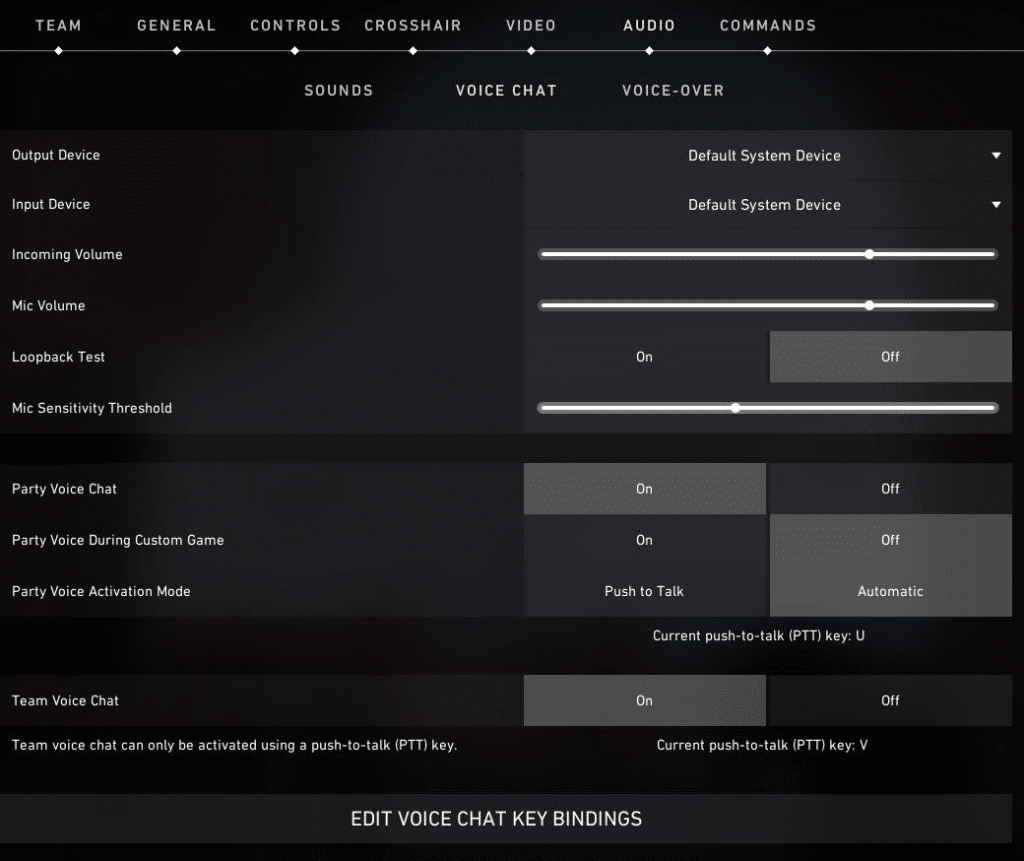
Just as Riot has been looking to fight disruptive in-game behavior, the next challenge will be to keep that same benchmark for voice chat. Hopefully, the dev team will use a system similar to the one over in VALORANT, where audio is reviewed.