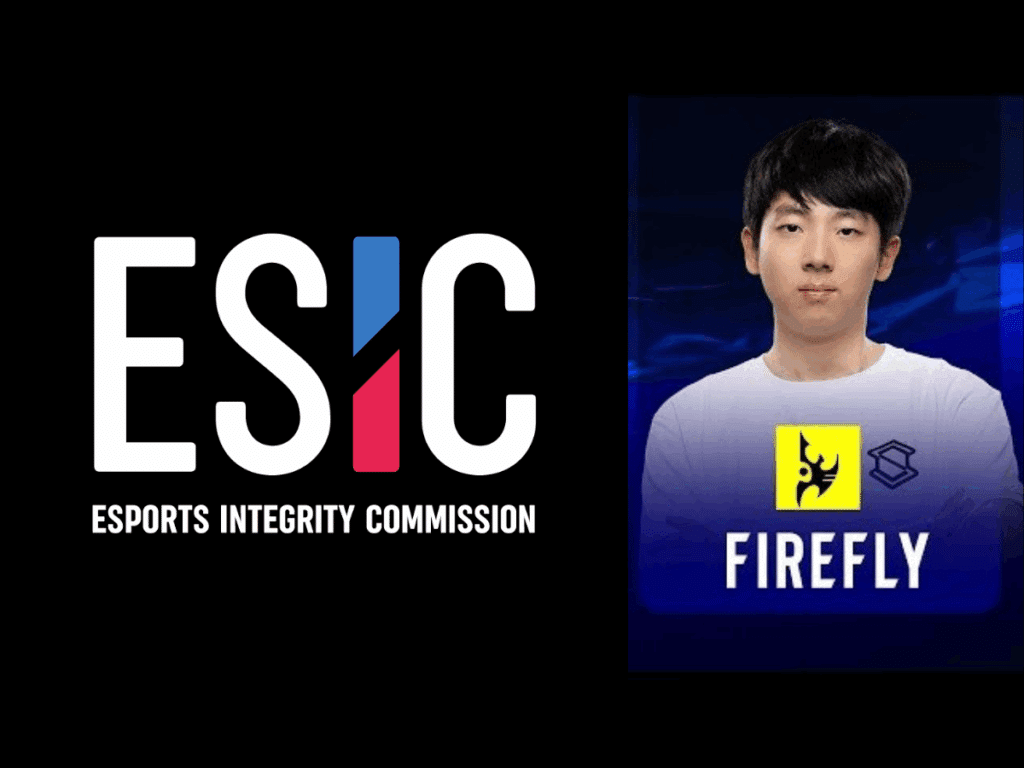
The Esports Integrity Commission (ESIC) has issued a lifetime competitive ban to StarCraft II player Xue ‘Firefly’ Tao.
The decision follows ESIC suspending the player in June, which resulted in Firefly no longer being eligible to compete at the Esports World Cup.
Following an inquiry that took place from April to July, ESIC revealed it had uncovered ‘evidence of a coordinated match-fixing and profit-sharing scheme’. The investigation found that Firefly deliberately manipulated the outcome of matches to benefit from betting activity.
In addition to Firefly’s lifetime ban from competing in StarCraft II esports, former player Jinhui ‘Jim’ Cao has received a provisional suspension from ESIC member events and tournaments, should he choose to return to competition.
According to the investigation, ESIC was notified of match-fixing allegations in May before beginning investigations at the start of June. On June 14th, the Commission issued a notice of charge and a provisional suspension preventing Firefly from competing at the Esports World Cup.
The investigation also uncovered over 100 screenshots of betting slips made across three sportsbooks, with Jim staking money against Firefly, earning an 83% win rate. Jim won approximately ¥32,116 (~£3,286) during Firefly’s EWC qualifying match against Bunny, where he lost 3-0.
In addition to the screenshots, the investigation shows a total of ¥97,800 (~£10,008) in transfers from Jim to Firefly as a result of match-fixing.
Match data also demonstrates anomalies with Firefly’s performances that directly correlate to the suspicious betting activity. ESIC reveals Firefly committed 11 breaches of its Anti-Corruption Code and ten breaches of the Code of Conduct, totalling 21 breaches. Breaches include betting on covered matches, providing inside information for betting purposes, and conduct that brings esports into disrepute.
“Mr. Xue’s conduct amounted to an egregious breach of the ESIC Integrity Program,” reads the investigation. “Accordingly, ESIC has sanctioned Mr. Xue with a lifetime ban from participation in any ESIC member event and competition in any capacity.”
ESIC’s Match-Fixing Crackdown
Throughout 2025, ESIC has ensured that match-fixing and other breaches of its Integrity Program don’t negatively impact the esports industry.
In May, the Commission issued ATOX Esports‘ Counter-Strike 2 players and staff with a range of bans following participation in match-fixing. Two players and an analyst received lifetime bans after partaking in strategies designed to manipulate the outcome of matches.
Elsewhere, Swedish Counter-Strike player Joel ‘joel’ Holmlund also received a lifetime ban after being caught using hardware cheats during a tournament.