The Esports Nations Cup (ENC) is meant to be a fun, slightly unhinged celebration of national pride, where countries assemble dream teams and battle it out for bragging rights. It is a festival of gaming. But leave it to a corner of the internet to ruin the vibe.
When Team Denmark announced their VALORANT roster, they did something incredibly cool. They included two of the absolute best players the country has to offer, who just so happen to be women. You can smell the responses, I’m sure.
One chud wrote: “I don’t want to offend Denmark nor Women, but that’s a bit crazy, they will include women players in their roster because they don’t have enough well-playing men.”
But here’s the thing: the Danish esports scene isn’t thirsting for male talent. This is a team that was intentionally put together. And I’m excited.
To be honest, I’m not an Esports Nations Cup fan. I wasn’t even going to watch it. However, I think this has made the ENC a proving ground for co-ed teams. We will finally get to see how co-ed tournaments work, which I think will reveal just how useless having separate scenes is.
Now, I’ll be tuning in.
Let’s Clear Something Up: Mimi and Noia are Absolute Certified Weapons
The idea that these two were picked as some sort of charity case is laughable to anyone who actually watches professional VALORANT.
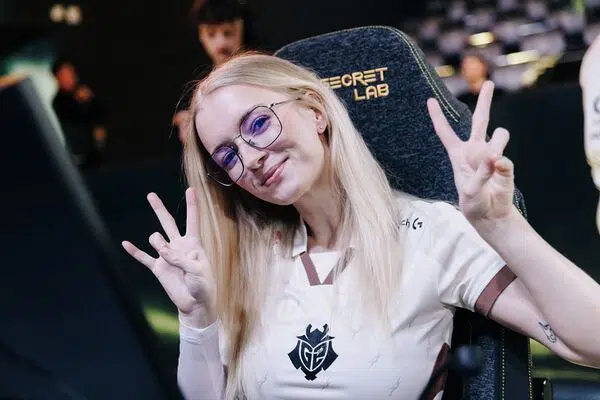
First up, we have Michaela “mimi” Lintrup. She is the in-game leader (IGL) for G2 Gozen and has been a dominant force in esports since 2015, back when she was crushing souls in Counter-Strike. She transitioned to VALORANT and immediately became a titan of the VCT Game Changers scene. She’s not just a legacy player; she is a tactical mastermind.
Then there’s Nicole “Noia” Tierce, a 21-year-old prodigy playing for Shopify Rebellion. She’s easily one of the most accomplished and mechanically gifted competitors in the Game Changers circuit.
When the roster dropped, the actual fans — the ones who know the game — were losing their minds in the best way possible. Comments flooded in calling it the “Best fcking roster ever” and pointing out that putting mimi and Noia on the same squad is a borderline cheat code.
They aren’t there to fill a quota. They are there because they can out-aim and out-brain most of the server.
The Nations Cup is the Perfect Place for This
Here is the thing about the Esports Nations Cup: it does not matter for the regular VALORANT circuit. It has zero impact on the VCT standings. It is literally a showcase tournament. Denmark didn’t need to copy-paste an existing Tier 1 male roster. The whole point of an event like this is to bring a wide, exciting range of representation to the stage, and that absolutely includes the Game Changers scene.
This makes it the perfect event to test co-ed competition. Separate women’s tournaments have been fantastic for creating safe spaces and building community, but they have historically received less financial backing, fewer sponsors, and lower viewership than the open circuits. This means fewer resources, less intense training infrastructure, and a slower path to hitting peak potential.
Putting women on the big stage alongside male pros is exactly how you bridge that gap. Are co-ed teams going to dominate instantly every single time? Maybe, maybe not. But they will never get the chance to reach their full potential without consistent, high-level competition and actual corporate backing.
Let’s be real for a second. The ENC itself has some awkward energy surrounding it, especially with Saudi Arabia’s massive, aggressive push to buy up and take over the esports ecosystem. It is easy to look at these tournaments with a bit of skepticism.
But Team Denmark’s roster gives us a genuinely great reason to tune in. If we can turn these events into a proving ground for co-ed teams, we get to see some incredible, fresh dynamics on the map. It proves to sponsors and viewers that co-ed VALORANT is high-octane, highly entertaining, and absolutely worth the investment.
Mimi and Noia are not the only female pros filling rosters across the world. This is just one example. I think the representation in the ENC will normalize the presence of women in large, professional tournaments and show they can keep up with the right support and training. It will feel less like a “special” event to see women play and more like the “norm” that esports fans should get used to.
Game Changers was a needed stepping stone, but it shouldn’t be the endgame for female players. This could be the catalyst that finally pushes women past all-female tournaments and into mainstream events.