The Esports World Cup is back, and this time it has a brand-new look. Due to geopolitical tension, the entire multi-week tournament was uprooted from Saudi Arabia at the last minute and shipped thousands of miles away to Paris, France.
According to the tournament organizers, this chaotic city swap has been a massive triumph. At the opening press conference, the CEO of the Esports World Cup Foundation proudly announced that they have already sold over 100,000 tickets.
At the opening ceremony, Ralf Reichert proclaimed: “More than 100,000 tickets have been sold in the last few weeks – a record pace for an event like this. The competition remains unchanged. What changes is the city.
“Riyadh built it. Paris takes it to the world.”
Various publications immediately ran with the headline, suggesting this might be the most sizable esports showcase in human history. Another dramatic declaration that sounds amazing on paper, but if you look at the event’s history, it is worth taking these massive numbers with a very healthy grain of salt.
Let’s check the math on the largest esports event in history
Claiming to have sold 100,000 tickets in just a few weeks is a bold strategy. For context, the event spans seven weeks, features 24 games, and boasts a prize pool approaching $100 million. But just because the CEO says a number does not mean 100,000 organic, hype-driven fans are actually filling the stadium seats right now.
The Paris Expo Porte de Versailles has a ton of space for conferences and whatever, with a capacity of over 100,000 people, but its largest theater seats 5,200 people. So… Did all the people who bought tickets just plan to wander around instead of watching the tournament?
More than likely, if the ticket sales are real, they are only attending the tournaments of the games they follow. But are they counting unique human beings who bought a ticket, or are they counting every single day pass across a seven-week calendar? If one person buys a pass to watch three different games over a weekend, does that count as three tickets sold?
When I went to check out the tickets for myself, you can basically buy a separate ticket for every day of the tournament, which means I could buy up to nine tickets for Week 2 of Mobile Legends: Bang Bang, then still buy tickets for a bunch of matches at another title happening that same week. Would that count as 18-plus ticket purchases towards the 100,000 total?
It’s also a bit surprising that 100,000 tickets were sold to a location when its largest theater seats only 5,200 guests and its largest hall is capped at 64,000 guests, yet I can still buy tickets to the tournaments now. I was even able to buy tickets to the Grand Finals of the VALORANT tournament, which is basically about to start.
You would think that if so many fans were attending, a popular, upcoming event like the VALORANT Grand Finals would be sold out.
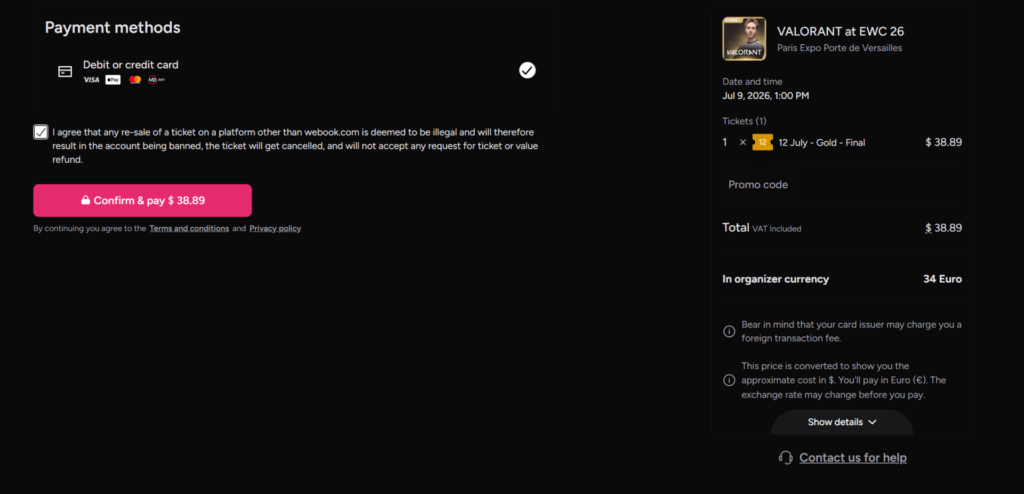
The Dota 2 Championship Weekend was also largely available aside from the Final Day. However, you could buy the Premium Tournament Pass for Week 2, which would let you get in anyway. Another massive title, Mobile Legends: Bang Bang, was also wide open for ticket purchasing, including the Championship Weekend Final Day. Surprisingly, Call of Duty: Warzone has a sold-out Championship Weekend Final Day.
This, of course, doesn’t prove anything. I’m not trying to claim that nobody is buying tickets just because nothing is sold out and they’re still allowing more tickets to be purchased. I’m just saying, there is space left. Which seems shocking for an event that’s allegedly record-breakingly massive.
The fans in attendance could be paid to be there
Suspicion around these crowd sizes is not just cynical hating; it is based on documented history. Investigative journalist Richard Lewis blew the whistle on how the Esports World Cup managed its crowds in Riyadh back in 2025. Internal leaks exposed a program called the Superfan campaign.
The organizers were reportedly deeply anxious that the crowds looked underwhelming on camera. To fix the optics, they created a financial reward scheme for the participating esports clubs. If an organization independently sourced, vetted, and flew out at least twenty superfans to Riyadh, the tournament foundation would foot the entire bill for flights, hotels, and shuttle buses. The organizations received cash bonuses for hitting these milestones, and the tournament drew a group of passionate fans to fill the front rows, so the event looked good on broadcast.
Why were they paying people to attend? Because nobody was.
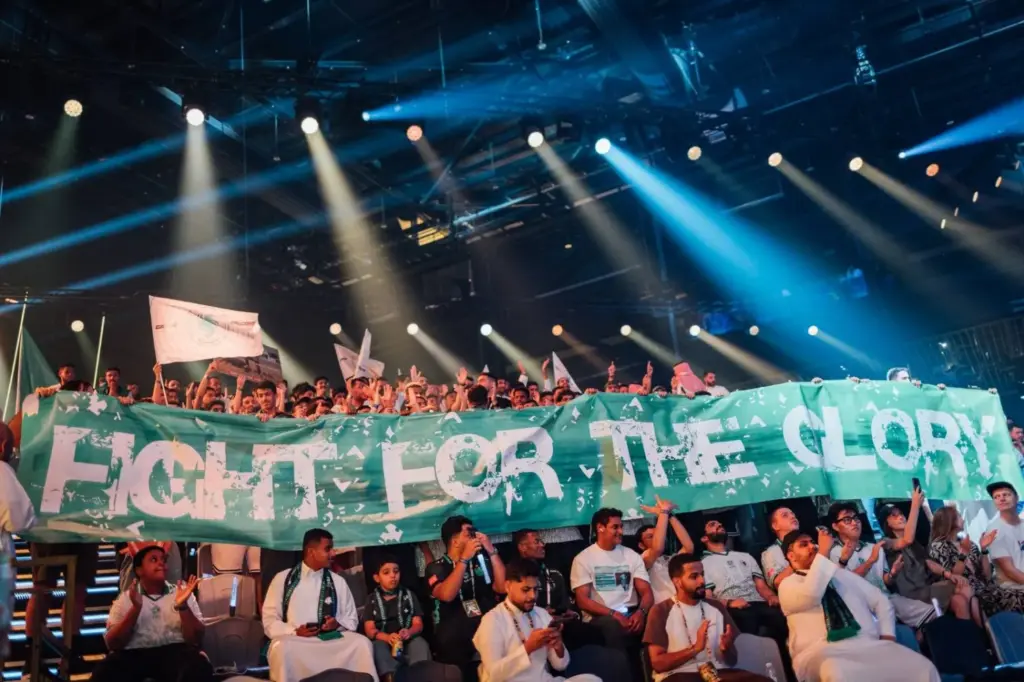
A source told Lewis that the Superfan campaign was “absolutely about expanding and diversifying the crowd for optics” since the pictures did not match the reported ticket sales. That year, they claimed to have sold over 60,000 tickets and boasted 289,000 visitors, but the images just showed “four hundred Saudi men in traditional dress” – and nowhere near the tens of thousands of fans reported to local news stations.
It’s not really all that shocking that fans were paid to be there. The teams are paid just to participate through the Club Partner Program, which is why they rush to sign chess players, FGC pros, and other competitors. There are also tons of incentives beyond prize money, including a Club Championship with an extra $30 million split among the top 24 teams based on leaderboard standings by the end of the event.
Again, I’m not saying with absolute certainty that the people attending the Esports World Cup are paid to be there. At least not all of them. But it’s still quite shocking to believe that over 100,000 people would attend an event that appears to go against what most esports fans stand for and doesn’t even count towards the actual season for most of the titles present. It’s basically a glorified showcase with paid participants.
Again, there may be some esports fans into it. And maybe some “normies” who felt like coming through since they live near Paris. But the forced hype and over-production of the Esports World Cup really doesn’t seem to vibe with the majority of esports fans. I mean… Look at the replies to this tweet for the over-the-top, totally random, desperate-to-be-mainstream opening ceremony:
Nobody is feeling this. I refuse to believe flocks of esports fans are heading to Paris to watch this live. Out of their own choice. It goes against the entire pivot of the esports industry as of late, back to genuine gamer vibes, after realizing that trying to appeal to mainstream audiences was wasting tons of money and losing fans.
Most of the positive replies on Esports World Cup tweets appear to be from the teams that are paid to be there. It’s tough to find fan replies on almost any of their social media updates. Like… Really FURIA?
Shifting cities and shifting narratives
With the tournament moving to Paris, the organizers are spinning a narrative of global expansion. They are framing the 100,000 ticket milestone as proof that European fans are ravenous for the product.
The news articles and interviews in mainstream media made the move seem like a monumental moment in esports history, clearly googly-eyed at the prize pool. But it was hard to find similar sentiments in the esports community around social media. I personally didn’t see esports fans deciding to attend EWC because of the new location, but maybe I missed a bunch of fans who changed their minds.
As the tournament kicks off, the real test will be what the streams look like when the cameras pan away from the main stage. The Esports World Cup certainly has the money to build impressive stages, but buying genuine, organic stadium hype is a whole different ball game.
I wasn’t able to attend the Esports World Cup, but we do have someone there right now, and the feedback I’ve been getting is pretty hilarious. Still, they told me they are going in without any pre-conceived opinions and truly want to see if the Esports World Cup is as hype and full of genuine esports fans as the CEO proclaimed.
We will see over the next seven weeks if Paris actually showed up, or if the organizers are just getting better at marketing a quiet room.