Leading tournament organizer ESL has just updated its Counter-Strike 2 rulebook, adding a bunch of changes. However, one that stuck out was a new clause regarding internal team communications during a live match.
The newly-added Clause 2.30 states that what you say to your own teammates during a match is no longer off-limits to tournament officials. The main change is that ESL is making any case of hate speech or discriminatory language a punishable offense. Players who are caught splurting can now be penalized through warnings, fines, or further disciplinary action.
With Counter-Strike being one of the more unfiltered gaming communities out there, this rule addition has drawn a lot of attention from fans, so what does this all mean?
Why is ESL only adding this rule now?
Counter-Strike and its esports has been alive and healthy for decades now, and we’re used to seeing pub and professional players engage in trash talking – it has pretty much become the culture at this point. However, why is ESL just doing something about it in the big ’26?
Now, the tournament organizer hasn’t officially tied this rule to any particular incident, but we have a pretty good guess.
At the recent IEM Cologne 2026 Major – the biggest CS2 event of the year – Ukrainian squad B8 Esports took on BIG Clan in Stage 2. During the match, B8’s in-game leader Andrii “npl” Kukharskyi was caught on camera mid-match, and the stream could hear him spouting out some rather fervent words.
According to translations that circulated afterward, npl was reported to have said some very unpleasant things targeted at BIG Clan’s veteran Johannes “tabseN” Wodarz. Now, I can’t necessarily repeat what he said as it’ll most likely get me fired, but it was along the lines of insulting tabseN’s mother, wishing death, and finishing the combo with a slur targeting sexual orientation.
A Russian commenter on HLTV.org even said that the last part of npl’s little outburst sounds much harsher than its English translation. I don’t speak their lingo myself, but they’re calling what he said a “bannable word,” so we can assume it’s not a friendly one.
Again, we don’t actually know if this specific moment is what pushed ESL to write 2.30 into the books, but there’s a pretty decent chance it was.
Hate speech, not trash talk
Before anyone panics, it’s worth being clear about what this rule actually targets.
From what I understand, this rule is aimed specifically at slurs and genuine hate speech – the stuff that gets you an actual ban in most online spaces. ESL is just trying to draw a line around language that has nothing to do with the game being played.
Trash talking is going nowhere – and it really shouldn’t. Most Counter-Strike players love trash talk and a bit of banter, and we should keep it in the professional scene. We love watching players stand up, taunt the enemy team, and call them bots or tell them they suck. That’s just Counter-Strike, and ESL isn’t trying to legislate that out of the game.

The community reaction to the new rule has been predictably divided. As you’d guess, many people are against the rule, saying Counter-Strike is slowly turning into a “soft” esport like its counterpart – VALORANT.
A user on X said this change is ridiculous, arguing that this has always been a big part of Counter-Strike culture, and what teams say to each other on TeamSpeak – which should be a private space – is none of ESL’s concern in the first place. “Who cares what teammates say to each other in the heat of the moment?” they closed.
On the other hand, plenty of fans are taking a more grounded view. They understand that ESL isn’t trying to ban trash talk entirely – it just wants to keep genuinely hateful language out of a professional environment.
ESL and other tournament organizers have increasingly featured snippets of team comms during broadcasts. Sometimes, when cameras pan to players, we can also hear them talking on screen. So, these comms have pretty much become part of the broadcast and are no longer completely private.
There’s a line between trash talk and hate speech
Personally, I think players should be free to say whatever they want. But professional Counter-Strike isn’t your Discord call with your close friends – it’s a business.
These are professional players representing a professional org in a professional tournament. It’s completely understandable that sponsors, who have big brands, don’t want their logos sitting next to players throwing around racist or homophobic slurs on broadcast.
To be completely honest, I don’t think this rule is going to kill Counter-Strike’s trash-talking culture at all. I’d even argue that the best trash talk has never relied on hate speech in the first place.
Let’s take Dan “apEX” Madesclaire, for example. He’s hands-down one of the funniest personalities this game has ever had, and is considered one of the more active trash-talkers out there.
He flipped off the entire BLAST.tv Austin Major crowd during his walkout and even recorded it for the ‘gram. When playing against his former teammate Lotan “Spinx” Giladi, he didn’t pull any punches, yelling at him to stop f***ing baiting. apEX’s antics even extended to telling Jimi “Jimpphat” Salo to go back to watching his Twitter porn. Man’s always finding creative ways to trash talk, and he’s not crossing any lines.

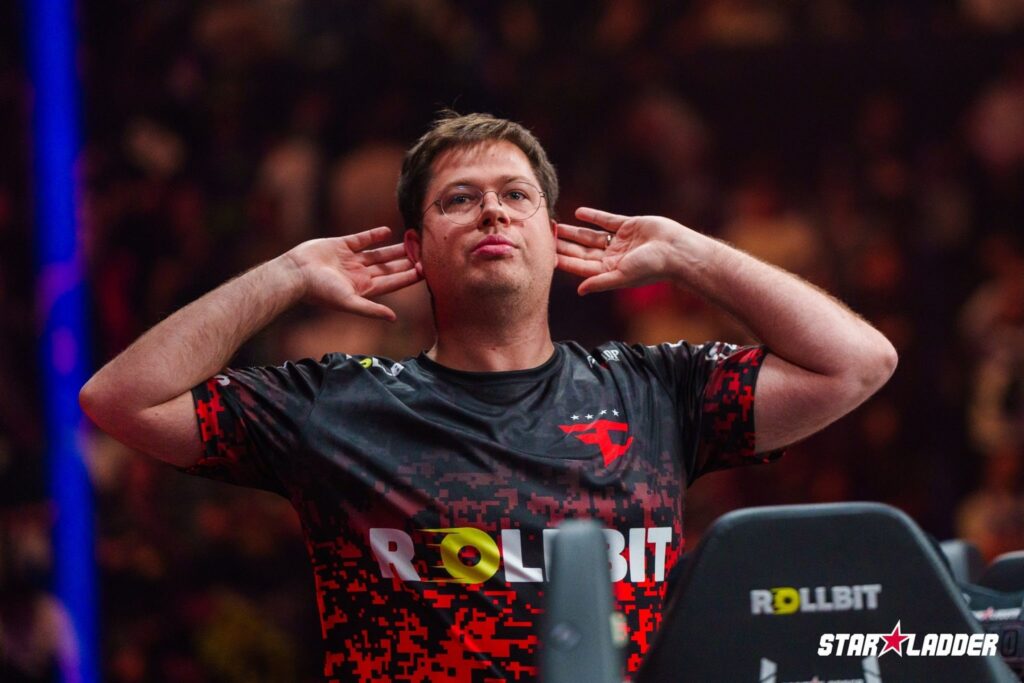
The same goes for Finn “karrigan” Andersen. My guy embraces the fact that he’s always the bottom fragger and starts emoting on his opponents for extra mental damage. He’ll stand up and start ear cupping after getting a couple of eco frags and blasting ambulance sirens just for the hell of it. And once again, karrigan doesn’t need to rely on hate speech or anything offside.
If anything, that sort of standard is already enough for me and one I’d rather see. Go ahead and call your opponents bots, tell them they’re baiters, and give them friendly reminders on how they need to hold left-click to shoot back. Shoot dead bodies, t-bag, and throw all of these hand gestures at your opponents sitting directly across you. That’s Counter-Strike.
If your idea of trash talk requires racist or discriminatory remarks, then maybe you’re just not very good at trash talking.