There’s a lot of buzz in the Counter-Strike community right now, and it has to do with Major stickers. Valve recently changed how Major sticker sales work at IEM Cologne 2026, ditching the capsule system we’ve used for decades in favor of a token shop where you just buy the sticker you want for a set price.
At first, this new system might sound like a W for people who just don’t want to gamble on unboxings – maybe you just want to buy your favorite player’s autograph and move on with your day. However, behind the scenes, this change is hitting the team’s revenue hard – really hard – and if things don’t improve, it could have severe implications for the scene’s future.
How CS2 Major sticker sales used to work
For over a decade, Major stickers have always worked through capsules. They’re just like your typical weapon cases, except they only contain stickers. So, a capsule would have a predetermined set of team stickers or player autographs, then you’d crack one open and hope to get one you’re looking for.
Then, revenue from those sales was split with teams, and we’re talking serious money. For example, according to HLTV.org, the BLAST.tv Paris Major in 2023 broke records, with teams reportedly earning an average of $4.5 million each. Of course, other Majors don’t reach that kind of spectacle, but teams at the StarLadder Budapest Major in 2025 were at least reportedly getting around $600,000 from the revenue split, which is still some very decent dough.
It’s also worth noting that this money was still paid out regardless of how well a team performed at the Major itself. You can show up to the Major, win zero maps, get eliminated in last place, and still earn some serious cash.
This sticker revenue has been a huge deal for the smaller orgs – mainly Tier 2 and Tier 3 teams. Qualifying for the Major was basically a guaranteed payday – and a really big one. If you’re a Tier 1 team, your priority is winning a trophy – qualifying for a Major is already a given. For these guys, the goal is to just make it there, and you have two shots per year to do it.
Once you’ve actually made it there, the sticker money alone could fund the roster for months.
The new system is tanking team revenue sales
The recent IEM Cologne Major was the first time things changed. Valve tore the capsule system entirely. Capsules are no longer a thing, and fans now purchase tokens and spend them directly on the specific stickers they want. The prices of each sticker fluctuate dynamically based on demand.
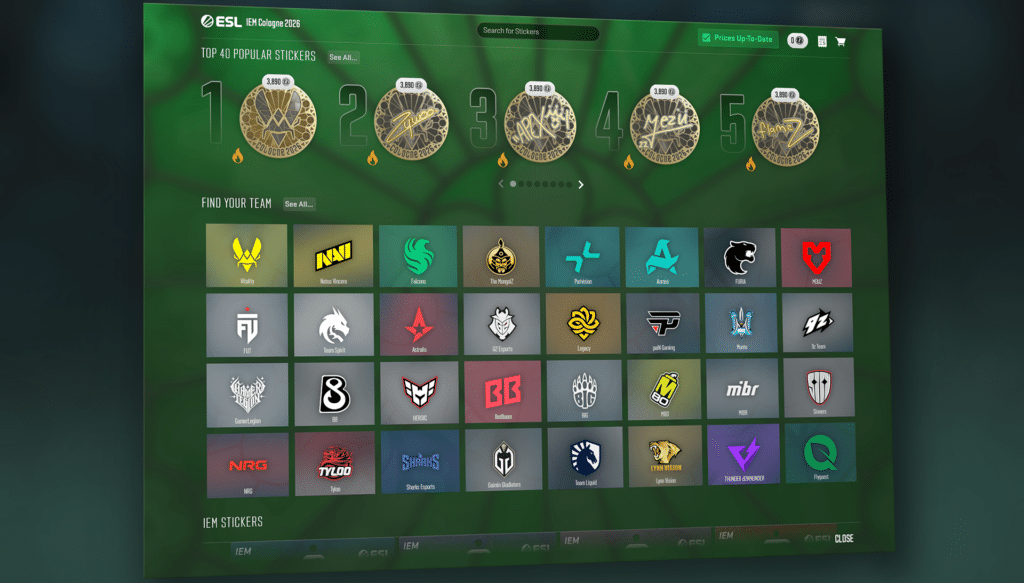
Back then, if you wanted a golden Danil “donk” Kryshkovets sticker, you’d have to open capsules or buy it from the market. But now, you can just buy tokens, then cop this sticker outright – no capsules required, though popularity drives the price up.
Valve has also tweaked how the revenue split works. Of the 50% of sticker revenue shared with teams, tournament organizers now keep 5%, while the rest is allocated based on two factors:
- The team’s Valve Regional Standings rank
- The team’s performance at the Major
So, teams that exit the tournament in Stage 1 will earn less money than those that get eliminated in Stage 2 or Stage 3. Teams in the lower half of the VRS rankings also get less money, so Tier 2 and Tier 3 orgs end up with the smallest slice. Meanwhile, the likes of Vitality, Falcons, and NAVI, among the richest esports orgs, take home the largest share.
I mean, sure, it’s a dog-eat-dog world, and getting more money for being better makes total sense. But this isn’t really about who “deserves” more money – it’s about who actually needs the money the most, and that’s the lower-tier squads.
According to HLTV.org’s report, an organization sent packing in Stage 1 only made around $60,000. But, we can consider it $120,000 if we’re counting the matching share that went to the players under the new 50/50 split. I’ll give Valve the benefit of the doubt and use $120,000 for the rest of this article.
So, for teams that barely make it through qualification and exit early, we’re seeing at least a 5x decrease compared to previous Majors. It’s even potentially up to 10x or more, depending on how the org agrees to divide the money between players and all that.
Why such a big drop? Probably due to gambling
So, why exactly did revenue fall off this hard? There are a few possible reasons why.
For starters, since you no longer have to “gamble” to get the specific sticker you want, there’s pretty much no reason left to keep spending on random pulls. Again, if you wanted a golden donk sticker back then, you might have to open hundreds of them before finally getting it.
Valve (and the teams) pretty much made money on every single one of those failed attempts. But take away the gambling, and you take away a decent chunk of that extra spend that came from people missing what they actually wanted.
There’s also the investment angle. A bunch of players would buy a crap ton of sticker capsules, not to open them, but to sit on them. Valve no longer sells capsules through the in-game shop after the Major ends, so you can only get them through other players who still have them. So, stockpiling them has become a popular investment opportunity, as you could resell them later on once the supply has dried up.
But now, we no longer have people holding hundreds of sticker capsules. You can multiply that by the thousands of people who had the same idea. You can imagine how much sticker revenue just vanished into thin air.
So, why did Valve even make this change? Probably due to gambling
People always say, “If it ain’t broken, don’t fix it.” So, Valve probably had a good reason to make this huge change, right? Valve hasn’t officially stated why they abolished the sticker capsules, but we can make a pretty solid guess.
The company has been under serious fire over lawsuits tied to gambling, specifically targeting its loot boxes. Last year, Valve rolled out a new Terminal system – you open it (without needing a case key), it shows you a skin, and you can decide whether or not you want to buy it. There’s no direct gambling involved in opening a case anymore, which looks like a pretty clear sign that Valve was already trying to get ahead of these lawsuits.
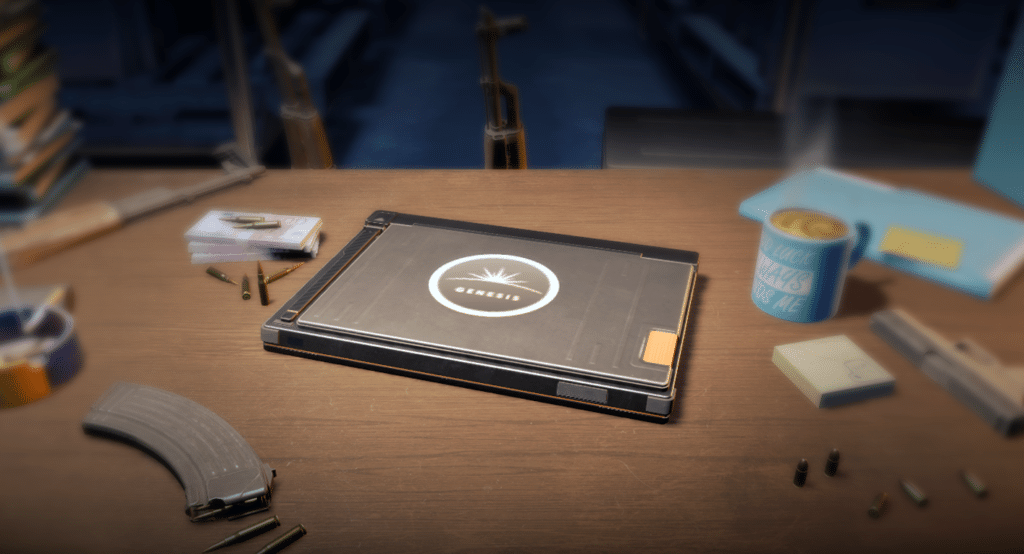
Sticker capsules pretty much worked the same way as weapon cases, meaning they’d fall under the same loot box umbrella regulators have been targeting. So, this is probably the reason Valve ditched the sticker capsule concept and tried their hand at this new token system instead.
Tier 2 and Tier 3 orgs feel a sense of doom and gloom
As you can probably guess, teams aren’t happy with this change, particularly Tier 2 and Tier 3 orgs. These teams don’t have the luxury of Tier 1 teams with what feels like 20 different sponsors, and they’re obviously finding it harder to stay profitable.
One of the best examples is SINNERS. This Czech org has been chasing that Major dream for years. They’ve been around since 2020, and those years of grinding finally paid off when they qualified for their first-ever Major at IEM Cologne. Huge. They got eliminated in Stage 1, but just qualifying for the tournament should have already been a massive win regardless.
Back then, teams were already getting massive payouts, so they thought it was finally their time to get theirs. But boom – if the $120,000 for exiting Stage 1 is consistent, that’s pretty much how much they got. Thanks for playing.
Let’s take another example. There’s this Russian org called CYBERSHOKE that fields a Tier 3 Counter-Strike roster. Just like others in this tier, their main goal isn’t to lift trophies at S-tier events – they just want to qualify for the Major. Last year, the team’s owner, Erik “Shoke” Shokov, revealed he’d spent around $950,000 on the team over 2.5 years.
Of course, these costs are allocated to different items, but to keep things simple, let’s just say he spends around $31,667 a month on the team. Every Major cycle is six months, so that’s roughly $190,000.
So, if CYBERSHOKE were to make it to a Major (they still haven’t), with previous sticker revenue counts in mind, Shoke would at least make a good amount of his money back for those six months. But now, if orgs are reportedly only getting around $120,000 before the player split, the numbers look rough.
Even with the huge cut in revenue, Majors are still going to pay more than every other S-tier event on the calendar – there’s no doubt about that. Qualifying for one is still a big deal since the org and its players have their logo and names immortalized in the game.
But that’s not really the main point. Until this year, Majors used to give life-changing money. It could make or break an org’s entire year, and players could be earning months (or even years’ worth) of salaries. Now, it’s just… good. It’s a nice bonus, but nothing too crazy.
From another perspective, that sticker money wasn’t just about breaking even or making money. Some teams can use it as reinvestment fuel. Let’s say a team makes it to the Major – they get $600,000 or whatever. Maybe the org can use some of that money to upgrade their roster and buy better players for the next season.

Who knows, they might finally get good enough to compete with the tier above them. They might be a serious contender in the future. A $120,000 payout just doesn’t do that.
Now, there’s a real danger. Tier 2 and Tier 3 orgs would take on the risk of chasing a Major slot because there’s a clear reward. If you reach the Major, you’ll probably get paid back with more to spare. But now that the reward is gone, the math stops mathing.
Qualifying for a Major is still really hard – it’s not guaranteed. With how qualification works through VRS points, orgs would have to send teams to compete in LAN tournaments and fund bootcamps, which add even more costs to the tally.
So, if the payout from making it to the Major isn’t worth all this risk anymore, why would an org even continue bankrolling a team? It just doesn’t make much sense from a business perspective. They’d be fully dependent on sponsorships and other revenue streams, and we know that most esports orgs in general are struggling to make money.
I personally don’t know what the fix is, but I’m pretty sure Valve needs to do something about this. Gaimin Gladiators exited CS2 last month, attributing “recent changes to the Major ecosystem and revenue structure” as one of the main reasons. If nothing changes, we might see more follow suit.