The Esports World Cup‘s third edition landed in Paris this year, following a last-minute relocation due to geopolitical tensions. The Esports Foundation faced an unenviable task: moving 25 tournaments, thousands of competitors, and all the infrastructure behind them to a new country and city in a matter of weeks. The tournament itself does not present as if it were cobbled together in such a short space of time, but behind the scenes, there’s undoubtedly been a lot of work to make it happen.
Esports Insider sat down with Hans Jagnow, Director of Club, National Team & Player Relations at the Esports Foundation, to talk through the relocation, why heads of state and A-list celebrities are now actively seeking (rather than running away) from esports and gaming, how the Club Championship is attempting to reshape fandom, and whether a competition built around club investment and partnership risks quashing the dreams of the bedroom-project clubs esports grew up with.
Editor’s note: This interview has been lightly edited for length and clarity.
Transferable concepts and the move to Paris
ESI: The Esports World Cup is still a fairly new event, and this year, there was a last-minute change of location due to a geopolitical situation. How much stress did that cause you?
Hans Jagnow (Esports Foundation): The most obvious factor here is that we had only a couple of weeks to transport and transfer an operation that involves thousands of people to a new city, a new country, and a new continent. Relocating this massive piece of the summer of esports to Paris was something I can only applaud the entire team for actually pulling off. That is something to recognize first and foremost.
Other than that, we are pretty happy that a lot of the concepts, a lot of the things that we’ve built over the last two years were transferable, and that is due to, number one, the trust that we had from our host country in Saudi Arabia. And then also the trust of this year’s host, which is the stakeholders here in Paris and the stakeholders in France that are equally excited about esports. I think that element of trust and excitement helped us build what we are building here and what we have successfully built over the last couple of weeks, to really deliver the biggest Esports World Cup we’ve ever had.
Engaging with governments and heads of state
ESI: To put on an event of this magnitude, you’re engaging with governments and people at the very top, at the state level. Did you find any hurdles with this? How are those discussions going?
Jagnow: Yeah, first of all, what I think changed over the last 10-20 years is coming from an industry and a scene that needed to justify itself at all points of its existence. I come from a generation that had to answer numerous questions around gaming from my own parents — “Can’t you go out?” Right?
Interestingly enough, that leads up to where we are now. They’re now trying to understand why we’re talking to heads of state, why we’re talking to governments all over the world, and why we’re piquing the interest of mainstream audiences. That is the significant and fundamental change: a generation that grew up with esports is now in leadership positions and part of the decision-making. These are positions that actually help establish esports as a normal part of society, and I feel that is changing the entire narrative, with political leaders and celebrities actively wanting to be around us. In contrast, many in the older generation came from a place where they actively sought distance.
Now they want to be near; it’s part of their lifestyle, it’s part of their interest, it’s part of their excitement, and you see this with a couple of political stakeholders. If you look at Macron, who on his election day turned up at the beach in an esports hoodie with his wife, no one would have ever thought that would be possible. It’s such a small gesture that has such a big impact. This is an important part of what the world’s leaders are doing every day.
“If you look at Macron, who on his election day turned up at the beach in an esports hoodie with his wife — no one would have ever thought that would be possible.”
Hans Jagnow, Esports Foundation
Ambassadors, celebrities, and the fandom conundrum
ESI: Something I’ve noticed with the Esports World Cup is the number of global ambassadors it boasts, Cristiano Ronaldo, for example, and the number of celebrities that come through in things like the Amazon Prime documentary. Part of that feels like it’s still about seeking legitimacy from a wider audience.
What role do you see the Esports Foundation playing in fandom, and how does fandom work between clubs, publishers, and everyone else involved?
Jagnow: It’s a core part of our strategy to address fans from different backgrounds with the right channels and the right people, and spark the excitement. When we’re talking about clubs, they’re the beating heart of our ecosystem. This is where the core fans of esports actually resonate. They follow the players, they follow the clubs, they want to see the clubs succeed, and they want to learn more about every single step of the player and what they do every day.
“When we’re talking about clubs, they’re the beating heart of our ecosystem.”
Hans Jagnow, Esports Foundation
We have this amazing club program that we’ve been running since 2023/2024, since the first edition of EWC, and have now expanded over the years. 40 clubs are our partners, with an investment of $20 million per year — a stipend to support not competitiveness, but sustainable marketing models beyond just prize money.
What we’re doing is working with our partners to reach the 300 million fans they collectively reach across the world, and, with the global population, we see markets like India or Indonesia as massive — a massive number of esports fans, massive viewership too. They’re all excited about the next stories that come out. That’s one part of the puzzle, and it’s a very significant part if you look at the 300 million fans compared to the 750 million viewers that the Esports World Cup had last year.
Then, looking at the ambassadors, we see that they connect and bridge different audiences around the world to expand the reach of esports today. These ambassadors and guests — the people who have access and whom we collaborate with around the Esports World Cup — always have a certain connection to gaming.
If we look at 2024, we talked about Neymar and his passion for Counter-Strike. Last year, it was Lando Norris, talking about how gaming is part of his routine and competitive preparation — part of the lifestyle. People are talking about needing to go to practice but wanting to finish their Call of Duty game first. All of this authentically reaches an audience already close to gaming culture. From the 3 billion gamers worldwide, some discover esports as a specific form of competition and entertainment within gaming.
Is the Club Championship’s format a design flaw?
ESI: In the Club Championship, Team Falcons have won twice in a row, and when I spoke to Nico Maurer of Vitality, he said it would take a monumental upset for them not to win it, given the investment they have and continue to make. Is that a design flaw? How do you see that leveling out, given that certain clubs — sending over one, maybe two rosters — are never going to compete at that level?
Jagnow: What makes the Esports World Cup so special is the idea of not only looking at one ecosystem, but bringing together these different games and proving that a really good esports club — the best esports club in the world — needs to deliver consistently. I think that’s the answer to the question as I understood it.
“A really good esports club — the best esports club in the world — needs to deliver consistently.”
Hans Jagnow, Esports Foundation
Firstly, over the last few years, we’ve seen Falcons twice in a row prove they’re able to produce high-quality output from their rosters consistently. They have something overarching across all their different games that allows them to consistently place top 8 or higher, which is the requirement even to collect Club Championship points.
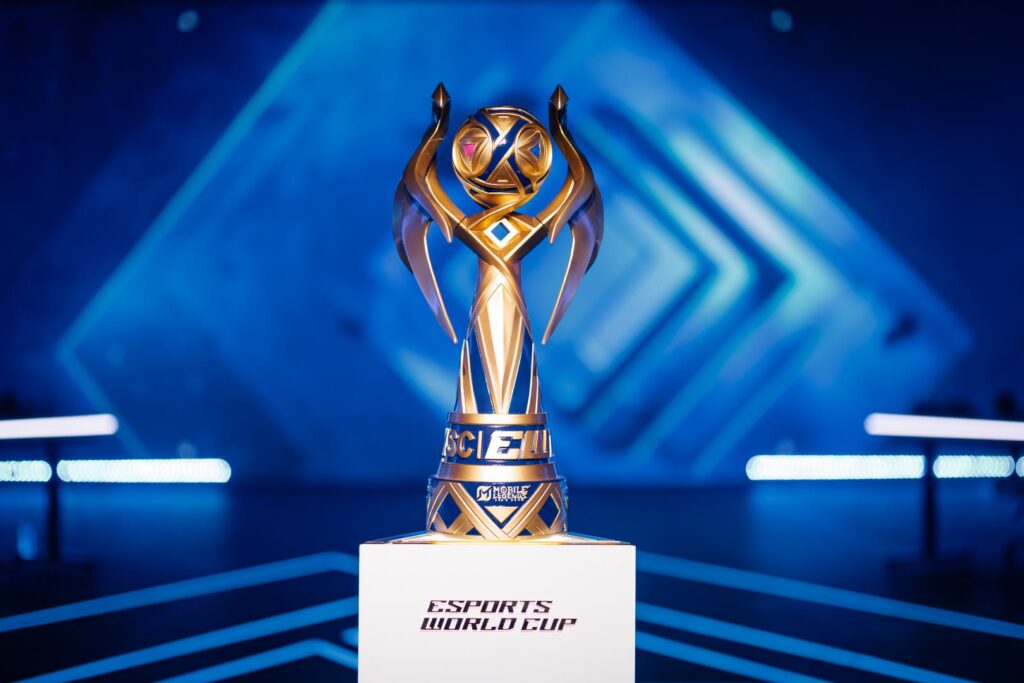
Secondly, we also saw that Falcons last year had a really hard time fulfilling the second criterion — winning at least one game. Only then are you eligible for the Club Championship trophy. So it’s not only about the points, but it’s also about whether you’re a winner. They had this amazing run from a team that qualified through the last-chance qualifier, went all the way to first place, and not only secured their win in Overwatch but also secured the Falcons trophy.
This year, we have a very exciting race in front of us. We’re already two tournaments in [at the time of interview], and across the 25 different tournaments, Team Vitality is currently in the lead. They’ve secured two top-8 placements over the last couple of days, which makes them eligible for the Club Championship and puts them highest in points right now — I think 400 points, if I’m not mistaken — and obviously, the door is now wide open for whatever the next 23 tournaments will bring, in terms of both points and wins.
That said, in terms of qualified rosters, there are strong contenders across the board. Team Falcons have around 20 qualified rosters so far, with a few more chances to qualify. Team Vitality has around 17, All Gamers has 16. It’s quite an exciting race. Last year, Team Liquid collected 3,000 points alone through three wins in chess, MLBB, and EAFC. Winning those titles really boosts where you stand on the leaderboard; it gives you a unique 1,000-point swing that sets you apart from your competitors.
So winning the Club Championship comes down to the same thing for every competitor each year: you need a good performance across all the games you’re competing in. Winning individual games earns a significant number of points and also counts toward meeting the criteria for first place in the Club Championship overall.
Cross-game fandom and crossover between titles
ESI: Do you think esports fans care about clubs more broadly, or are they more focused on individual games? Are you seeing crossover and cross-pollination of fans between games — the kind you wouldn’t get without a tournament of this magnitude?
Jagnow: Firstly, I think with every new concept you introduce — and the Club Championship was a really ambitious concept — it takes time. It’s rooted in the ambition to bring 25 different tournaments, 24 games, into the same place in the same competitive format. We’re in our third year — time flies, sometimes it feels like we’ve been here for 10 or 20 years, but this is only the third Esports World Cup. Fans take time to develop an understanding of something that, at the beginning, was outside their comfort zone. They look at individual games and focus on the players in that specific ecosystem, based on what they play, what they know, and what they prefer.
Over the last few years, the Club Championship has helped professional clubs bind their fans much more closely to their brand by giving them a narrative that crosses all the different games. Suddenly, you’re not only looking at the Counter-Strike Majors, but you’re also looking at MLBB, because it influences how your favorite brand develops over the year. The Esports World Cup is the highlight of that development each year.
So what I see in social media, in comments, and what we’re also actively developing with our club partners, is that a lot of fans understand the storylines, understand the ambition, and understand the impact on sustainability that the Club Championship has for these clubs — and what opportunities open up once you’ve achieved a good placement on the leaderboard. To make it short, I think what we’ve incentivized is more fandom for the clubs, more storytelling throughout the year, and ultimately more opportunities to be involved in esports across different games.
“What we’ve incentivized is more fandom for the clubs, more storytelling across the year, and ultimately more opportunities to be involved with esports.”
Hans Jagnow, Esports Foundation
Last but not least, the games themselves also profit from that. They see organizations moving into their ecosystems wanting to build something stable and sustainable — especially if they identify really good players they can work with, bring their philosophy to, and build good competitive results with. That becomes a long-term partnership that lets them compete well in the Club Championship, and that has real value to them.
Expanding the game ecosystem, and whether 24 is a hard cap
ESI: Do you get any pressure from clubs to look at working with other games or publishers? You’ve got an array of titles from Fatal Fury to EA FC, but there are plenty of other games out there. Do clubs have a say in expanding the game ecosystem, and is 24 a hard cap on the number of games?
Jagnow: I don’t think we have one number in mind. It always needs to work across many different criteria, but I am very comfortable with the number of tournaments we have right now. It’s a good seven-week timeline — eight if you count the pre-weeks, wild card tournaments, and the two-week tournaments. What I think is much more important is the mix of games. What we want, in the end, is the best games, the best players, the best clubs — that’s our ambition. I feel very comfortable around 25 tournaments; I think that’s also a shared feeling, that this is very manageable and provides maximum value to our viewers, to the fans, and to everyone who follows esports.
What’s important is having the right diversity across game genres and the ecosystems that support them. As our Chief Games Officer, Fabian, puts it, we always look at this from three angles: first, what’s the overall recognition and viewership; second, what are the audience and fans like; and third, is there an existing ecosystem that ensures this happens year-round and makes it sustainable and exciting for fans. That’s how we decide which games are selected.
You saw only limited movement this year — two new games, TrackMania and Fortnite. They’re very different games, appealing to audiences very different from those of the others. What we want is a well-balanced mix that represents esports in the best way possible, as an entire community and industry.
Openness, ‘whales’, and protecting the bedroom-project dream
ESI: Many teams are founded from a passion project in someone’s bedroom. Does the Club Championship, through its sheer size and the partnership scheme, risk quashing the dreams of these clubs? Could it cause more damage to the ecosystem than benefit? Is there a risk that certain teams become “whales” and create a massive imbalance?
Jagnow: We value openness a lot — openness in our ecosystem, openness in how you can qualify and participate across the different games, both for players and through the number of last-chance qualifiers we’re hosting across titles. There are thousands of players who can travel to EWC and just participate, and if they’re good enough, they make their way to the main tournament, the main stage, the main weeks. That’s very much how we look at many of the things we build within the EWC ecosystem.
We take the same approach with clubs. If you look at the club partner program, you’ll see there are all-time stars — the top 8 in the Club Championship get an automatic invite to next year’s partner program. Then we have several clubs we work with continuously because they’ve been such good partners, and some clubs we add or rotate over the years to address things we see as beneficial for the global development of esports.
Whether that’s regions we’re focusing on or the creativity an individual club brings. We have clubs you wouldn’t consider the biggest in the world, but that we still consider the best in specific areas. Even smaller clubs get a chance to build familiarity with the different ecosystems within EWC, and then build their competitiveness from there to participate in EWC. So we help with growth and development.
That’s an important part of what we do. The Club Championship is open to everyone. We see a lot of diversity in backgrounds — single-title clubs that are very good but don’t participate in the Club Championship, yet still win EWC and individual-game tournaments in some cases. We have very small, focused clubs that concentrate on two or three ecosystems and perform very well, putting them in the top 24 of the Club Championship and giving them additional funding through that prize money.
Then we have clubs dedicated to investing and growing over time. I’ll give you a few examples that I always see as good reference points for a strong strategy: Team Falcons, All Gamers, and Team Vitality are all similar in that they started by focusing on one region — Falcons in the Middle East and Saudi Arabia, All Gamers in China, Vitality in France — but have since expanded internationally.
Falcons now field rosters from all over the world. All Gamers have been expanding outside China over the last two years to bring competitive excellence from around the world. Vitality invested heavily last year in Southeast Asia with the acquisition of Bigetron, upgrading its mobile gaming approach and reaching that region’s player and fan base.
That also teaches other up-and-coming clubs to build a local fan base and expand from there, because esports is global. I think that’s so integrated into the character and philosophy of esports — we are a global sport, and to be successful, you need to be global, cross borders, and seek competitive excellence all across the world.
“We are a global sport, and to be successful, you need to be global, cross borders, and seek competitive excellence all across the world.”
Hans Jagnow, Esports Foundation
Esports Insider’s travel and accommodation for the Esports World Cup in Paris were covered by the Esports Foundation. The organization had no editorial input into this piece.