TL;DR
- Each Dota 2 role has specific expectations, and every hero performs those tasks differently.
- Beginner-friendly heroes have a simpler game plan and are easier to pilot.
- Utilising more straightforward heroes will help to flatten the learning curve and enable you to better understand the basics of each role.
- Every role has heroes who can adapt to the team’s needs.
Dota 2 is infamous for its steep learning curve. With over 126 heroes, unintuitive mechanics, and diverse item builds, it can quickly overwhelm newcomers. Beyond picking beginner-friendly heroes, players also need to understand the expectations of their chosen role alongside the game’s fundamentals.
Understanding Dota 2 roles and their distinct responsibility on the team makes everything run smoothly. While the general goal remains the same, every hero brings a different approach with their unique kit. For this Dota 2 beginners guide, we’ll look at some of the best heroes to learn a new role with and what core concepts they teach about the position.
Hard Carry (Position 1) – Efficient farming and damage
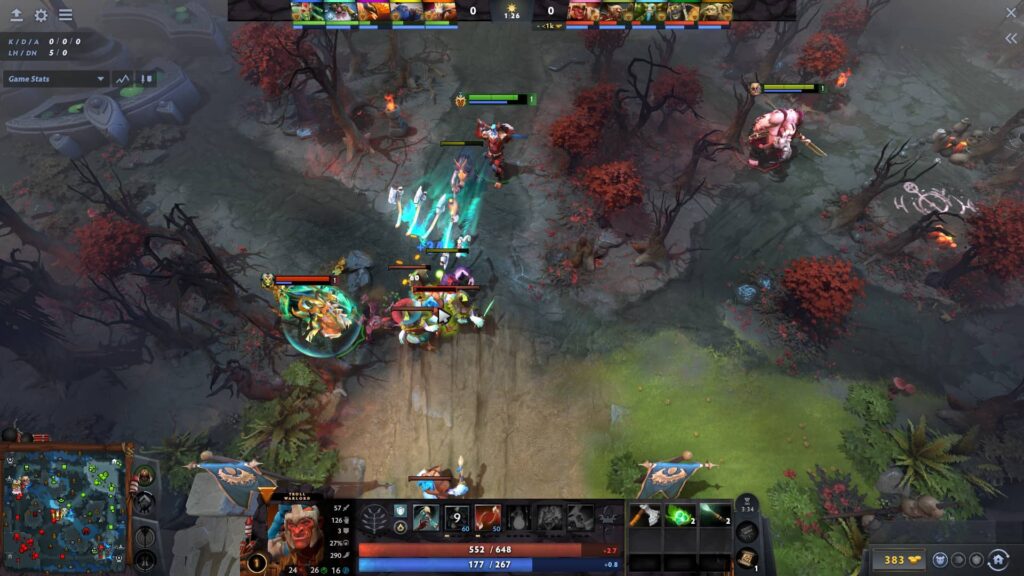
The hard carry (position 1) receives the largest farm priority of the team. This is a great Dota 2 role for a new player, since it lets them focus on fundamental concepts like last-hitting, farming patterns, and deciding when to take a fight.
| Hero | Core concepts | Brief gameplan |
|---|---|---|
| Juggernaut | All-around, teamfighting | Juggernaut has a strong kill lane with Blade Fury. Look to take objectives with the healing ward. |
| Sven | Fast farming, playing around cooldowns | Play around God’s Strength, blow up the backline with big damage. |
| Medusa | Scaling to the late game | Farm nonstop until items are ready. |
| Sniper | Positioning, sieging | Hit enemies from max range and siege high ground early. |
| Nature’s Prophet | Smart itemization | Farm everywhere, adapt items to the enemy’s composition, teleport to most fights. |
Players need to strike a balance between farming and fighting, based on their item timings, level power spikes, and game state. Carry players usually pick last in the draft, so they need to have a healthy pool to choose from to answer their opponent’s heroes.
Lastly, players who want to master the role need to have a deep understanding of the shop in the game. Following cookie-cutter Dota 2 guides for every game, rather than adapting, is a sure way to fall behind.
Mid (Position 2) – Tempo and map control
Mid laners (position 2) play the only true solo lane, giving them full access to gold and experience. The first step to mastering the role is outplaying, or at least going even with, the opposing mid player. This lane will put your individual skills to the test, and you need to get better at last hitting, denying, and harassing to get ahead.
The drawback of mid lane is that this is extremely match-up dependent. It’s best to curate a small list of comfort heroes, so that you’ll understand their glaring strengths and exploitable weaknesses.
| Hero | Core concepts | Brief gameplan |
|---|---|---|
| Zeus | Outplaying mid, spellcasting | Zeus’ hard-hitting spells should give you an edge in harassing and winning the lane. After that, position smartly during teamfights. |
| Dragon Knight | Surviving melee match-ups, pushing towers | Dragon Knight’s survivability lets you get comfortable using melee heroes in mid. After that, force towers with your ultimate. |
| Queen of Pain | Nuking, roaming | Queen of Pain is an aggressive choice that can effectively roam the map. |
| Leshrac | Teamfighting, magic damage carry | Leshrac is an easy-to-use magic damage powerhouse. Get your item timings and force enemies to respond to your sieges. |
This is a good mix of heroes who have safe or strong laning phases and impactful mid-game powerspikes. Don’t feel compelled to permanently leave the lane to roam all the time, since you’ll fall behind gold and levels.
Offlane (Position 3) – Frontline and utility
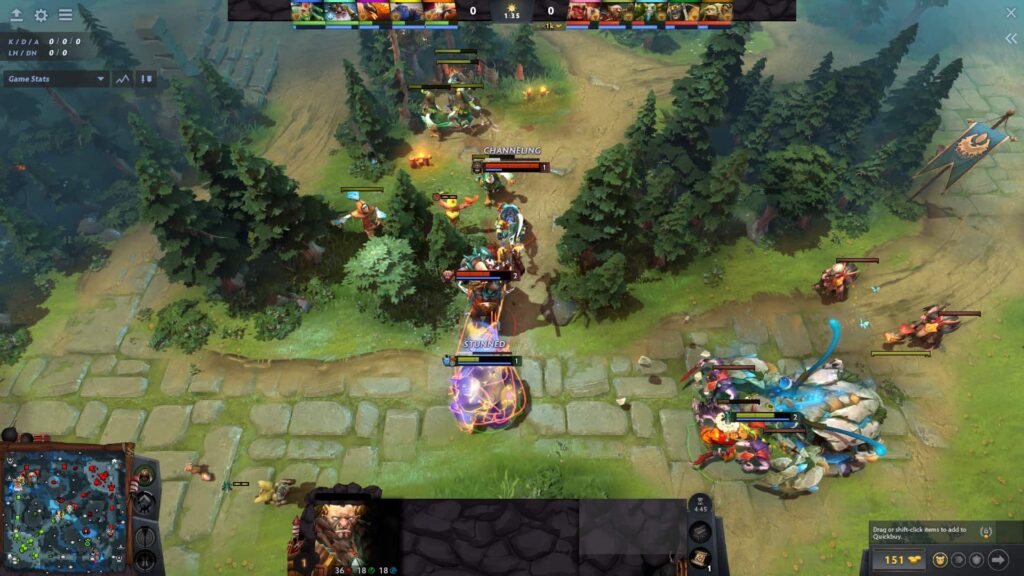
Offlane (position 3) is a flexible core role that features heroes who can initiate, frontline, assassinate, semi-carry, push with summons, or itemise into auras. Players interested in this role need to become comfortable starting from a disadvantage, which is why it’s called the hard lane in the first place.
| Hero | Core concepts | Brief gameplan |
|---|---|---|
| Bristleback | Semi-carry | Bristleback is an oppressive frontliner when ahead. Find farm and aim to be a lethal distraction in teamfights. |
| Slardar | Ganking | Slardar’s mobility and superior duelling kit make him tailor-made for roaming and finding isolated fights. |
| Tidehunter | Initiating | Tidehunter is the quintessential durable initiator in Dota 2. Blink in with a good Ravage and soak damage after. |
| Beastmaster | Zoo and pushing | Beastmaster uses his summons to push safely. Look for targets to gank every time Primal Roar is up. |
| Dawnbreaker | Counter-initiate | Dawnbreaker can clear waves fast with her abilities while looking for opportunities to counter gank. |
| Underlord | Auras and utility | Underlord wants to group up with big teamfights, beefing up the team with auras and itemisation. |
After the laning phase, this role also needs a good sense of macro game. It’s mainly up to the offlane on how they’ll take space and attention to disrupt the enemy carry, whether that’s directly through hunting them or indirectly by applying objective pressure.
Soft Support (Position 4) – Playmaking and map pressure
The soft support (position 4) is the most flexible role in Dota 2. Unlike the hard support, position 4 players are expected to move around the map, create pressure, and look for plays, while also balancing support duties like vision control and stacking.
Position 4 players are also expected to find farm during dull moments. Their extra gold is crucial to buying items that enable their team or hinder the enemy.
| Hero | Core concepts | Brief gameplan |
|---|---|---|
| Clockwerk | Vision control, scouting, isolation | Clockwerk can use Rocket Flare to track the enemy cores. His goal is to isolate key targets with abilities during fights. |
| Vengeful Spirit | Pickoffs, saves | Vengeful Spirit can either swap in an enemy core or protect her own. Roam every time the swap is off cooldown. |
| Spirit Breaker | Map awareness, pickoffs | Spirit Breaker punishes heroes who appear on the map with Charge. Don’t let enemies feel safe when they show on the map. |
| Snapfire | Lane domination, teamfight | Snapfire dominates the lane with her burst and dismantles teamfights with her ultimate. |
| Nyx Assassin | Scouting, pickoffs | Nyx Assassin should actively hunt for fragile targets with Vendetta during the mid-game. |
These picks offer aggressive options for position 4 players to play an active part in the game. However, this is still a support role, and you should keep your options open to what better fits the team. For example, picking Shadow Shaman for more disables and push, or Bounty Hunter to counter invisible targets.
Hard Support (Position 5) – Protect and enable
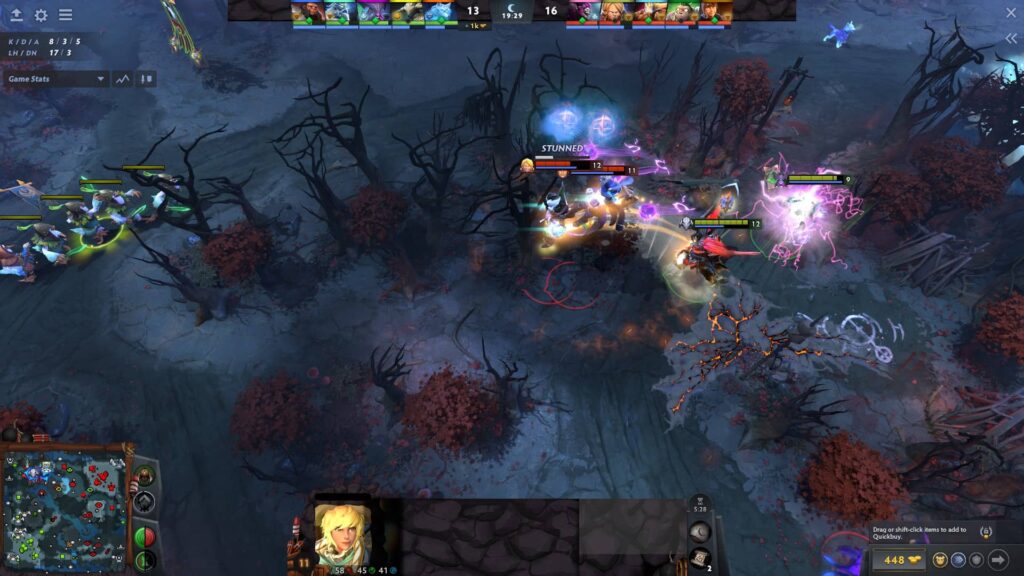
The hard support (position 5) can function in Dota 2 with very few resources. This role sets up the hard carry for a good game from the laning phase, then balances stacking, vision control, and ganking during the mid-game.
| Hero | Core concepts | Brief gameplan |
|---|---|---|
| Lich | Defensive play | Lich uses his combination of slows, shields, and crowd control to keep targets off his allies. |
| Crystal Maiden | Positioning, spell usage | Crystal Maiden is a fragile support with powerful spells and CC. |
| Warlock | Teamfighting, counter-initiation | Warlock needs to be patient before dropping his big abilities during teamfights. |
| Dazzle | Saving allies, healing | Dazzle is great at saving allies from certain death while keeping the whole team healed up. |
| Jakiro | Zone control, CC | Jakiro should combine his spells to control the fight, keeping enemies zoned out from teammates. |
Additionally, hard supports have to think carefully about which defensive or utility item they’ll buy for the game. When bought in the right games, items like Glimmer Cape, Force Staff, and Pavise can save heroes during crucial moments.
Conclusion
Learning how to play Dota 2 is a gradual and admittedly painful process. By starting with beginner-friendly heroes, players can ease their understanding of the game’s complexities by first understanding their goals within their roles.
Start slowly and holistically. Guides may tell you which items to buy and which skill to level up, but this takes away from truly understanding and adapting to each game in Dota 2.
FAQs
How to learn Dota 2 as a beginner?
Dota 2 has a fairly serviceable onboarding and tutorial accessible from the client. After that, try a few bot games before throwing yourself headlong into a real game. Pick characters you’re comfortable with in all Dota 2 roles to lessen information in each game.
What do beginners need to know about Dota 2?
Beginners in Dota 2 first need to learn the basics of laning, like last-hitting and denying. From there, understanding fundamentals like hero mastery, basic itemisation, and when to fight will come naturally as you play.
How to get started with Dota 2?
Players can get started with Dota 2 by completing the onboarding and tutorial process, picking heroes that make the most sense to them, and playing unranked matches after a few bot games. While it will be rough at the very start, matchmaking will eventually get you in a queue with similar skill level players.