TL;DR
- Fortnite has set a precedent for how a game can work with other IPs, such as Halo, Tomb Raider, Marvel, and Star Wars.
- Fortnite became a huge hit because it managed to do two things: define a whole new category for battle-royale games and be a natural fit for esports tournaments.
- The tense gameplay and the amount of loot that could be collected and bought only drew in more players as the years passed.
- Once the 2019 Fortnite World Cup launched, offering a $30 million prize pool, this only solidified the game as a staple at esports tournaments.
- Today, almost every new season features content from well-known franchises, which makes Fortnite even more focused, sustainable, and important.
Fortnite is one of the best battle royale games of all time and a consistently fantastic esports game. Developed by Epic Games and released in 2017, Fortnite was made during a game jam just after the release of Gears of War 3 in 2011, another well-known franchise from Epic. Inspired by other games like Minecraft, Fortnite became the game that many see today.
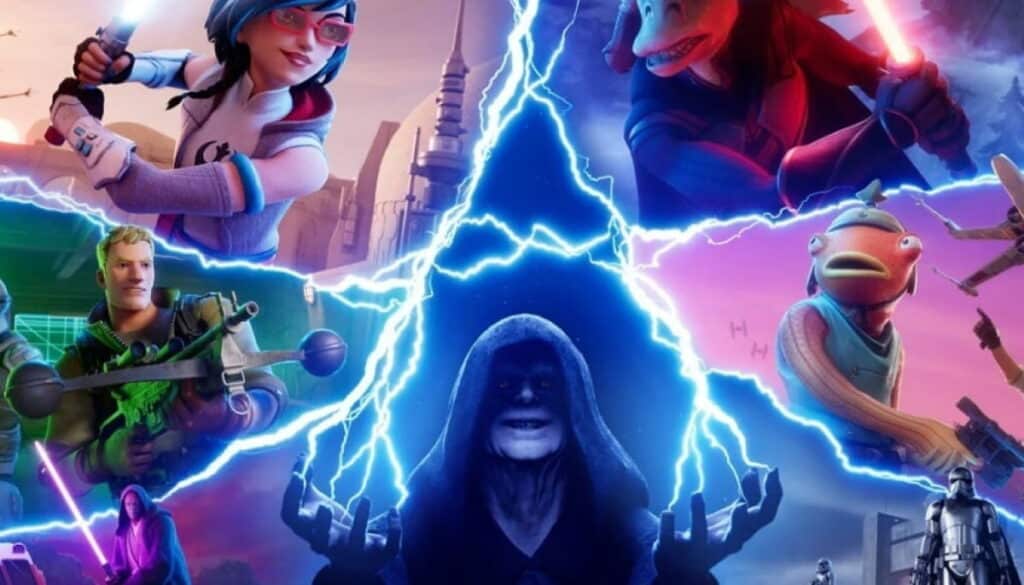
For those unaware, players are launched from a bus, high in the sky, and onto an island, where they must face off against 100 other players, whether solo or in a team, to fight for the title of first place. Since its release eight years ago, Fortnite has set a precedent for how a game can work with other intellectual properties, such as Halo, Tomb Raider, Marvel, and Star Wars. It’s not uncommon to be part of a team featuring Lara Croft, Emperor Palpatine, Sub-Zero, and Master Chief. According to Exploding Topics, there are roughly 650 million Fortnite players, with 1.5 million playing daily, making the game a worldwide phenomenon.
With lots of Fortnite skins, music tracks, and emote reactions to collect and buy, Epic Games’ title is a force to be reckoned with. To mark its almost-eight-year anniversary since its launch, we’ve broken down how the game has evolved, and what Epic Games does to keep it relevant in esports and other markets worldwide.
How has Fortnite’s competitive landscape evolved?
When Fortnite became a huge hit not long after its 2017 debut, it managed to do two things instantly: define a whole new category for battle-royale games and be a natural fit for esports tournaments. What made the game work for players at the beginning was its ease of use from reaching the title screen, to having their character launched from the ‘Battle Bus’, into the wide sprawling map with 99 other players. The tense gameplay that would stem from this objective, as well as the amount of loot that could be collected and bought, which also changes constantly thanks to Fortnite’s frequent battle pass updates, only drew in more players as the years passed.
Once the 2019 Fortnite World Cup occurred, offering a $30 million prize pool, this only solidified the game as a staple at esports tournaments, and continues to do so, six years on. Developer Epic Games has consistently refined and improved Fortnite without majorly changing its core gameplay that’s been there since launch. That’s meant modes like Zero Build and others made by the community have diversified how Fortnite is played in every session, which, in turn, overshadows efforts made by other games in the genre, such as PUBG. Today, almost every new season features content from well-known franchises, which only makes Fortnite more focused, sustainable, and important as the behaviours of players change with every new console and mobile device launch.
What changes does Epic make to keep it relevant?
One of the best decisions developer Epic Games made since Fortnite’s launch was to change the title’s appearance and offerings while keeping the core gameplay intact. For instance, the Battle Pass, launched as part of Season 2 in December 2017, is a cosmetic item bundle that can be bought for 1,000 V-Bucks, Fortnite’s in-game currency. Lasting the duration of the current season, allows players to collect cosmetic items dependent on the levels of their character, as well as claim exclusive items related to the battle pass. This, combined with the ever-changing gameplay twists like drivable vehicles, in-game events like fighting Marvel’s Galactus, or wielding a lightsaber from the Star Wars franchise, keeps Fortnite fresh, and keeps players wondering what could be next.
There are also graphical improvements made frequently, with Epic Games having moved Fortnite to Unreal Engine 5 in December 2021, showcasing real-time reflections and more detailed environments across the map. There are rumours of a new physics update coming later this year, which could make for some viral moments when characters are defeated in close combat. With cross-platform support also part of the game, both PlayStation 5 and Nintendo Switch owners can play Fortnite as part of the team, offering the same experience. This is also true of the game’s mobile port on Android and iOS devices. With Fortnite recently returning to Apple’s App Store in the U.S., this means millions of potential players, both old and new, can play the game again on their iPhone and iPad devices with players on other platforms, further widening the field with the competition.
How does Epic Games’ approach compare to other popular esports?
If we look at Fortnite from a solely esports viewpoint, it’s a leader in the battle-royale category, regardless of the success of similar modes that games like Call of Duty: Warzone offer today. Unlike popular esports games like Counter-Strike 2, League of Legends, and VALORANT, which require careful teamwork and deep knowledge of certain maps and abilities, Fortnite is very accessible to almost any player.
From the moment the player is at the main screen, they can pick and choose which mode they want to play in, as well as the characters they’ve collected or bought previously, and jump straight into a game with 99 other players, with the objective always remaining the same. When the many objectives, which require players to perform certain tasks such as collecting items, destroying objects, or doing certain actions in specific places, all add to experience points to help level up characters, it only adds to the fun of what Fortnite provides. The presence of other modes like No Build and Creative allows players to shape their own experiences too, something that’s simply not present in other esports games like Dota 2 and VALORANT. It’s these unique moments that give Fortnite its own footing at esports events, with viewers keeping track of the modes that have been picked, as well as the best weapons and cosmetics by prolific players. As we fast approach Fortnite’s 10th anniversary in 2027, the title continues to carve out its own niche in the battle royale category, as well as its presence in several esports events, keeping the fun and the mystery of its future seasons intact.
Conclusion
Fortnite is one of the best free-to-play esports games of all time, and for good reason. It’s a game that consistently keeps up with the times, always evolving to stay relevant by way of gameplay improvements and partnerships with on-trend brands from movies, music, and other categories.
Epic Games’ efforts have meant that Fortnite brings in over $5 billion in revenue for the company, and there are no signs of the game reaching its peak with players anytime soon. With Fortnite’s recent return to the Apple App Store in the U.S. and reaching number 1 in the charts, it reaffirms Fortnite as one of the most popular esports games for years to come.
Looking ahead, a ‘Fortnite 2’ seems unlikely. Instead, Epic is expected to refine the game further, making sure that the core gameplay of the player facing 99 others in a huge map remains intact, while keeping it fresh with on-trend content and items. Fortnite has also been confirmed as a launch title for the Nintendo Switch 2 on June 5, further strengthening the game’s position.
FAQs
What season of Fortnite are we currently in?
Fortnite Chapter 6 Season 3 is currently ongoing. It began on May 2 and revolves around a Star Wars theme.
When does the next season begin?
The next season of Fortnite Chapter 6 Season 4 begins on June 7.
When did Fortnite come out?
Fortnite came out on 21 July 2017.
References
- https://explodingtopics.com/blog/fortnite-stats (Exploding Topics)