TL;DR
- Rocket League has 22 competitive ranks split across eight distinct tiers.
- The highest Rocket League rank is Supersonic Legend (SSL), reserved for the best players.
- Your rank is based on MMR (Matchmaking Rating), a hidden value that goes up or down with each win or loss.
- Every new season begins with a soft reset, slightly lowering your rank but keeping your underlying MMR, with no rank decay from inactivity.
- Ranked playlists include Duel (1v1), Doubles (2v2), Standard (3v3), and four extra competitive modes.
- The Rocket League rank distribution shows that most players fall between Gold and Diamond.
How does ranking work in Rocket League? While it may just look like chaotic car football on the surface, it’s a high-speed, mechanically demanding, competitive wonderland where even the slightest mistake can be punished. With how long the game has been around, climbing the ranks in Rocket League takes more than just luck, demanding consistency, game sense, and a strong understanding of how the ranks work.
If you’re a player looking to learn more about the Rocket League ranking system, MMR, and how to climb the ladder in going into 2026, you’re in the right place. This guide will break down everything you need – from a full Rocket League rank order to rank distributions, soft resets, and tips to improve.

What are Rocket League ranks?
As with many competitive online games, Rocket League has a tiered ranking system, built to put you up against players of similar skill. Ranked is the best way to track your progress, improve over time, and give you something to strive for.
There are three main competitive playlists in Rocket League:
- Duel: Previously known as Solo Duel, this is a 1v1 game that relies solely on individual skill and strategy in the arena.
- Doubles: This involves a 2v2 set-up, likely with one player defending and the other on the offence.
- Standard: The most popular ranked mode with 3v3, requiring full coordination and cooperation between all team members.
Beyond the standard playlists, Rocket League offers four alternate ranked modes: Rumble (power-ups), Dropshot (break the floor to score), Hoops (basketball-style), and Snow Day (puck-based hockey). Each brings a fresh twist to the core “car soccer” gameplay.
Aside from playlist types, there’s now a system to address “unintentional smurfing,” meaning if you haven’t played a playlist in a while but have played elsewhere, your starting Rocket League rank in that playlist can be adjusted upwards during placement matches. This helps players avoid being placed too low just because of inactivity.
All Rocket League ranks in order
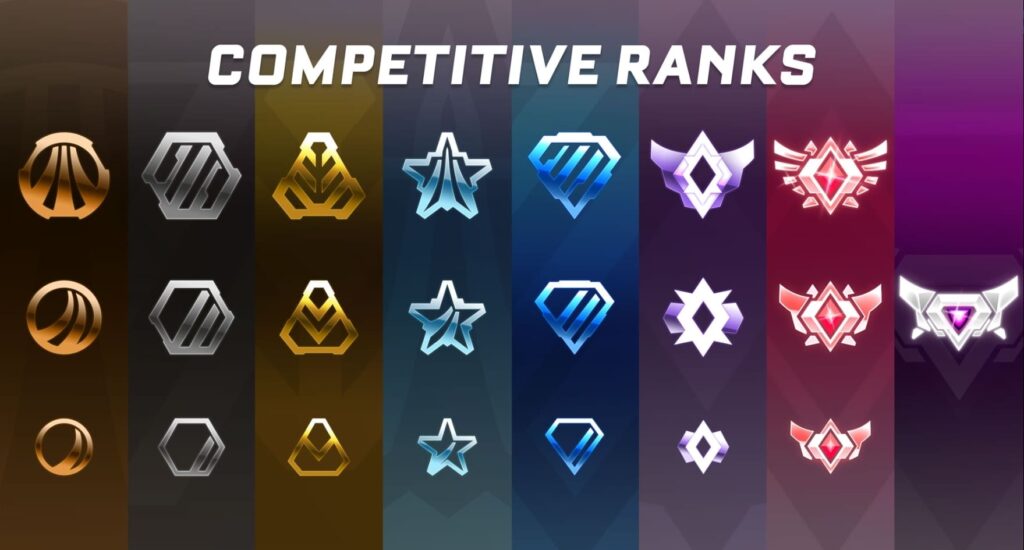
As of 2025, there are a total of 22 Rocket League ranks, each split into four divisions. With the exception of the Supersonic Legend (SSL) tier, every rank in Rocket League is divided into three levels, ascending from one to three.
The Rocket League competitive rank tiers are: Bronze, Silver, Gold, Platinum, Diamond, Champion, Grand Champion, and Supersonic Legend. The Supersonic Legend rank, which is the highest tier in the game, does not have a division inside it and was added to the game in Season 1 when Rocket League went free-to-play.
Here’s a breakdown of the Rocket League rank order, from lowest to highest – I is the lowest division in a skill tier, while III is the highest.
| Rank tier | Divisions | Description |
|---|---|---|
| Bronze | I → II → III | The starting point for new players |
| Silver | I → II → III | Basic gameplay fundamentals are taking shape; slight rise in competition |
| Gold | I → II → III | Home to players with solid mechanics and growing game sense |
| Platinum | I → II → III | The rank where rotations, positioning, and team strategy start to matter more |
| Diamond | I → II → III | Skilled players with sharp mechanics, good reactions, and solid understanding of team play |
| Champion | I → II → III | High-level competitors with strong game sense, mechanics, and consistency. Very competitive matches with precise execution required |
| Grand Champion | I → II → III | Elite tier with semi-pro level play. Deep game knowledge and a master of gameplay mechanics |
| Supersonic Legend | – | The highest rank in Rocket League – around the top 0.01% of Rocket League players |
There is also the ‘Unranked’ tier, which consists of players who haven’t played competitively or are in the process of completing their placements to earn their final rank.
Rocket League ranked rewards
Rocket League’s ranked system offers seasonal rewards based on your highest rank from a competitive season. You must win 10 matches at that rank for that reward; however, this means that it will only take your peak rank if you have shown some consistency there.
These competitive rewards include themed items like decals, wheels, trails, goal explosions, toppers, and banners. Like Fortnite umbrellas, these rewards change per season (e.g.,Season 20 introduces Sonic-themed items such as the Sonic car bodies and other cosmetics) for ultimate exclusivity. Rewards also include player titles for those who reach the Grand Champion or Supersonic Legend tier.
There are also now additional prestige rewards for players who maintain high ranks across multiple playlists. If you hit Grand Champion or SSL in more than one competitive mode, you may get bonus titles or banners that reflect “Multi-playlist excellence.” These were introduced starting Season 19 to encourage players to be more versatile and involved.
How do Rocket League ranks work?
Like many online multiplayer games, the Rocket League ranking system uses an MMR (matchmaking rating) system to determine your rank, match placements, and who you’re matched against.
Every time you play a ranked match, you gain or lose MMR – a hidden number that represents your actual skill level. While you’ll see your visible rank (like Bronze II or Champion I), your MMR is the factor that decides who you get matched with and how close you are to ranking up or down.
When jumping into ranked for the first time, you’ll need to play and complete ten placement matches. These first games help the system figure out where to place you on the competitive ladder. Your performance in your placement matches – wins, losses, and who you’re playing against – determines your starting MMR and rank. If you immediately storm through and win four of your first matches, your next matches may be substantially harder.
As you get your first rank (for many players, this is the lowest rank in Rocket League – Bronze I) and start winning or losing games, you should move up divisions and eventually into the next rank. But the system doesn’t always promote or demote you cleanly after every single match.
Sometimes you’ll win but stay in the same division — other times, you’ll jump a full division or rank after one game. That’s because the system looks at more than just wins: your MMR changes, your recent overall performance, and even the strength of your opponents all factor in.
Additionally, starting in 2024, Rocket League added a safeguard in “rank prediction” during placement matches: If you’re “stale” in a playlist (haven’t played it recently) but have a good rank in others, your placement may be adjusted upwards based on those other playlists.
Rocket League soft resets & rank decay
At the start of every new competitive Rocket League season, all players undergo a soft rank reset. This means your visible rank will drop slightly, but your hidden MMR still influences where you’ll end up after your ten placement matches. The purpose of a soft reset is to level the playing field at the beginning of a new season, accounting for playerbase changes.
Unlike other competitive games, Rocket League doesn’t feature a traditional rank decay. This means you won’t lose your Rocket League rank levels for inactivity. Your rank only changes based on your match outcomes – win to climb, lose to drop. However, taking extended breaks from the game can still affect your performance with mechanical rust. Meta shifts can also lead to lower placements over time.
For example, if you haven’t played in over a year and you were Diamond III, multiple seasons have passed since then, so you can expect to be placed around Diamond I/Platinum III.
For Season 20, the soft reset was applied in all Competitive Playlists, including the new Quads mode, and the reset amount is slightly stronger in playlists where many players were inactive in the prior season (so more visible drop for those who haven’t played).
Rocket League rank distribution in 2025

According to the official Tracker Network, the current Rocket League rank distribution for the standard 3v3 reflects all Rocket League ranks.
The most common rank in Rocket League is Diamond I.
As of December 2025, there are 12.33% in Diamond I, although the exact statistics of Supersonic Legend players haven’t been listed, since Season 21 has only just started.
How to rank up in Rocket League
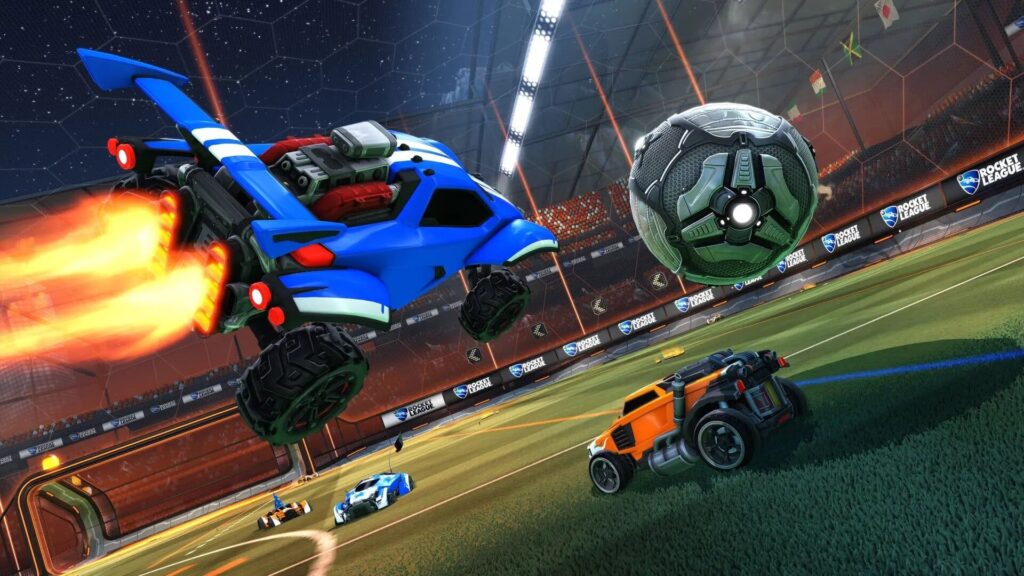
Now that the Rocket League ranks, divisions, and how the system works have been covered, let’s look at how to climb them. Here are five simple tips you can follow to ascend the ranks as efficiently as possible.
1. Master the basics
Before beginning your ranked journey, focus on core mechanics and ensure you have a strong understanding of the basics. Free play is the perfect place to work on aerials, recoveries, dribbling, and so on. Being able to use these mechanics cleanly matters at every single rank, and it’s important to be confident with ball control before attempting more advanced techniques, like aerial dribbles, flip resets, and ceiling shots.
2. Communicate effectively
In any team game, communication is the key to success, and this applies to the standard 3v3 games, allowing you to coordinate plays, strategise, and take advantage of each other’s positioning. While voice chat is advised, you can also use tools like Quick Chat commands for communication. Either way, clear communication will make your team more organised and thus result in more consistent victories.
3. Play consistently
Unless you’re some Rocket League prodigy, getting better will take time. Practice makes perfect, and your game sense, mechanical skills, and communication will be further developed the more you play. If you’re serious about ranking up, make sure you can set aside a couple of hours as frequently as you can realistically manage and ensure you’re focused.
4. Analyse your replays
Whenever you can, especially after losses, watch your own replays to spot mistakes or bad habits. Examples include poor rotations, overextending, or bad challenges. Fixing these repeated mistakes will have a huge impact on your rank and how much you can improve.
5. Stay positive
You can’t win them all, but staying positive and avoiding getting tilted will keep your mind clear and avoid losses from snowballing into more losses. Frustration from mistakes often leads to more mistakes, and it can quickly lead to a vicious cycle that makes the game an unfun grind.
6. Camera & controls
Once you’re confident you know what you’re doing, play around with your camera settings, FOV, and controller deadzone to find what feels most comfortable. Games can often be down to tiny margins, so these changes could potentially be the reason your Rocket League rankings improve.
7. Queueing smart
It’s easier to coordinate with people you have natural synergy with. Playing in a duo or trio of friends is more reliable than relying on randoms, and this added consistency will help build the kind of chemistry that will help you climb.
Taking some time between matches, especially losses, to have a quick break will keep you fresh to continue your climb during sessions. It is also advised to spend 15-30 minutes a session on custom training and workshops focused on improving one skill at a time, building confidence before jumping back into a game.
Conclusion
Grinding through a competitive game can be brutal, and the Rocket League ranked ladder is no exception. No matter if you’re sitting in Silver or within reach of Grand Champion, treat every game as a chance to improve your mechanics, hone your game sense, and dribble past your opponents.
There’s no quick and easy way to rank up fast in Rocket League. Consistency and persistence are key, as well as the mindset to learn from losses and keep a cool head.
The game evolves every season. Playlist changes, balance patches, and meta shifts will affect what kind of skills or strategies will be the most effective. Being adaptable and willing to learn more is vital.
FAQs
How to check your rank in Rocket League?
To check your current rank, head to the ‘Play’ menu and select ‘Competitive.’ Here you’ll see your rank level for each ranked mode, including your current division. You can also use a third-party Rocket League rank tracker like Tracker Network for more detailed breakdowns – just type in your Epic Games ID.
What does rank disparity mean in Rocket League?
Rank disparity is when a party’s players are too far apart in rank, and thus skill level. If this gap is too wide, you will be unable to queue for competitive modes together in an effort to keep matchmaking as fair as possible.
What ranks can play together in Rocket League?
Any player within three ranks can queue together, meaning that a Silver III player can play with God III players, but not Platinum I.
What is the highest rank in Rocket League?
The best rank in Rocket League is Supersonic Legend. It’s the top 0.05% of Rocket League players and the elite tier of competitive play.
What is the average rank in Rocket League?
As of 2025, the average rank in Standard 3v3 sits around Gold III to Platinum II.
What is the best rank in Rocket League?
“Best” is subjective, but Supersonic Legend is the pinnacle of competition as the highest rank in Rocket League.
How long does it take to reach Supersonic Legend in Rocket League?
There’s no set answer, but realistically, only a tiny fraction of players ever get there (0.05%). It usually takes years of grinding and thousands of hours.
Do casual games help your rank in Rocket League?
Playing casual games won’t affect your MMR or Rocket League rank, but they are useful when learning, trying new mechanics, experimenting with strategies, or warming up before another ranked season.
REFERENCES
- What are Rocket League Competitive Ranks? (Epic Games)
- Rocket League (Epic Games)
- Skill Rating Distribution (Tracker.GG)