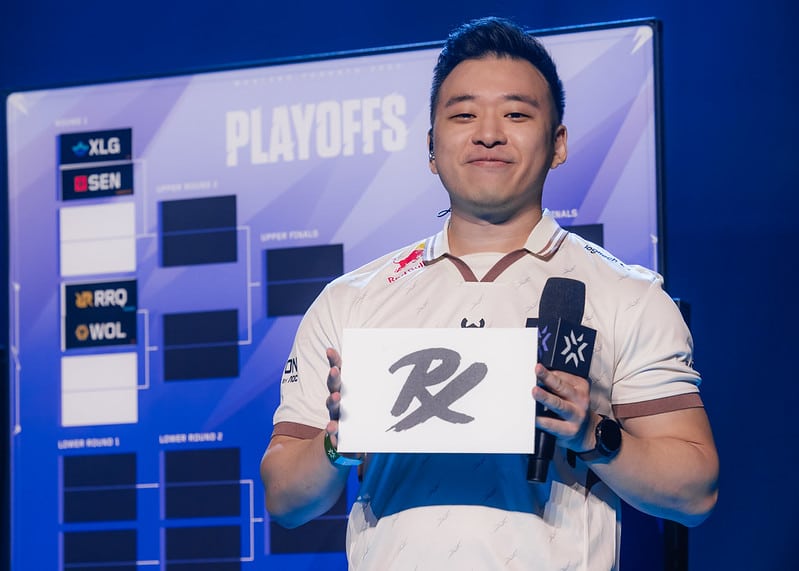
VALORANT Masters Toronto has concluded its opening Playoffs matches, where fans experienced the four VCT Stage 1 champions on the event stage for the first time. Despite being allowed to pick their first opponent among the Swiss Stage teams, every first seed – G2 Esports, XLG Esports, Fnatic and Rex Regum Qeon (RRQ) – lost their Toronto debut.
These surprising results have opened a discussion within the VALORANT esports community about the alleged ‘first seed curse.’ Some fans and professionals argue that qualifying as the first seed for a Masters event brings more disadvantages than benefits with Riot’s current format.
To add some perspective to this debate, Esports Insider has scrutinised what actually happened with the first seeds at VALORANT Masters Toronto and whether the first seed curse is real.
Losing the Map Veto
Part of the map veto strategy is identifying your opponent’s best maps versus those of your own team and then directing the map bans and picks to gain the best possible outcome. The first seeds at Masters Toronto should have come into their map vetos with an advantage since they had already seen some of their opponents’ matches play out during the Swiss Stage.
Match VODs from before Masters Toronto do not give reliable intel since these hail from the discarded Tejo-meta.
However, the first seeds picked or left open maps on which their rivals had shown significant prowess. The most extreme example was the map veto between XLG and Sentinels, where XLG picked Sentinel’s arguably best map, Sunset. The Americas squad was then able to select its second-strongest map, Lotus.
Overall, it seemed like the first seeding teams tunnel-visioned on the maps where they felt most comfortable, neglecting to consider how these maps might benefit the Swiss Stage contestants.
Playing to Win Versus Playing Not to Lose

To survive the Swiss Stage, teams had to reveal most of their cards, giving away their preferred maps, team compositions and strategies. Meanwhile, those with direct Playoffs buy-ins could analyse their rivals from the sidelines and develop their tournament strategy accordingly.
This is especially important given the drastic meta shift after VCT Stage 1. Tejo fading into obscurity essentially created a blank canvas for teams to innovate. A well-prepared and creative team composition will often surprise opponents, making it challenging to adapt counter-strategies on the fly.
A good example of this is Gen.G, which has become one of the event favourites, thanks to its clean protocols and creative agent combinations. Gen.G was the first competitor in Toronto to utilise Deadlock on maps like Sunset. Similarly, the Pacific team has been at the forefront of the emerging double-controller meta featuring Omen and Viper.
In contrast, all first seeds chose to play safe team compositions in their opening games. Due to their popularity in 2023/24 before the Tejo-meta, most of these comps are well-studied and easy to revert back to. However, this is also their weakness. Other teams in Toronto have plenty of experience countering these common strats and setups.
In hindsight, it seems as if the first seeds were punished for wanting to avoid the risk associated with innovative, out-of-the-box strategies. They played not to lose instead of playing to win.
Are First Seeds at a Disadvantage?
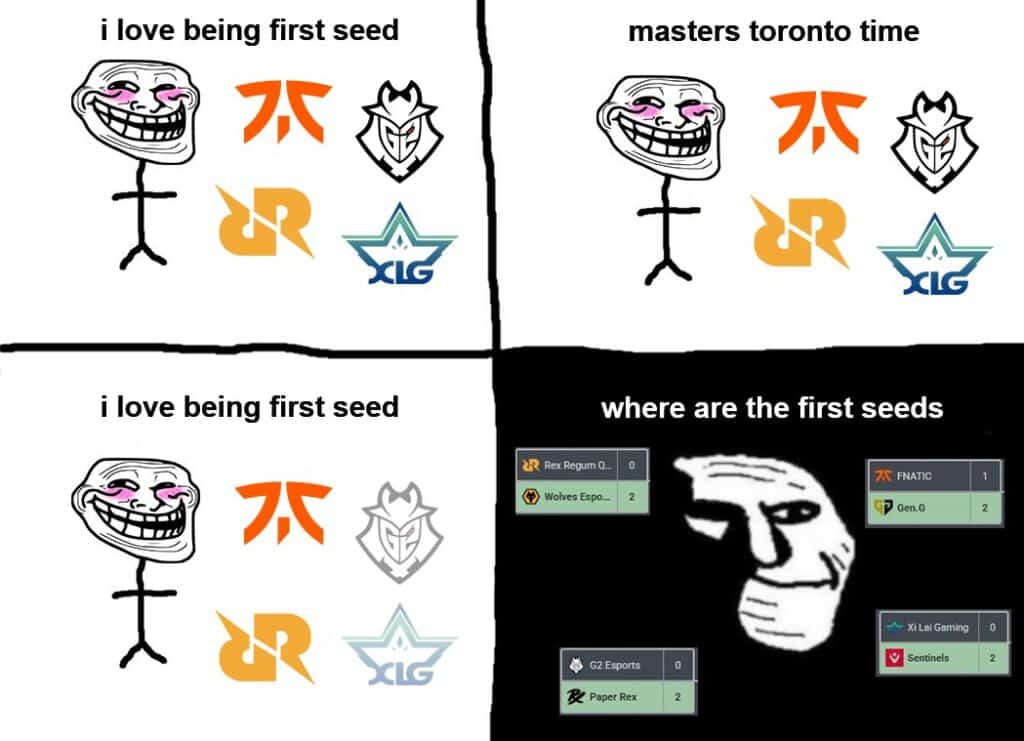
To answer this question, let’s first look at the supposed benefits of being a first seed. As previously mentioned, first seeds have a longer ‘break’ between their regional tournaments and their first Masters matches, giving them additional time to prepare. This also allows them to gain intel on the Swiss Stage teams without revealing their own game plan.
The most obvious advantages are that they do not risk early Masters elimination and gain the privilege of choosing their initial opponent among the top four Swiss Stage participants.
While the professional VALORANT esports scene appears to be divided on this topic, many professionals argue that these promised benefits are partially or fully outweighed by the disadvantages of being a first seed.
For instance, G2 Head Coach Josh ‘JoshRT’ Lee highlighted the lack of momentum his team experienced after skipping the Swiss Stage: “Skipping straight to playoffs doesn’t feel like much of an advantage in a tournament like this, and I’m sure most 1st seeds would rather play groups.
Tournament momentum is real. Now that I’ve experienced both sides, I’d rather play group stage and take the Champ Points and trophy as the real reward for winning our region.”
The numbers seem to support JoshRT’s argument as Masters Tokyo 2023 was the only Masters iteration where more than half of the direct Playoffs seeds won their opening matches.
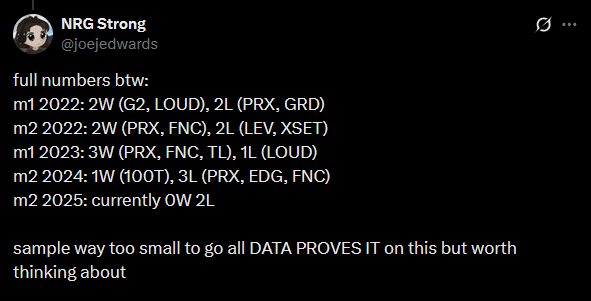
Yet, it is also evident that many factors and decisions impact a team’s success or failure. Ultimately, a winning team should not have to rely on momentum alone. Although the easiest solution, the disappointing results of Toronto’s top seeds cannot be blamed on the first seed curse entirely.