France-based esports organization Team Vitality fields one of the most successful rosters in the history of competitive gaming. And it’s not what you might expect.
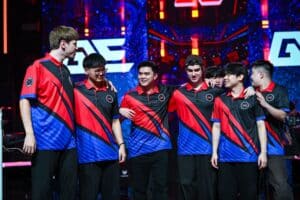
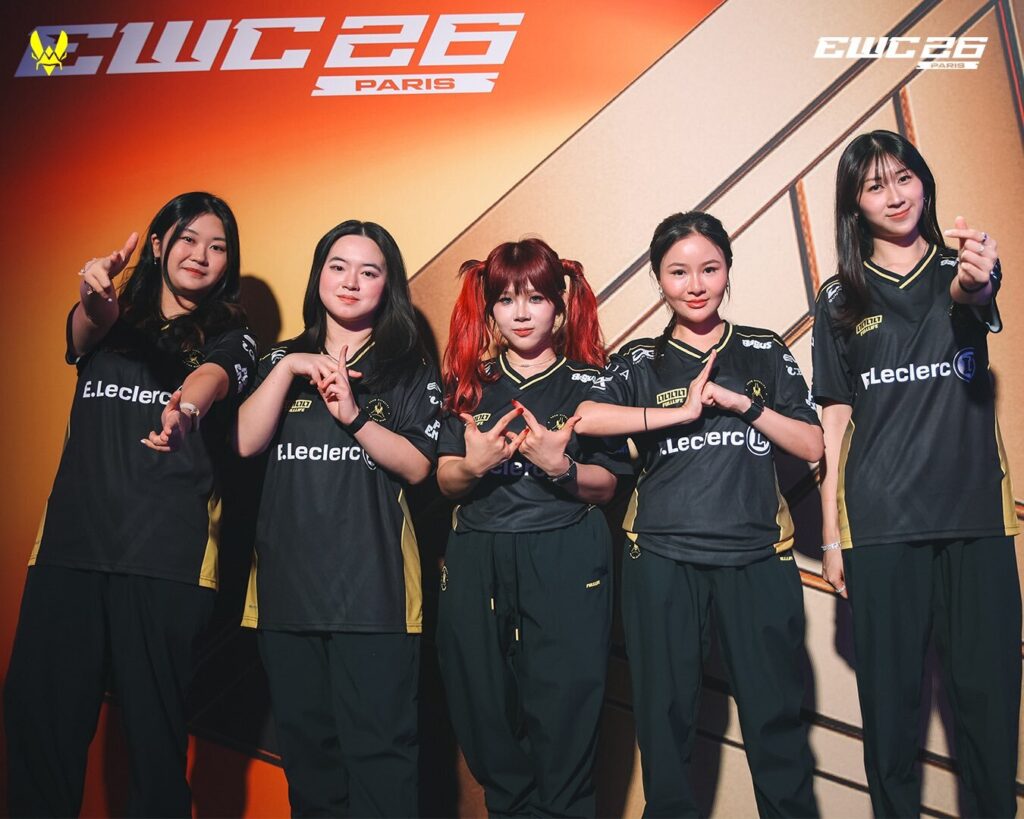
Team Vitality’s women’s Mobile Legends: Bang Bang (MLBB) team just won its fourth championship title at the Esports World Cup (EWC) 2026. According to esports data platform Esports Charts, 565,483 peak viewers witnessed Team Vitality’s historic achievement, making this the most-watched edition of the MLBB Women’s International (formerly Invitational) to date.
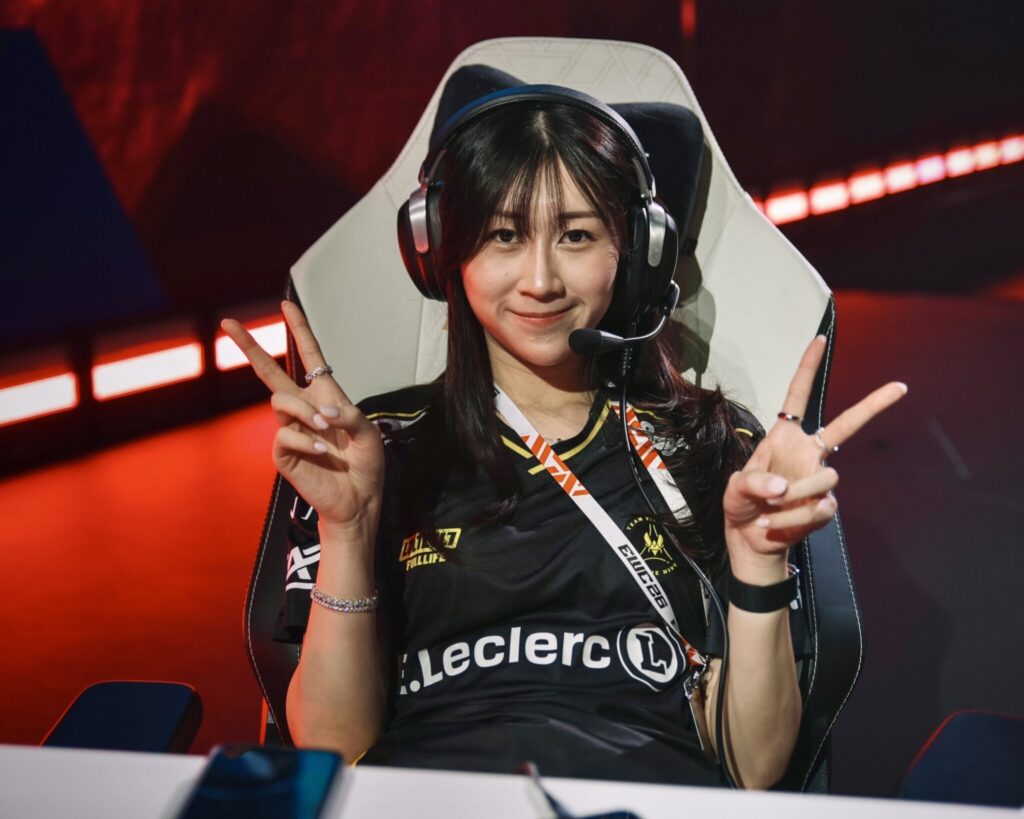
As an incredibly accomplished women’s mobile esports roster represented by a Western organization, Team Vitality MLBB takes a unique position within the global esports landscape. At the EWC in Paris, the team showcased MLBB’s competitive excellence to a Western esports audience largely unaware of or skeptical of mobile esports, while simultaneously challenging gender stereotypes in a male-dominated industry.
Esports Insider spoke to the Indonesian star roster about the dedication required in their discipline and their role in spearheading women’s esports.
Mobile esports are still held back in the West due to “mobile stigma”
What are the most popular esports titles in the West? Counter-Strike? League of Legends? VALORANT? Certainly not mobile titles. And this is despite the likes of MLBB, Free Fire, and PUBG Mobile having already established massive fandoms in the East, particularly across Southeast Asia.
For instance, the 2024 League of Legends World Championship is the most-watched esports tournament to date, with a peak viewership of 6.9 million. Its 2025 and 2023 editions occupy the second and third ranks, respectively. In fourth place, however, sits MLBB’s M7 World Championship with 5.7 million peak viewers. This is followed by yet another mobile esports event, the Free Fire World Series 2021, which peaked at 5.4 million viewers.
So, what is holding back mobile esports in the West? I found an intriguing online discussion about this issue, in which the central argument was that “Western media dominates the world, and it is heavily biased against mobile games.” Outside of esports-specific media outlets, major mobile esports events appear to be discussed less frequently and less thoroughly than “traditional” esports titles.
This means that gaming enthusiasts in Western regions are less likely to get invested in a mobile game and its competitive scene.
Others argued that it is not a matter of bias but of “simple supply and demand.” Because mobile games lack global reach beyond Southeast Asia, Western sponsors show little interest in mobile esports events. This creates a cycle of reduced global investment, leading to less global reach and even less global investment.
In addition, “mobile stigma” remains alive and well across Western esports fandoms. Mobile games are heavily associated with predatory prizing models, for example. Most notably, the “free-to-play” pricing strategy is used by many mobile titles, which involves no initial charge to access a game in exchange for microtransactions embedded into the long-term playing experience.
In our exclusive interview with Team Vitality’s MLBB team, the sister duo of Michelle “Chel” Siswanto and Cindy “Cinny” Siswanto highlighted accessibility and convenience as unique aspects of mobile esports. MLBB can be played almost anywhere, any time, on a device that is significantly more affordable than other gaming consoles.
Moreover, Cinny pointed out another factor that drew her towards MLBB esports: “The meta in Mobile Legends keeps on changing very fast. So, it’s really, really fun to play with. Like, at the start of the month, this is the meta. And then at the end of the month, it’s a different one. […] I guess that’s what makes Mobile Legends fun.”
Role models for competitive excellence
Another aspect of “mobile stigma” involves a sense of loyalty many veteran gamers in the West have carried towards the gaming consoles they grew up with. This can also create negative preconceptions towards other gaming consoles, including phones.
Mobile esports are still a young phenomenon compared to the likes of Counter-Strike and League of Legends. Furthermore, mobile titles remain heavily associated with casual gaming in the minds of Western game consumers. As a result, some Western veteran gamers consider mobile esports titles less legitimate because they believe these games require less mechanical skill.
Team Vitality’s MLBB roster cannot single-handedly untangle all stereotypes attached to mobile games. However, stories such as theirs showcase that consistent success in their discipline demands both excellent in-game mechanics and dedication.
The Team Vitality core has won four out of five MLBB Women’s International (MWI) trophies since its formation under Bigetron Era in 2019. Five years later, the Bigetron Era women’s team was acquired by Team Vitality, and so was the entire Bigetron Esports brand last year. According to Gold Laner Chel, the team followed a thorough training regimen specifically in preparation for the MWI at the EWC 2026.
“I think we started practicing for the EWC like two months before the EWC. And it was pretty intense, our preparation”, outlined Chel. “We started scrimming from like 1 pm, but then we did warm-up, we did some ranked games from 11 am, and then we finish[ed] at 9 pm. And outside of the scrim hours, we also did ranks on our own. Like, we play in our free time.
“So basically, we just have a full day of playing ranked games. And six days a week.”
Consistency through experience and cohesion
As is the case for most, if not all, esports disciplines, it takes more than in-game grind and mechanical skill to reach the highest competitive heights in MLBB. Sure, a prodigy with sharp reflexes and lots of raw talent might challenge veteran players. But to maintain a dominant position within an esports scene, experience and team cohesion are crucial.
That is also what Viorelle “Vival” Chen emphasized when asked how Team Vitality has achieved its level of consistency across several years and MLBB’s ever-changing meta: “One of the main factors is that I have been playing with my team for so long, so I’ve gotten used [to it], and I know what our gameplay is like. All I have to do is execute it right.”
The player added: “And another factor is I’ve been a Jungler for so long, I’ve been playing Mobile Legends for so long, as well, and I know what my role is for. What should my role be in the team? After playing for so many years, I pretty much know the basics, the theories of my role. So, all I have to do is execute it every day in practice, in scrims, and eventually, in tournaments. So, I think that’s how we stay consistent.”
Vival’s teammate Vivi “Vivian” Indrawaty echoed this sentiment. When talking to Esports Insider, the “Mother of Tanks,” as she’s known in the MLBB esports community, opened up about her journey of finding the in-game role that best matched her knowledge and skillset. This led Vivian to transition from the Jungler to the Roamer role.
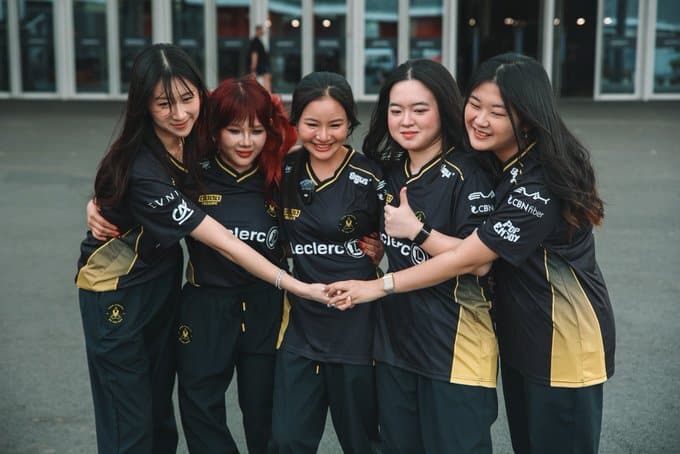
While it can take months to build synergy and trust within an esports roster, Team Vitality already had a tightly-knit duo at the team’s inception. Cinny shared with Esports Insider how competing alongside her older sister Chel helped her during the early stages of her esports journey.
“I feel that my sister and I have the same passion,” explained Cinny. “So, we just wanted to go into the professional world together. Like at first, I didn’t know everyone, right? And having my sister with me is like I’m having a trusted person. So, I guess that’s how it started.”
Defying gender roles inside and outside the game
In the male-dominated esports industry, seeing that one of the most historically accomplished teams is a full women’s roster is inspiring in itself. Esports still lacks diverse gender representation on its biggest stages.
Therefore, the few yet ever-growing number of female role models in the field plays a vital role in empowering girls and other women in their esports ambitions.
As brought up by Team Vitality’s Venny “Fumi” Lim, this applies to in-game representation, as well: “Yes, I see myself as a role model for female gamers out there. Especially, [because] I am an EXP Laner, and I realize that my role – I don’t think a lot of female gamers want to play my role because […] there’s a factor of the heroes. The heroes are monstrous types…
“The point is, not a lot of female gamers, female Mobile Legends players, want to play my role. And I see myself as a role model for that. Those female gamers out there who want to play as an EXP Laner can look up to me.”
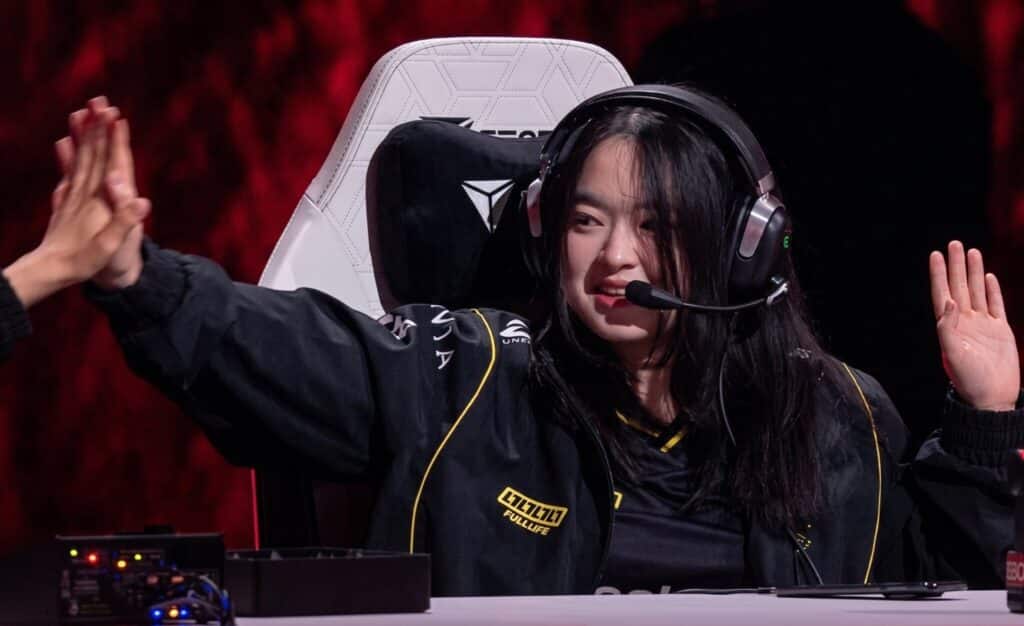
The rising MWI viewership numbers indicate that women’s MLBB esports is on an upward trajectory. But when asked about her vision for the scene, Vival argued that not all regions are developing in the same direction.
“For the future, I really hope that MOONTON themselves want to keep on improving the women’s scene across the world. But I’m going to highlight my country, because the regeneration and the women’s scene in our country, Indonesia, has been declining over the years,” the MWI 2026 MVP told Esports Insider. “It’s not as bright as compared to the early COVID years. That’s where it started. And yeah, I really hope that MOONTON themselves can take notice of this and find ways to maybe improve the ecosystem.
“What I see in comparison to other countries – I see that other countries, they still have more active female tournaments other than EWC. I think that’s what makes the regeneration outside of our country even better. Like in this year’s EWC, we saw a lot of female teams from other countries that have improved. And even dark horses are emerging in this year’s MWI. […] That’s my hope for the future of Mobile Legends women’s [esports].”