Ever since Riot Games introduced the partnership system in VALORANT esports, Tier 2 has existed in an uncomfortable position. It was important enough to be called the foundation of Tier 1, but it rarely received enough spotlight, investment, or care to sustain itself.
As a result, multiple organizations left the scene, as the sheer amount of investment required to run a team simply didn’t make sense. After years of criticism, Riot Games finally decided to amend the rules in 2026 and beyond, especially after organizations such as G2 Esports (with The Guard roster) and Nongshim RedForce defeated some of the best teams to lift trophies.
The publisher introduced Path to Champions while announcing a more open format starting with the 2027 VCT season to “make every match matter.” And that did not just spice things up by creating a new mix of teams, but exposed Tier 1 in exactly the way a VALORANT esports fan might have imagined.
Path to Champions changed the equation
Path to Champions eliminated Ascension tournaments and directly placed the top Challengers teams into a newly introduced Play-Ins stage in VCT Stage 2 leagues across all regions. Not only that, but the qualified teams also received a $75,000 stipend to cover costs such as travel, visas, and more.
While this did not solve all of Tier 2’s concerns, it kept the competitive pipeline alive and gave Challengers teams a real shot at reaching the most prestigious event of the VCT season.
It was not just a stress test for Challengers teams, but also an eye-opening challenge for the lower-ranked teams in the VCT Stage 2 Group Stage — one that multiple organizations failed.
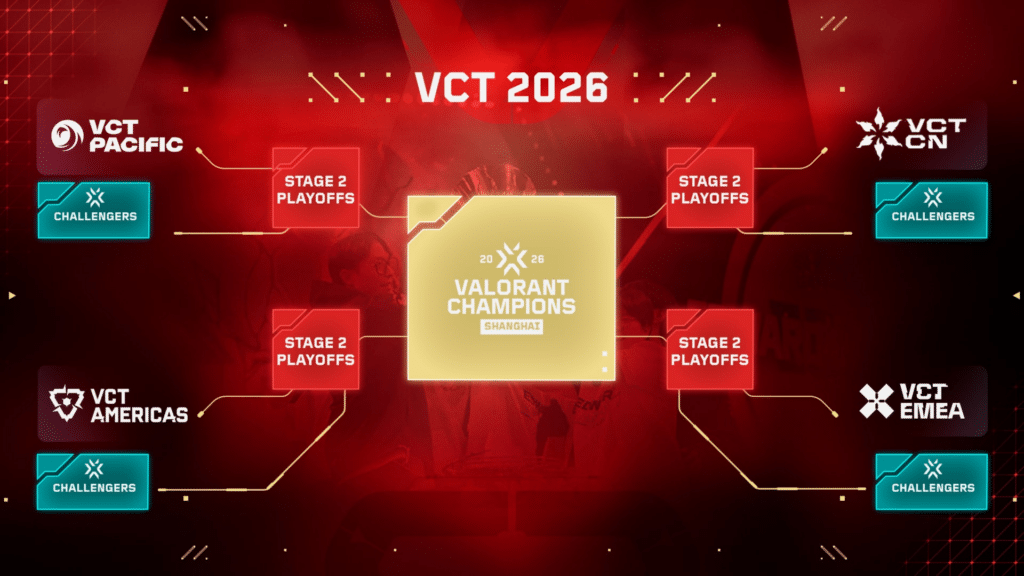
Starting with EMEA, three out of four Challenger organizations placed in Play-Ins defeated some of the strongest teams, such as Fnatic and Team Heretics, to qualify for the Playoffs.
That is already a huge statement. Teams that fans expected to be title contenders are entirely out of the race because of organizations stepping onto the international stage for the first time.
Among them, Enterprise Esports, featuring Martin “Magnum” Peňkov and Patryk “paTiTek” Fabrowski, is continuing its impressive run in the Playoffs after kicking Team Vitality into the lower bracket to proceed to the Upper Semifinals.
“VCT teams are usually playing way to boring, and watching Tier 2 has always been way more fun for me. Nice that someone is calling out the frauds this time,” VALORANT caster Erik “Qwikk” Persson stated after Enterprise Esports made it to the Playoffs.
“These T1 teams are getting exposed left and right, and we’re here for it. Better to have competent T2 teams represent EMEA on international events than these T1 fraud teams,” added an X (Twitter) user.
I personally did expect Enterprise Esports to perform better than other Tier 2 teams because Magnum and paTiTek are literally two of the most innovative minds in the region.
However, their first win against Fnatic was considered a fluke by part of the community, so, as someone who has always supported underdogs, seeing Enterprise silence the crowd after a massive upset against Team Vitality’s star-studded roster would be one of my favorite moments.
A similar story is unfolding in the Stage 2 Pacific Play-Ins, and this time, it is not just Nongshim RedForce disrupting the giants. Sharper Esports, a Thai org from Challengers Southeast Asia, has won two back-to-back series in the upper bracket to set up a matchup against DRX for a spot in the Playoffs.
That said, Tier 1 teams have been largely unchallenged in the Americas and China, showcasing just how competitive both regions have been internally. But that does not take away from the threat coming their way in 2027.
Comfort made Tier 1 vulnerable
The experiment intended to test Tier 2 ended up revealing that Tier 1 is far more vulnerable than we thought, and watching it happen was shocking and oddly satisfying.
So, what caused it?
Well, partnered organizations have enjoyed superior resources such as better financial arrangements, facilities, coaching staff, support from Riot Games, and more.
In addition, VCT has served as a long-term safety net for them, since there was no threat of relegation. On the other hand, Tier 2 teams, operating under tighter budgets and greater existential pressure, were forced to make the most out of every opportunity.
Rosters weren’t formed around big names, but raw talent and synergy, something that has historically benefited teams far more in a competitive title like VALORANT. These teams were constantly forced to innovate because of fierce competition and razor-thin margins for error.
Of course, that doesn’t mean VCT teams stopped trying. They are, after all, playing among the best in the world to reach the ultimate goal of lifting the VALORANT Champions trophy. The problem is that there have been virtually zero consequences for not performing at the highest standards.
Moreover, there will always be a surprise factor that underdogs bring to the stage, while there is a wealth of data and VODs available for Tier 2 teams to study and prepare against their opponents. The question, however, will be whether they can maintain that level of performance over the long term.
A healthier VCT needs more than partnerships
The Path to Champions isn’t perfect. Tier 2 teams still face long-term disadvantages, while concerns around competitive integrity in some lower-level tournaments will remain.
But nothing is perfect, and for the first time, Challengers teams have a genuine shot at directly making it to the biggest VALORANT stage in the world.
More importantly, this establishes a healthier level of competition within VCT, as a comfortable circuit can quickly become stagnant. Riot Games is taking that even further by changing the entire circuit with the introduction of the Open Qualifiers and Cups.
In the upcoming VCT season, partnered organizations will receive direct entry into Kickoff only, except in China. From there, they will have to earn their place in the remaining tournaments through their performance.
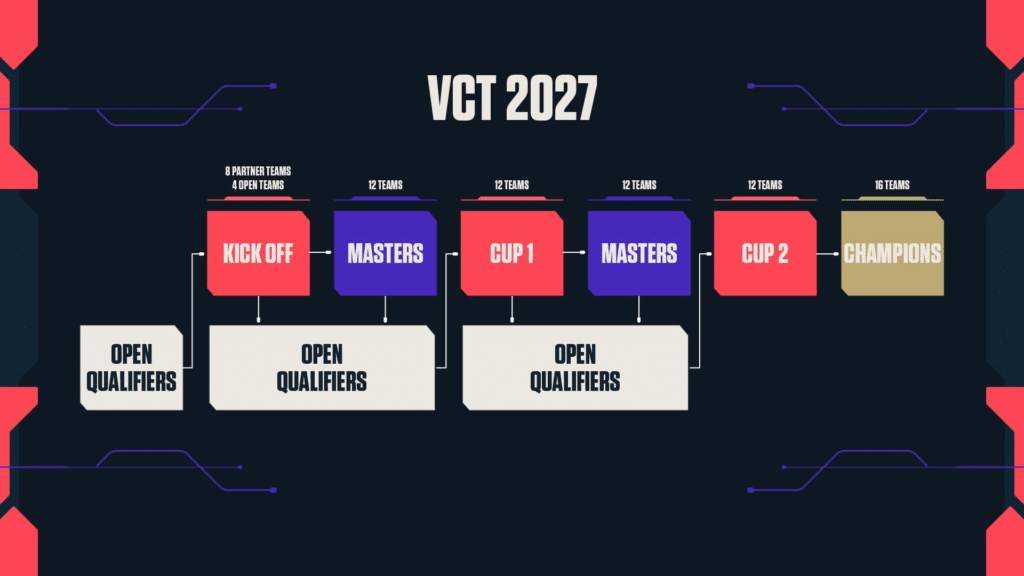
In VCT China, partnered and visitor teams will receive direct entry into Kickoff and both Cups. In addition, VCT Pacific will feature a Last Chance Qualifier for South Asian and Oceanian teams to battle for qualification into Kickoff and the Cups.
With these changes, Tier 1 teams will be forced to adapt faster, drastically improve their rosters, and take their overall development more seriously. Otherwise, they could miss out on virtually every VCT event except Kickoff.
Either way, all of Riot Games’ decisions are extremely important and healthy for the future of VALORANT esports, because every competitive ecosystem needs a steady flow of new talent and investment at every level to grow.
Not only that, but I believe this would bring back some of the lost viewers who stopped watching VCT because of the predictability of the results, as evidenced by the drop in viewership.
In short, underdogs were given a chance, and they held up a mirror that Tier 1 teams couldn’t look away from. It is an uncomfortable pressure for them and multiple teams would fall under it for sure, but short-term mess is the price of a healthier, more competitive VCT ecosystem.