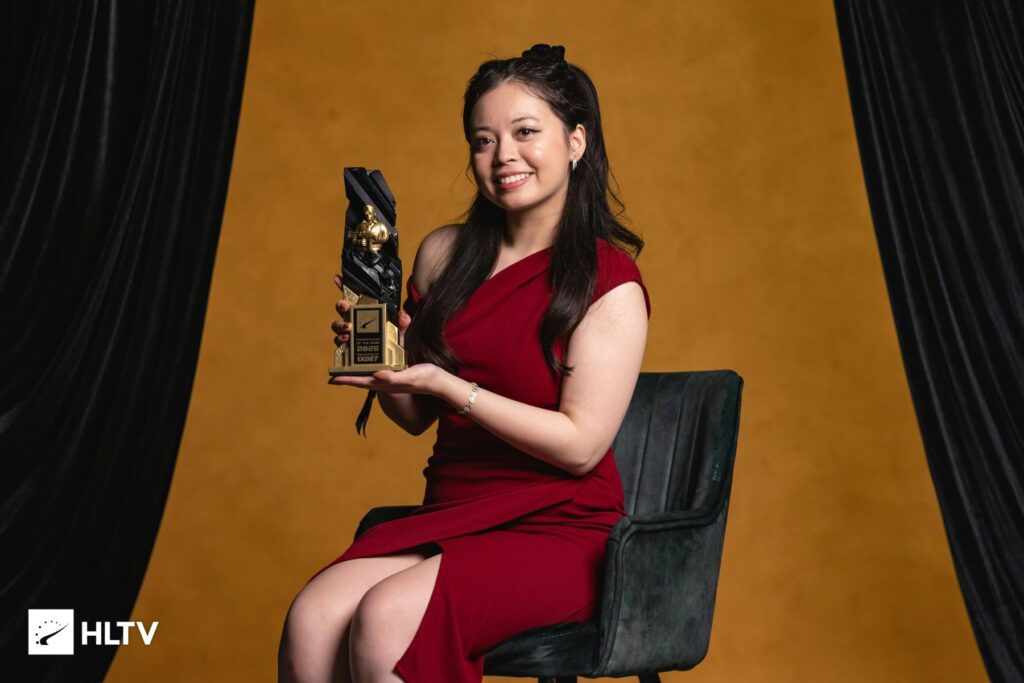
On August 8th, one of the most prominent players in the women’s Counter-Strike 2 scene, Mayline “ASTRA” Champliaud, made waves by announcing her transition from CS to VALORANT esports.
According to HLTV’s Women’s Player of the Year 2025, “the recent news of female CS falling apart and the lack of tournaments coming up” led to this decision. Nine days later, ESL Impact League Season 7 champion FURIA moved its entire CS roster to VALORANT.
In light of such recent developments, uncertainty has seemingly reached a new high within the women’s CS community. “I’ve never witnessed such a massive downgrade to a women’s scene,” posted former Imperial Female player Zainab “zAAz” Turkie on social media.
Esports Insider sat down with FlyQuest Chief Operating Officer (COO) and FlyQuest RED Director Stephanie “missharvey” Harvey, as well as esports broadcast talent Leyna “Affinity” McQuillin, to discuss the current state of women’s CS and why the scene is struggling.
- Is Counter-Strike 2 going soft? Esports fans react to new comms rule and debate hate speech vs. trash talk
- “The spirit of the FGC is still there”: Cuddle_Core talks old-school gatekeeping, grassroots to mainstream, and making a career out of Tekken
- “Our preparation was pretty intense”: How Team Vitality’s MLBB roster breaks stereotypes about mobile gaming and women’s esports
From ESL Impact to teams disbanding: The state of women’s CS
To make one thing clear, women have always been part of the CS esports community, whether as competitors, production crew, or fans.
However, the ESL Impact League launched in 2022 to give women and other marginalized genders a safe space to compete on a completely new scale: better funding, higher production value, and, most importantly, a structured circuit to incentivize investment from esports organizations into the women’s ecosystem.
The start of 2025 was somewhat of a highlight for the scene, with Imperial Female making massive headlines as the first women’s team to qualify for Intel Extreme Masters (IEM) Katowice. But only nine months later, ESL Impact organizer ESL FACEIT Group (EFG) announced the indefinite suspension of the league.
“From having talked to them, they still wanna do something at some point. But […] they have big projects, and they have to take their priorities somewhere,” missharvey told Esports Insider. “That format was costing them a lot of money. It wasn’t the ideal format in my book […] for money, for cash flow, for stability, to make sure it would last a long time. […]
“It was perfect for us competitors, but, you know, without massive partner investments, it wasn’t a sustainable circuit.”
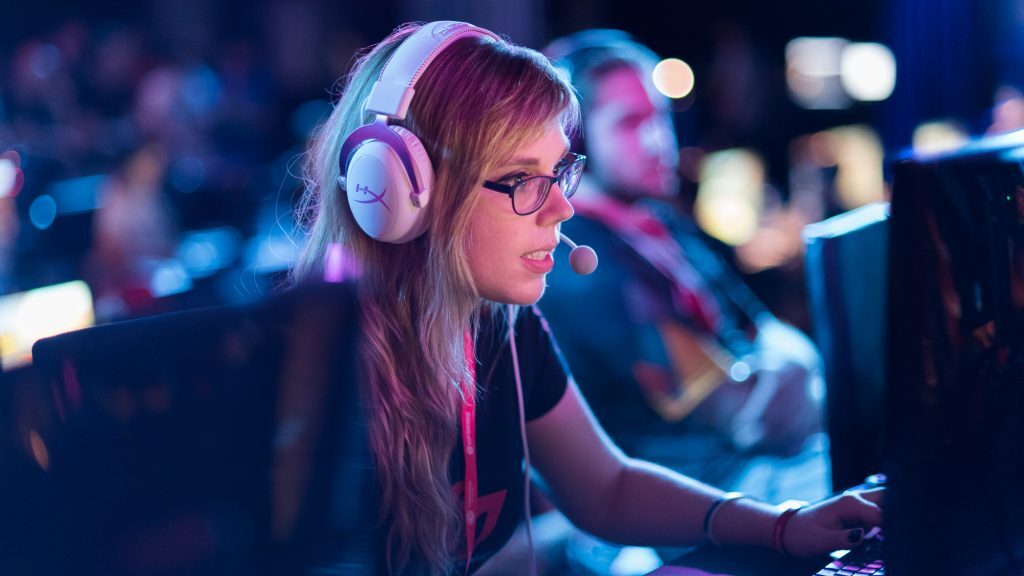
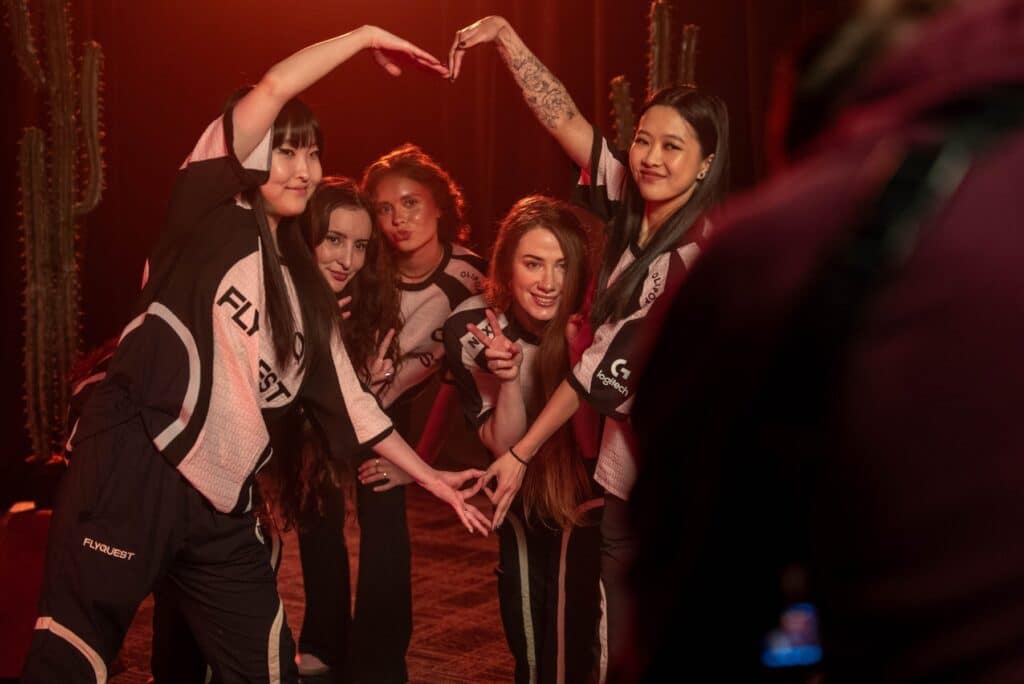
missharvey has been deeply involved with women’s CS for over two decades. Starting out as a professional player, she transitioned to coaching in 2019, and has taken on various esports roles ever since. Today, she works as the COO at North American esports organization FlyQuest. She also leads the esports organization’s FlyQuest RED initiative, which includes three women’s rosters across CS, League of Legends (LoL), and VALORANT.
In our interview, missharvey reflected on how women’s CS has developed throughout her time in the scene: “So I started competing in [2003] in Counter-Strike, and this is the first time where I can confidently say there is no future women event in Counter-Strike planned or announced or that we’re looking forward to.
This has never happened before because there was always at least [the Electronic Sports World Cup], which is now known as EWC. […] And that was happening at least once a year. So you knew at least once a year, you were gonna show up. It died in 2009, and we were doubting what was gonna happen. And then it came back in 2010. That was also another moment of uncertainty. But even though it died in 2009, there was still regional events a little bit left and right for the women communities.”
“Yeah, I am bleak when it comes to the international level of competition,” she added. “And it’s especially really heartbreaking because Counter-Strike and Impact League was like one of the healthiest it had ever been when it came to talent growth and support and stability.”
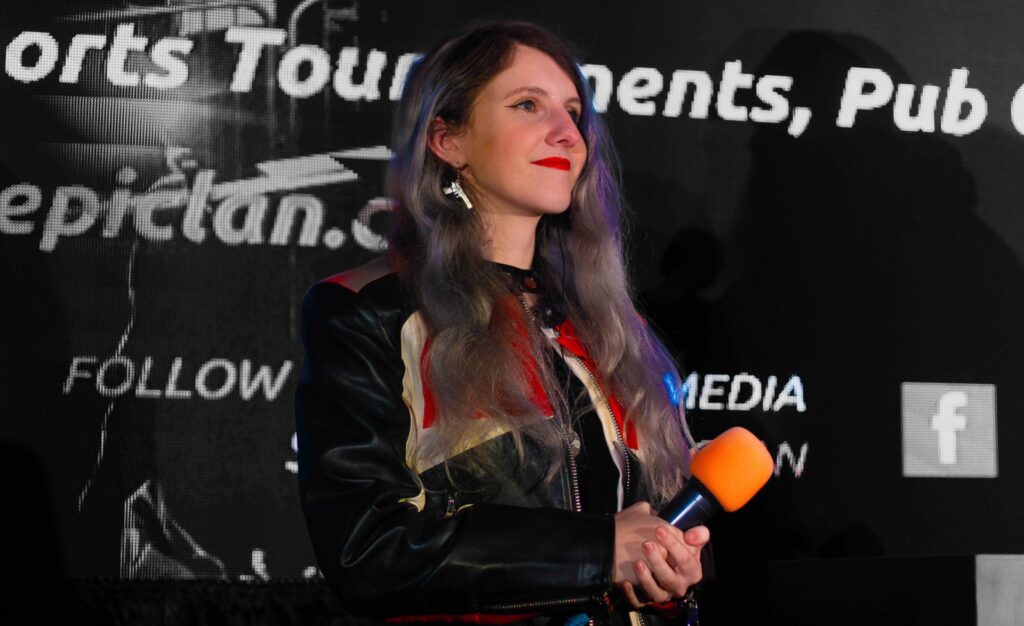
CS caster Affinity, who made a pivot towards VALORANT at the beginning of the year, expressed a similar sentiment: “It truly kills me inside to say this, but I don’t just believe it’s declining: I think it’s on life support right now. Ever since Impact ended, there’s been much less of a drive for women to put the grind into competitive CS.”
Affinity is known within the women’s CS community for her undying support and dedication, having worked on competitions such as the IESF Female World Esports Championship, several ESL Impact seasons, and ELITE FE events.
Her career pivot was influenced by various factors, including a desire to work with her VALORANT casting duo EKO and a lack of opportunities in CS. Today, she mainly platforms women’s CS through watch parties and unpaid casting on her own channel.
Regarding the state of women’s CS, Affinity further explained: “There’s also a major catch-22 going on: with no tournaments, no orgs want to sign teams, but because there are no teams, nobody wants to organize tournaments, and it’s a vicious cycle right now.
“And then with no big, easy-to-find tournament platforming these women, the next generation of women have nothing to aspire to, nobody to look up to and identify with.”
Counter-Strike versus VALORANT: It starts in the game
With so many stakeholders migrating from women’s CS to VALORANT, the latter’s league for women and other marginalized genders, Game Changers (GC), has become somewhat of a role model for driving inclusion in esports. One glaring difference between the two games is Valve’s laid-back development approach for CS versus Riot Games’ more controlling direction of the VALORANT esports ecosystem — for better or for worse.
VALORANT is still missing a lot of community-driven features compared to CS, but as missharvey put it, “[Valve are] kinda like, ‘Here’s a tool, here’s a toy, play with it,’ while VALORANT is like, ‘This is the toy. These are the rules. If you don’t follow the rules, we take away the toy.’”
According to the CS veteran, VALORANT always had diversity baked into the game from the very beginning. Riot made an intentional effort to be unapologetically diverse and, over time, normalize diverse representation within its esports scene.
This strategy includes diverse character design and moderating in-game toxicity with the goal of building a diverse and accepting community.
“The issue goes deeper than just the esports scene; it’s in the community,” emphasized Affinity. “Riot has done a far greater job moderating toxicity and creating that environment; CS doesn’t have that and is a game spanning back generations now, so it’s not an easy fix on that front. The day more women feel safe even using their mic in game, the sooner we can start seeing women fall in love and start grinding CS exponentially.”
The caster also shared how this has affected her experience working in the field: “In CS, the Twitch chats were always vile whenever I casted: comments about my appearance, my voice, how women shouldn’t be in CS, and many, many threats. In Valorant, I still get some of those comments, but they are few and far between, and I’ve found the Valorant community actually self-moderates its own chats a lot better.”
It appears that diversity and inclusion efforts across CS esports have yet to shake the foundations of the community and create a sense of belonging for marginalized genders.
“For CS, it’s all about, at the root of it, it’s an old game with a lot of mentality that is, I think, outdated when it comes to inclusivity. There is systemic misogyny. There’s overall systemic discrimination that is transparent,” summarized missharvey.
“In CS, I have to fight all the time against the odds that are against me to be part of that community. While in VALORANT, it is inherently open to me to be there. So, everything is effortless when it comes to belonging. And after that, obviously, it’s still difficult to compete, but at least I feel like I belong.”
The impact of incubators and consistent effort
Both missharvey and Affinity highlighted the importance of key stakeholders that have essentially worked as incubators for women’s esports across several regions and titles.
“I do want to give quick props to HLTV and HLTV Awards specifically for having women’s CS awards. It was truly a pillar of legitimization in the eyes of the wider scene and one of the few times that women’s CS was put in a spotlight nobody could look away from,” remarked Affinity.
For League of Legends, the esports organization Blue Otter comes to mind, which breathed new life into the American women’s LoL scene through its League Impact Series. This will also be the first tournament for FlyQuest RED’s recently formed LoL women’s roster — two incubators working in tandem to raise the level of women’s LoL esports in their region.
“Their purpose is kinda bigger than everything else, because it allows people in need to do their work without the burden of having to face the complete, 100% adversity that it would be faced with without that incubator,” missharvey told Esports Insider regarding the role of incubators.
“The adversity is so big in FPS for diversity to thrive, to succeed, that, yes, some might. But with these incubators, a lot will. And you remove the incubators, and you remove a lot of the chances for it to happen.”
In addition to acknowledging Riot Games’ long-term dedication to the GC ecosystem, missharvey commended the publisher’s work alongside incubators to consistently evolve GC: “There’s so much thought into every detail to make sure that the money that is spent in these incubators is actually well done and not just like wasting money to waste money. It’s just very inspiring for me to continue being in these circuits and caring when they’re so well thought out.
“They’re not perfect. But every year, we give feedback, and it’s improving, and it’s always getting better and better. Which allows me to have really a high-level program when it comes to just FLYQuest RED in general.”
Meanwhile, Affinity outlined how many women’s tournaments suffered from a lack of dedication and investment: “You need to put the money into it to get the results. You have to actually be invested to get results back from it. If you throw together a cheap tournament and don’t have all the flashy promo you would for any other event, how can you expect people to care or want to support it either?”
Looking ahead: What’s the future of women’s CS?
As acknowledged by both Affinity and missharvey, the massive elephant in the esports room is a lack of sustainable revenue streams, resulting in shrinking funding for esports initiatives across the board.
“There is less and less money into tournaments. There is less and less support locally. Like local LAN centers and events are dying. […] So there is less and less opportunities for amateur teams to compete in general,” missharvey pointed out.
“And so, if you’re removing these points of entry already from the general circuit, well, the diversity and gender-expanding circuits are gonna suffer the most from this. Cause if you can’t even give amateurs any kind of support, you’re not gonna even think of diversity and other kinds of incubators.”
However, in Affinity’s opinion, that shouldn’t completely deter tournament organizers from investing in women’s CS: “ESL ran Impact at a loss, but it was never about the money; it was about cultivating the space for women to grow, it was about something bigger and more immaterial than money.
“If we had another big tournament to fill the void Impact left, then we would see that spark re-ignite, the motivation to grind towards something, a place to cultivate this talent.”
missharvey used a similar argument to support FlyQuest’s ongoing dedication to women’s esports, including CS: “FlyQuest RED is a division that is not making money. Like, we have to be real here. We choose to invest as FlyQuest in a division that we believe is making a difference. And we have been here; we are not changing. […]
“And that division, like I mentioned, is fully ran just like any other division at FlyQuest. And it does mean that we are not in the green with that division, and that’s okay. That’s a choice. And I think it’s very important for any company to make these kinds of choices, and I’m pretty proud not to be giving up.”
While she doesn’t blame EFG for shutting down ESL Impact, she also argued that format adjustments or downscaling could have kept the circuit and the majority of women’s teams alive.
“We got this. How we get it? I’m not sure. We have ideas, we have plans, but right now…I really thought that by September, someone would have stepped up. Like anybody. Like a BLAST,” expressed missharvey in regard to the future of women’s CS.
“Even an EWC; they have women’s divisions in their tournaments. How come they’re not just adding a women Counter-Strike? Even just one event a year within women Counter-Strike would be enough to lift up the tide a little bit, and our boats would rise together.”
Affinity concluded with a similar sentiment of skepticism and devotion towards CS: “With so many [tournament organizers] promising events and pulling out, trust is at an all-time low rn in the women’s CS scene, so huge thank you to Brace for Impact, Athena League and the few community casters like ParksCasts, Popilop and PGF Bailey who are doing whatever they can to help, too.
“Also also, I will always call women’s CS home, and just because my primary focus is VALORANT doesn’t mean I love the women’s CS scene any less, and I will always do whatever I can to support it.”