For years, the script on the League of Legends esports international stage has been the same: China and Korea battle it out for the top spots, with one Western team barely keeping up.
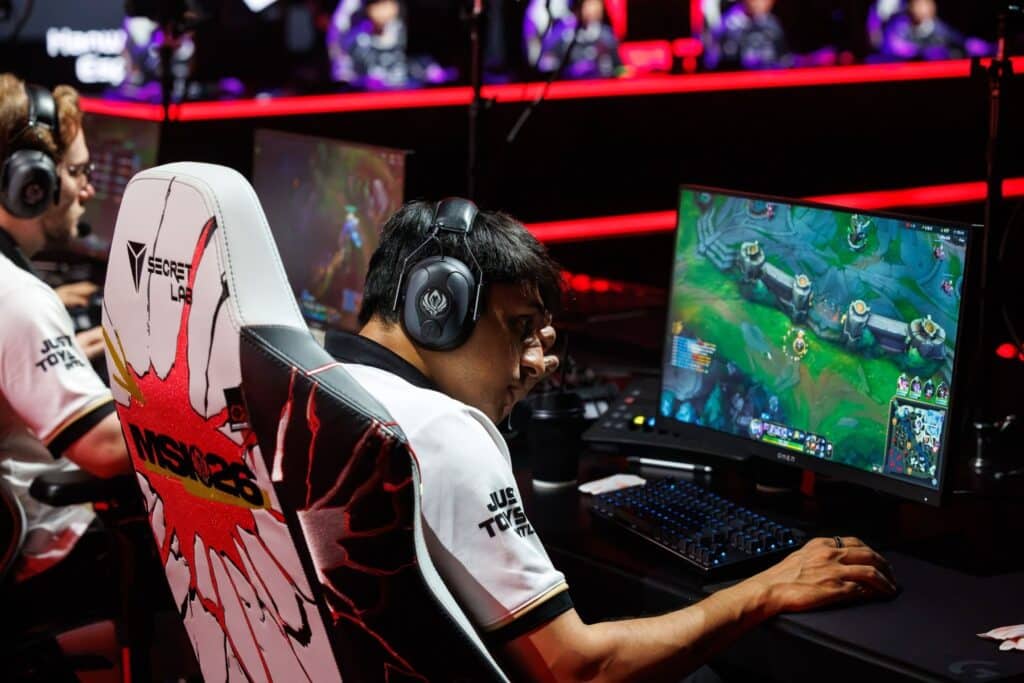
The Mid-Season Invitational 2026 completely threw that script away, partially rewriting the storylines for the second part of the season.
Yes, a Korean team still won the tournament, and it was still an LPL vs LCK final, but both the LEC and the LCS put up some great fights and achieved results that were still unthinkable less than half a year ago. While it has been an uphill battle for so many years, the West is gradually crawling back into contention.
Fearless Draft allows teams to be creative, closing gap through preparation
Introduced at the start of 2025, Fearless Draft has been one of the key changes behind the spectacular series we’ve had so far.
The increased champion diversity not only makes each match more exciting to watch, but it also forces teams to completely transform their approach to drafting.
It’s no longer required to stick to playing all the meta champions immediately: teams can take advantage of the specific themes around team compositions to make their choices, but also counter them. This is where the creative picks come into play, and having them ready means you have more cards to play in the draft.
“Fearless is definitely bringing out a new side to competitive play,” said a user on Reddit. “The West brings out so many unique picks and strategies, and it was amazing to watch the games.”
The unique picks are what allowed G2 Esports to take down T1 at MSI. By utilizing Sergen “BrokenBlade” Çelik’s pocket picks like Yasuo, Kled, and Cho’Gath, T1 found themselves on the back foot the moment they stepped onto Summoner’s Rift. G2 had already done that earlier in the year at First Stand, when they beat Gen.G.
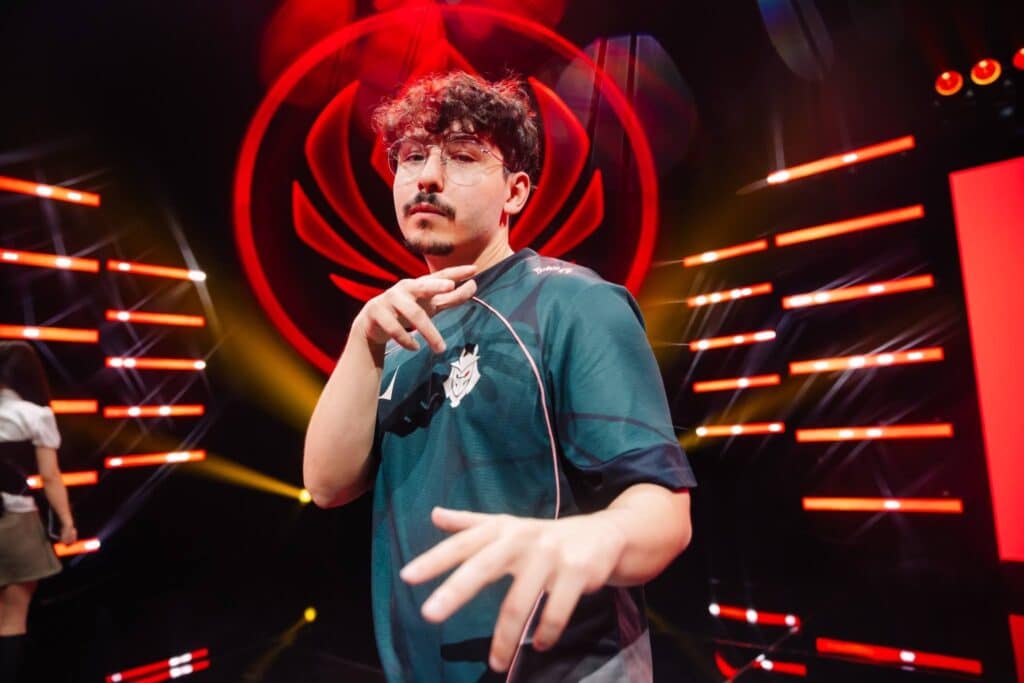
The strongest LCK and LPL teams still have strong fundamentals and the talent to play consistently at a high level, but they are also less likely to take risks with unconventional picks. In particular, Korean teams have traditionally preferred to refine what they already know works.
While this approach produces an incredibly high floor, it can also bite them back whenever there’s a major meta shift before the start of the tournament, like MSI this year.
Most teams keep up in the early game, but not later…
Fearless Draft is not the only factor at play. Western teams are also slowly improving their fundamentals.
Since 2020, the West has struggled to master the fundamentals, often leading to losing game states in the first few minutes. A poor trade or a bad-timed recall could turn into a major lead for Eastern teams, which would then snowball the game out of control.
Now, most teams, including teams from weaker regions like CBLOL, can match the top Eastern teams in the first 10 to 15 minutes. While you could argue that the game is not as action-packed as it used to be due to how the meta has evolved, it’s mainly because teams match each other better, forcing both sides to make more rational, less volatile choices.
The main difference, however, still lies in the teamfighting. Once the early game is over, Eastern teams generally have a better understanding of how fights should unfold and which are the right moments to force plays. In particular, some of the top teams are particularly good at fighting even in losing positions.
T1 is one of the best teams in this department: the world champions are often able to win games despite minor gold deficits by relying on the playmaking of its stars like Ryu “Keria” Min-seok and Lee “Faker” Sang-hyeok.
Game quality has risen, even though the score doesn’t show it
“The reality is that the top six to eight teams in the world are incredibly close,” another user argued. “People don’t realize that series score is not a metric to decide the margin of skill.”
While there were several 3-0 series at MSI 2026, some of the matches weren’t much closer than what the score told. LYON lost in this exact way against the finalist BiliBili Gaming (BLG), despite consistently matching the Chinese team for most of each game.
BLG themselves played two close series against Hanwha Life Esports, but one ended up being a 3-1 victory and the other, the final, a 2-3 loss. When it comes to the top teams, it’s all the small details that matter: players’ form, draft, and clutch moments can easily swing a series one way or the other.
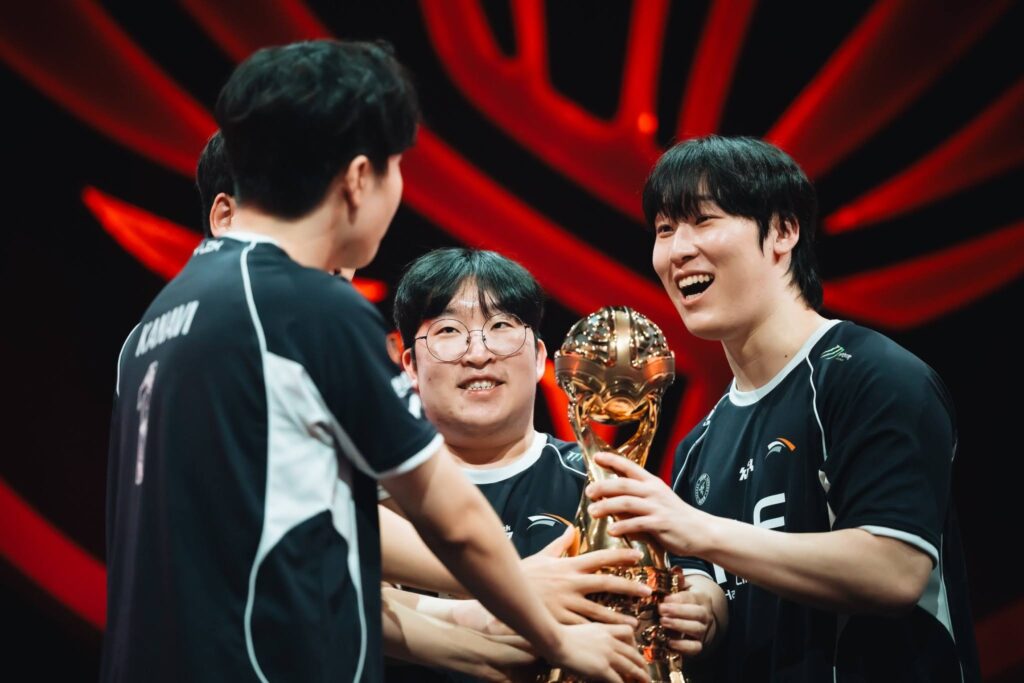
G2 beating T1 was not evidence that Europe had fully surpassed Korea. G2’s then-heavy loss to LYON was not proof that the T1 result had been meaningless. Both series showed the same thing: it’s a matter of who can perform to peak level on that given day.
The gap is about being consistently at the peak level
Performing at peak level is exactly where I still think the West has to catch up. The top LCK and LPL teams can still perform at a reasonably high level even on a poor day.
They are able to reproduce high-quality gameplay even when early game play goes wrong or they have a losing draft. The Western teams tend to be more volatile, which can be costly in best-of-five series.
LYON was among the best teams in terms of consistency at MSI, to the point where ADC Lee “Gumayusi” Min-hyeong admitted that HLE’s teamfighting was not as good that day. Yet, it wasn’t enough to defeat Hanwha Life Esports.
Upsets can happen, but they still do not happen often enough for the odds to truly favor the West. “The gap between the regions has definitely narrowed this year,” another comment added. “The real question is whether this is a one-off or the start of a lasting trend.”
Worlds 2026 could deliver more unpredictable results
MSI’s double-elimination bracket has often rewarded the most consistent teams. Worlds, in comparison, will not offer protection once the knockout stage begins.
If the skill gap between individual players is small, the West can easily close that gap through its creative drafts. Sometimes, even through better teamfighting.
After many years of poor international results, the West is finally seeing the light at the end of the tunnel. The East might also have become less dominant, but the top LCS and LEC teams have proved they will always have a chance to take on the LCK and the LPL.
What we need now, however, is a team that turns those isolated performances into a complete tournament run.