Let’s be honest with ourselves for a second: the era of esports organizations begging mainstream corporate giants for a lifeline is getting a little tired.
For years, the industry playbook was simple: throw money at non-endemic brands, slap a Mastercard, Coinbase, or Mercedes-Benz logo on a jersey, and pray that a casual crypto customer suddenly decides to buy a $90 team hoodie or watch a match at an upcoming tournament. Or, vice versa, events like Evo promoted Chipotle everywhere (even providing a bus to a local Chipotle) since it took no time to create meaningful ways to make money aside from begging for mainstream sponsors. Who can forget the cringe Chipotle bundle in 2XKO?
This stuff just feels hammered in, desperate, and – esports fans’ worst fear – inauthentic.
We’ve watched teams churn through bizarre pitch decks trying to persuade middle management at insurance conglomerates that teenagers watching VALORANT streams are desperate to buy auto policies or sign up for the U.S. Army.
Meanwhile, as major sponsors pivot their budgets away from individual team deals and toward centralized mega-tournaments, esports organizations are facing a quiet reality check: you cannot build a sustainable business model by pleasing people who don’t actually care about gaming.
Enter Karmine Corp.
Instead of chasing another lukewarm corporate partnership, the French powerhouse just did something radical: they built a full-fledged, physical trading card game called Blue Rising. And in doing so, KC just handed the rest of the industry a masterclass in how to monetize a fanbase without selling your soul.
Catering to the core, not the casual
If you’ve been around esports for a while, your first thought might be, “Wait, haven’t teams tried cards before?”
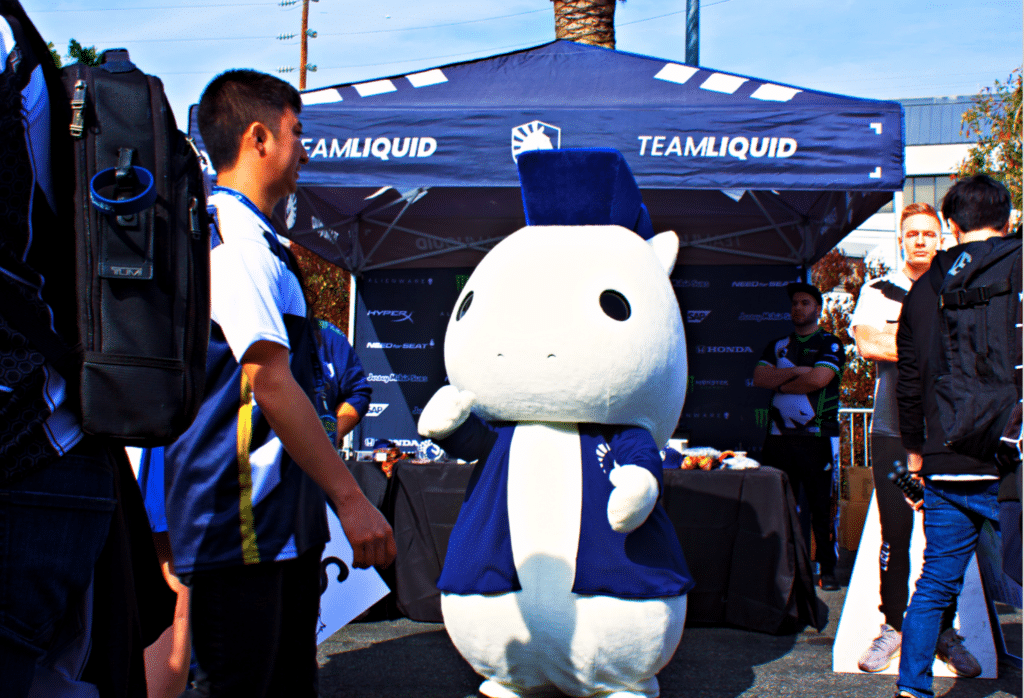
You’d be right! Years ago, Team Liquid handed out collectible trading cards to fans at LCS events. It was a neat, fun bit of fan service — a cool keepsake to tuck into your wallet after grabbing a photo with your favorite mid-laner. I personally loved it, especially with their mascot, Blue, handing out the cards.
But Blue Rising isn’t a giveaway novelty or a cheap promotional gimmick. It’s a real and functional tactical collectible card game built from the ground up.
- Character Cards: Embody real KC players and icons as arena fighters with custom tactical stats
- Event Cards: Gameplay twists based on iconic, real moments from Karmine Corp history
- Item Cards: Strategic gear and reinforcements to tune synergies and tilt battles in your favor
The genius part is that it’s not just a fully functioning card game. It takes players, moments, and gaming gear right from esports culture and makes it engaging and real. It allows fans to really connect with the card game and feel they have deep ball knowledge. It’s made for KC fans and other esports fans who can relate to the cards.
Imagine pulling a card that lets you clutch a losing round because it’s flavored after a famous French arena crowd chant or a historic comeback at an EMEA tournament. This is using thought, intention, and true passion to create authentic content and merch for actual fans rather than hoping to cash out on a lazy anime-themed sweater or make social media posts about a credit card company.
A revenue model that could finally grow esports fandoms
The core problem with the traditional esports playbook was its top-down structure. Teams tried to monetize like traditional broadcast sports before they had the local stadium infrastructure or TV deals to support it.
Blue Rising flips the script back to what gaming does best: tangible, community-driven mechanics.
Fans don’t want to buy an energy drink just because a streamer held it on camera for three seconds. Well, if they are over 13 years old. They don’t want to watch a boring YouTube video about a car they’ll never buy. They don’t want fast food logos slapped all over a broadcast.
Fans do want to collect rare display boxes, trade booster packs with friends at live watch parties, and crack open custom art sleeves featuring their favorite pro players.
By creating physical products that tap directly into tabletop gaming culture, Karmine Corp isn’t asking for a desperate, thoughtless handout. They’re offering genuine entertainment value. They are treating their fans like real gamers who love collecting, competing, and owning physical pieces of the culture. They are showing they understand gaming and esports.
A breath of fresh air
While other organizations spend millions trying to translate general brand awareness into merch sales, KC has built an internal economy. They realized that 50,000 fanatical, deeply engaged fans who feel seen by their team will always be more valuable than 500,000 passive viewers who couldn’t name a single player on the roster. (One reason I will never believe that co-stream viewership counts, since most of those fans are only there for the influencer and won’t stick around.)
Blue Rising proves that the path forward for esports isn’t pretending to be a mainstream broadcast sport. It’s doubling down on the chaotic, passionate, lore-heavy subculture that made competitive gaming special in the first place. There has been proof for a while now that esports fans want raw, real, and fun.
It’s tactile, it’s tactical, and a relief. Esports needs to stop pretending it’s something it’s not if it wants to survive. Rather than daydreaming about some immense growth that will never last beyond whatever gimmick they wanted to exploit at the time, esports tournaments and organizations should focus on the dedicated fans and gamers who will actually buy products and stick around to watch every match. It may not bring immense riches, but it will allow esports to live on.