TL;DR
- League of Legends has five core roles: Top, Jungle, Mid, ADC, and Support – each with unique responsibilities and playstyles.
- Top Laners are self-sufficient bruisers or tanks that excel in 1v1s and split-push pressure.
- Junglers control the map, gank lanes, and secure key objectives like Drakes.
- Mid Laners are flexible playmakers who often roam and become the team’s main carry.
- ADCs scale over time but are fragile, requiring solid positioning and team protection.
- Supports control vision, set up plays, and keep teammates alive.
If you have never played a MOBA before, trying to get started in League of Legends can be daunting. There are over 170 champions, five distinct roles, and seven main classes, so there’s bucket loads to learn. Knowing your role and lane is usually how many get their start. Whether you’re the lucky one who has been chosen first in Draft Pick or autofilled into a random lane, the LoL roles have massive impacts on a match.
So, if you’re a beginner trying to find your feet, let’s have a look at the five League of Legends roles: Top, Jungle, Mid, ADC, and Support, so you can get started dominating your lane. We’ll go over what they do, where they do it, their challengers, and potential picks.
League of Legends roles explained
League of Legends matches start by putting five players into five unique roles, which outline their responsibilities, playstyle, and how they impact the game.
While you can choose any champion for any role or position, not everyone works everywhere, and it can be a recipe for disaster in Ranked. Using a champion built for the role will allow you to unleash their full potential, thus helping you walk away with a victory.
How roles work in League of Legends
Each of the five League of Legends positions brings something different and impactful to Summoner’s Rift. Some excel in 1v1 duels, while others set the match’s tempo by roaming the map, but all are necessary to get a victory.
Here are the five LoL roles in summary:
- Top: Fighters or frontline tanks. Typically solo and self-sufficient
- Jungle: The roamers. They control neutral objectives like Drakes, apply pressure, and make big plays happen
- Mid: Often mages or assassins with strong roam potential to assist either Top or Bot
- ADC (Bot Lane): Ranged champions that are focused on farming gold through minion waves, scaling, and shredding later on
- Support: The glue that holds the team together, often enchanters, mages, or tanks. Supports control vision with wards and keep their ADC (and team) alive
Typically, each role has specific League of Legends classes that suit it. For instance, tanks and fighters function well in Top, while assassins and mages usually excel in Mid.
There are exceptions, of course, and there are several champions who are versatile enough to fit several roles with different items, summoner spells, or rune setups. Experimentation and research are vital to see what champions and roles will work well for you.
Remember, each role is pivotal to form a complete team comp and winning often requires everyone to do their bit. No role is less important than another.
Role 1: Top
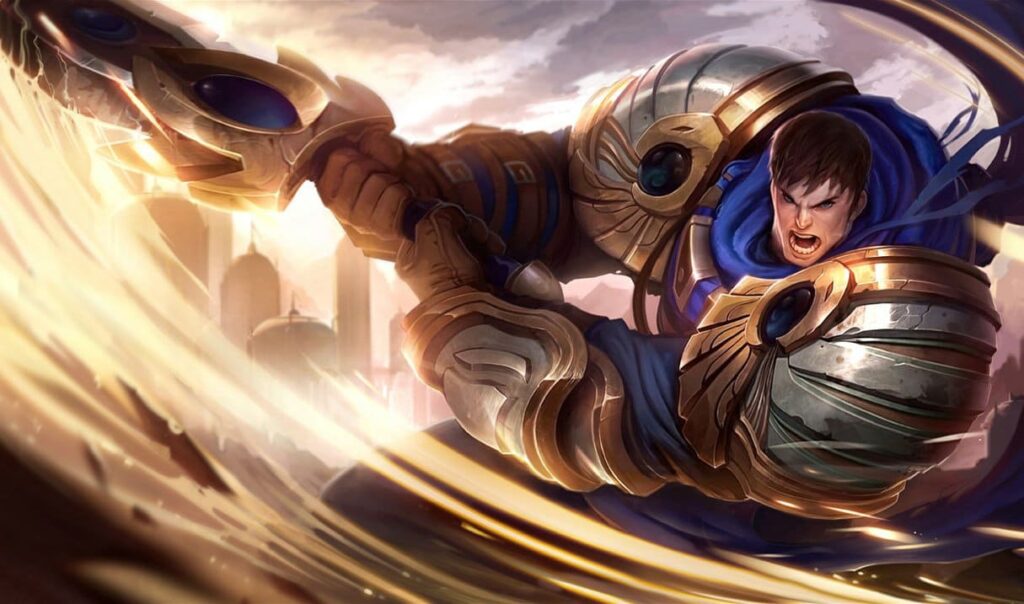
Top Lane is a League of Legends role all about being isolated from the rest of the team at the top of Summoner’s Rift. It requires independence, strong laning fundamentals, and an understanding of 1v1 matchups.
Typically, champions suited to Top Lane fall into two League of Legends classes: Tanks (like Sion and Malphite) or fighters (like Mordekaiser and Aatrox) who apply pressure through split-pushing and duelling. Tanks are usually the better option for beginners, being safer and team-oriented, while fighters have superior carry potential, although champions in the Slayer class can also thrive in top.
Top Laners often choose the Teleport summoner spell, allowing them to make cross-map plays within seconds. Well-timed teleports can swing fights around objectives like Drakes, secure kills, or save a Turret. When played well, a Top Laner can be the backbone of the team and get them the win.
- Example champions: Mordekaiser, Garus, Darius, Sion, Riven, Aatrix, Malphite, Camille, Irelia.
- Playstyle fit: Those who want 1v1 duels, split-pushing, to front-line and tank damage.
- Strengths in teamfights: Usually engage, peel for teammates, or flank (dependent on champion pick).
- Challenges: Spends long periods of a match isolated and requires good TP usage and wave management.
- You’ll enjoy it if: You like 1v1 duels, don’t mind being isolated, and want the opportunity to carry.
Role 2: Jungle
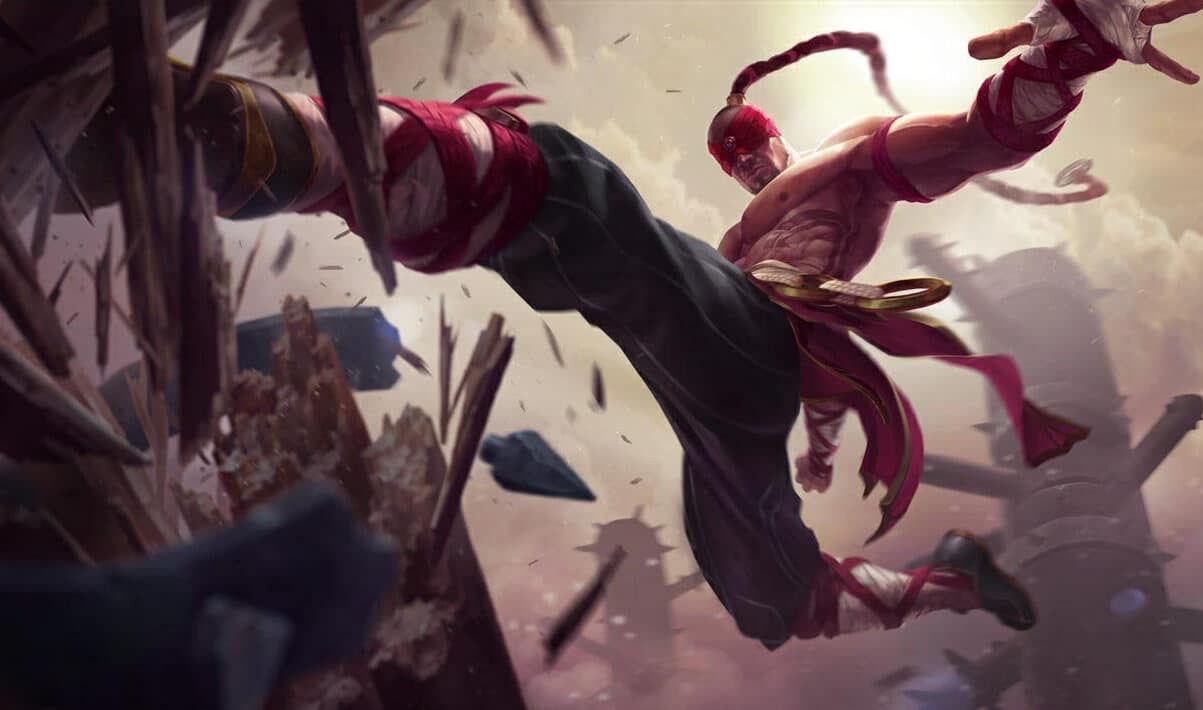
Many have argued that Jungler is the hardest role to master, since players will need to have basic knowledge of the neutral camp spawning times and the most efficient farming routes. As a result, more knowledge is needed to get started in the role.
As they often set the pace from champion select, the Jungler is often the shot-caller of the team. Teammates look to their Jungler for early gank pressure, objective controls, and strong rotations. It is vital for a Jungler to secure buffs from Drakes, the Rift Herald, Voidgrubs, and so on to win.
Failing ganks or missing objectives can quickly snowball into a loss, making the Jungle role one of the most impactful and punishing League of Legends positions. While many champions can technically be played as a Jungler, only a few excel at it, like assassins Evelynn or Shaco, or bruisers like Lee Sin and Vi.
As a Jungler, you’ll need to lock in the Smite summoner spell to aid your camp farming, pick one of the three Jungle starter items, and ideally have a champion with good mobility, crowd control, and solid clear speed.
- Example champions: Diana, Master Yi, Kha’Zix, Kindred, Evelynn, Shaco, Lee Sin, Vi.
- Playstyle fit: Map-reading roamers, who set up ganks, secure objectives, and do a bit of PvE.
- Strengths in teamfights: Strong engage potential, Smite usage, and set the tempo for the match.
- Challenges: Without a lane, there’s no guaranteed gold or XP. A bad start (poor early pathing or failed ganks) can set a Jungler back quickly.
- You’ll enjoy it if: You like using strong positional play to outfox opponents, enjoy macro play, or be the reason the team is well-equipped for a fight.
Role 3: Mid
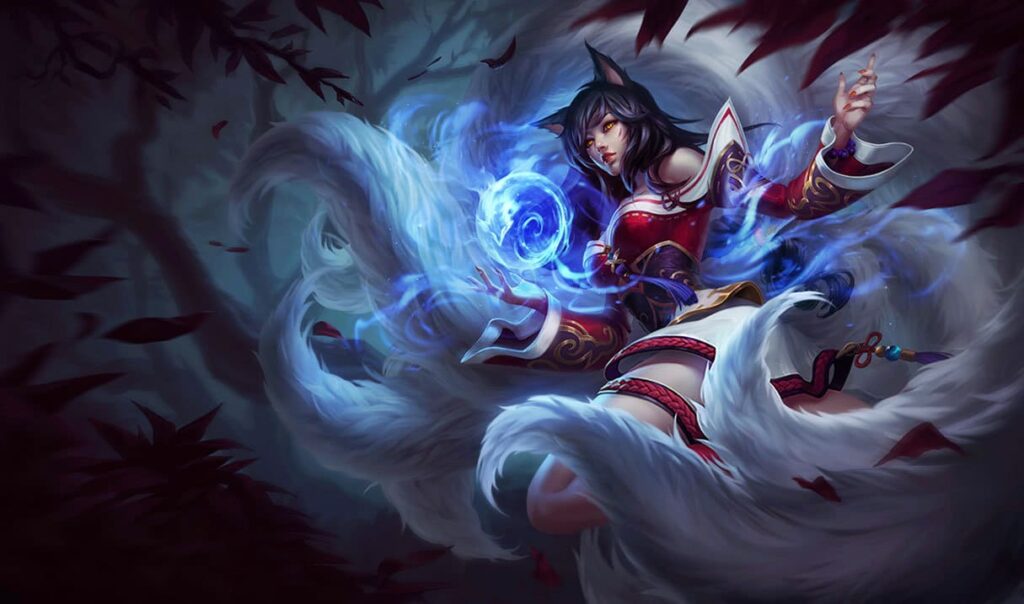
Taking up the centre of the map, Mid Laners can impact any lane and objective, since their lane is the shortest and has easy access to both the river and jungle. Mid is a high-pressure, high-reward position that can dictate the pace of a match, as they need to protect their towers for as long as possible to prevent the map opening up for the enemy.
A good Mid Laner does more than farm gold and trade damage with their enemy laner. They’re expected to control river vision, roam to help side laners, and rotate quickly to contest objectives like Rift Heralds or Drakes.
Timing your wave clears correctly is key: shove the wave, disappear from the map, and create pressure just by going missing.
Mid champions typically fall into two categories: mages and assassins. Mages, like Orianna and Syndra, have effective minion wave clear, are great at zoning, and have strong, ranged burst damage.
Assassins, like Zed and Akali, are known to roam and target squishy enemies with swift combos. Then, there are versatile hybrids, like Ahri and Sylas, who mix poke with high mobility and can adapt depending on the matchup.
- Example champions: Ahri, Annie, Yasuo, LeBlanc, Ryze, Veigar, Akali, Orianna, Zed
- Playstyle fit: Solo lane with lots of action, roam potential, and teamfight pressure
- Strengths in teamfights: Massive burst damage, pressure, and kill potential; often the team’s main carry aside from ADC
- Challenges: Often the main target for enemy Junglers, poor Mid control can also lead to losing quickly
- You’ll enjoy it if: You want to be the centre of the action, enjoy flashier plays, or love dominating lane and roaming
Role 4: ADC
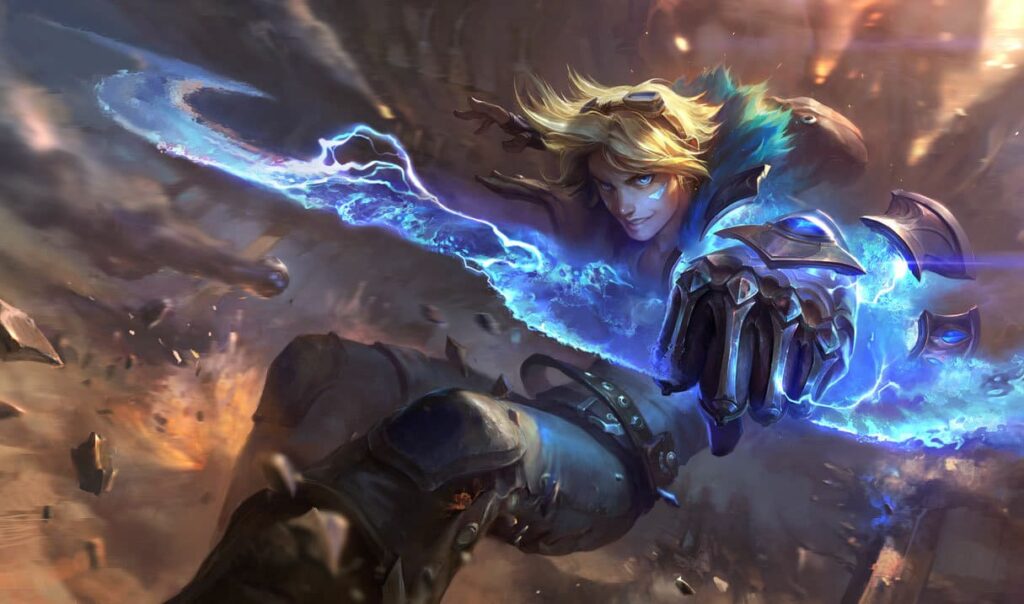
The ADC, or Attack Damage Carry, plays in the bottom lane alongside a Support. ADCs are typically ranged champions that deal consistent physical damage and scale extremely well into the late game. While they can be a fragile glass cannon early on, they become the team’s primary source of DPS during extended teamfights, especially after completing core item builds.
The ADC’s job is all about farming gold efficiently in the early game while maintaining a respectable CS (Creep Score), operating in safe positions, and dealing heavy damage without being caught out. ADCs tow the line between risk and reward. A wrong step can result in a swift death, but the right move can melt the enemy team from the backline before they know what hit them.
- Example champions: Miss Fortune, Ezreal, Jinx, Caitlyn, Jhin, Lucian, Draven, Twitch
- Playstyle fit: Ranged DPS with a focus on farming gold, scaling, positioning, and consistent damage output
- Strengths in teamfights: Deals most of the sustained damage
- Challenges: Squishy and vulnerable if positioned incorrectly, relies on their team to protect them, and farming minions can be difficult for newer players
- You’ll enjoy it if: You live for high-risk, high-reward gameplay and the satisfaction of melting entire teams in the late game
Role 5: Support
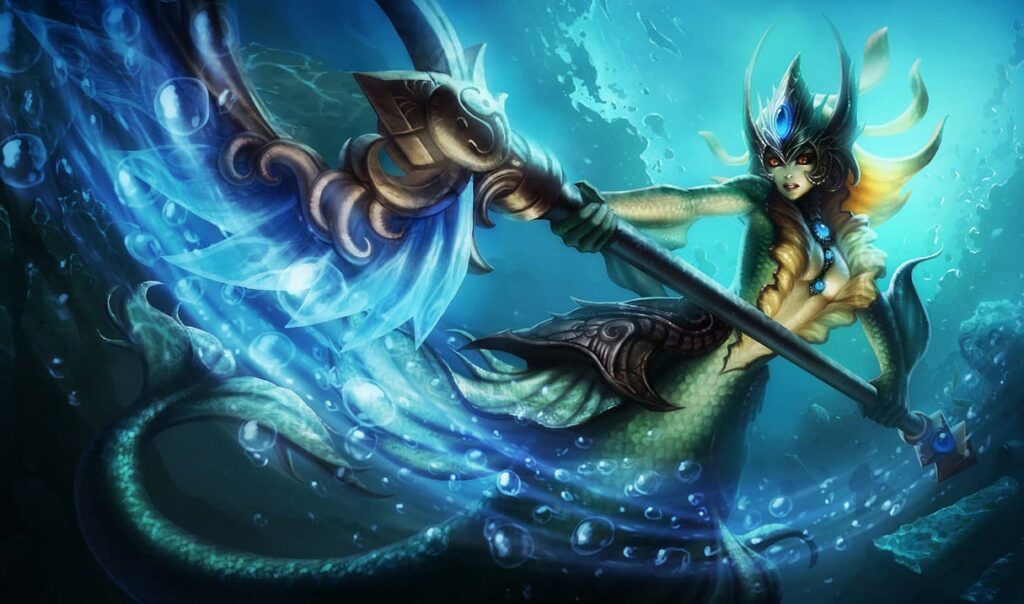
Supports are the backbone of any good team composition, often the unsung heroes behind every winning play. Their responsibilities include protecting carries, setting up plays with crowd control, controlling map vision with wards, and keeping teammates alive through heals or shields.
Support champions come in a variety of forms: enchanters (e.g., Nami, Lulu, Sona) who focus on healing, shielding, and utility, engage tanks (e.g., Nautilus, Leona) that initiate fights, or even mages who can deal burst damage and poke (e.g., Lux, Brand).
Supports aren’t known for topping the damage charts, but tend to be the brains behind a team. In the early game, they focus on protecting their glass-cannon ADC, so they can farm safely, and control the bot lane while levelling their support item.
These gold-generating items provide wards and income by passively triggering on poke damage or minion executions, and are crucial to scaling and vision control in the mid-to-late game.
- Example champions: Nami, Sona, Blitzcrank, Leona, Lulu, Thresh, Yuumi, Brand
- Playstyle fit: Utility-based players who control map vision and enable their teammates
- Strengths in teamfights: Picks, peels, healing, shielding — often the difference between winning or losing a fight
- Challenges: Limited income; most of their gold comes from their support item
- You’ll enjoy it if: You’re a teamplayer who likes setting up others for success
Top LoL role pairings
Learning your role in isolation is an important first step, but learning how that role interacts with teammates is integral to success. Learning LoL role pairings are vital when playing in a duo and will take you to another level. Here are some examples you can use for yourself:
- Top + Mid: There’s the most flexibility between the champion pools for Top and Mid, meaning they can trade lanes if it results in a better 1v1 matchup
- Jungle + Mid: Jungle pressure helps Mid snowball, and a strong Mid Laner makes it easier to invade or contest objectives
- Jungle + ADC: Less common, but aggressive Junglers who focus early dragons and bot dives can help their ADC scale faster into the mid-game
- ADC + Support: Bot lane is a 2v2 from the start, and synergy here can dominate the laning phase easily
How to choose the right role
Even if you understand how the five LoL roles work, choosing one might be overwhelming while you’re still learning. Here are some tips you can use to help you understand which role is for you, even when you’re new to the game:
1. Start with a self-assessment
Ask yourself a few questions:
- Do you prefer 1v1s or teamfights?
- Are you more focused on lane domination or a map-wide impact?
- Are you happy to let your team take the spotlight?
- Are you confident in giving call-outs and commands?
If you’re mechanically confident and like seeing big damage numbers, ADC and Mid will be up your alley. Someone who prefers rotating, planning, using vision, and controlling the game flow will likely prefer Jungle and Support. Those who are comfortable, or even would rather be alone and get stuck in with 1v1 duels, will fit Top like a glove.
2. Test roles in normal games
Don’t go straight into ranked when figuring out which role suits you. Instead, try casual or vs AI when experimenting with which of the LoL roles suit you, depending on your confidence. This will give you real experience to draw on when choosing your role.
Losing doesn’t mean too much outside of ranked, so winning shouldn’t be the goal here. Finding your favourite role and how that role works is paramount, so try to enjoy the process.
3. Stick to 1-2 roles to master
After trying the five roles, pick a couple: one main and one backup. Being specialised will ensure you’re strong in a role and thus have deeper knowledge of specific matchups. Even the very best tend to stick to a single role.
4. Stay flexible
Still, you don’t have the luxury of being a pro, and you might not always get to play your main role, even with autofill protection. Having a backup role means you can still pull your weight without your main, giving you better matchup knowledge and helping you rank up when you take on the grind.
Conclusion: Own your lane
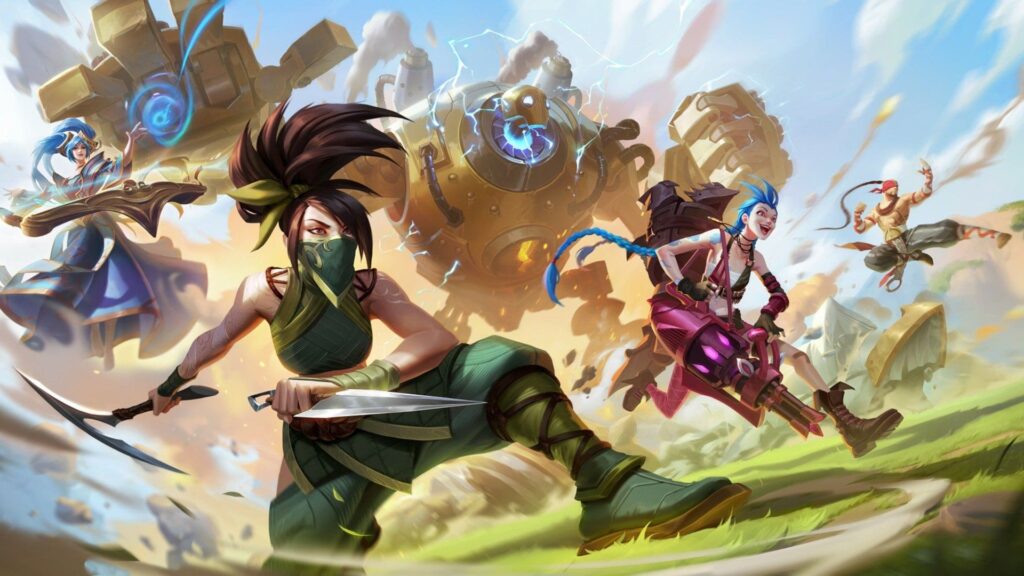
At the end of the day, League of Legends is a team game, and so teamwork is vital. Understanding your role is a vital first step and will provide you with a strong foundation for effective team play. Every lane has a role to play, and understanding these roles will only help. Every champion will affect a match differently, and with a roster of 171, there will be something for everyone. If you like MOBAs, you’ll find a champion that fits your personality and playstyle, whether that’s clutch healing or blowing enemies aside as a DPS juggernaut.
The more you learn about how the five League of Legends roles work, including their strengths, challenges, and the go-to champions, you will find yourself improving with an increased win rate.
League is more than just mechanics and knowledge, however. It’s about quick decision-making, being flexible, and playing your role well as a team player, rather than flying solo.
FAQs
What is the easiest role in League of Legends?
While all roles have their challenges, support is generally considered the easiest LoL role to begin with, given that it’s the easiest to understand. Support champions are also relatively straightforward, with the gameplan being around healing, shielding, or engaging.
What are the roles in League of Legends?
There are five League of Legends champion roles:
• Top
• Jungle
• Mid
• ADC
• Support
Each role plays an important part in team strategy and contributes differently to winning the game.
How to choose a role in League of Legends?
To choose a League of Legends role, it is important to work out what type of gameplay you enjoy, whether that be one-on-one duelling, roaming the map, or aiding teammates. Try all the roles in non-ranked game modes to work out what you enjoy, and once you’ve found your fit, focus on the one or two roles you’ve chosen to master them. Choosing a role is about understanding how you want to impact a match and what your strengths are.
REFERENCES
- Choosing the Right Champion (Riot Games)
- Smite (League of Legends Wiki)
- Farming (League of Legends Fandom)
- Vision Control: Step By Step Warding Guide for LoL (Mobalytics)