TL;DR
- Currently, no controller standardisation exists in mobile esports.
- The timing aligns for it to happen now as rumours circulate about established franchises entering the market.
- Standardisation will make competitions fair for everyone and help developers know which controllers to support.
- We’re currently in a fragmented landscape with controllers in mobile esports, where fairness and inclusivity aren’t guaranteed.
Mobile esports is an expanding market that’s only beginning to be noticed by more developers. Games like VALORANT Mobile and Destiny: Rising are about to be released for iPhones and Android devices as a beta test, and there are whispers that more mobile games based on established franchises are coming.
However, one aspect that sets the category apart from regular esports is how players control the games. For popular esports games like Counter-Strike 2 and Tekken 8, peripherals like keyboards, mice, and controllers are used without thought. Some are also sponsored by brands like Razer and Turtle Beach, but this is less common for mobile esports games.
Hence, the case should be made for a standardised list of approved controllers for mobile esports. This will help to make competitions fair for everyone who takes part and help the developers know which controllers to support. Below, we’ll break down how things stand and what could be done to establish a set of rules for controllers so that the mobile esports scene is fair to all.
Mobile esports controllers
Currently, no controller standardisation exists in mobile esports. Mobile games like Fortnite and PUBG Mobile offer a mix of touch controls and compatibility with third-party controllers, but as there are so many peripherals available for smartphones and tablets, there’s no consistent list of what players can use.
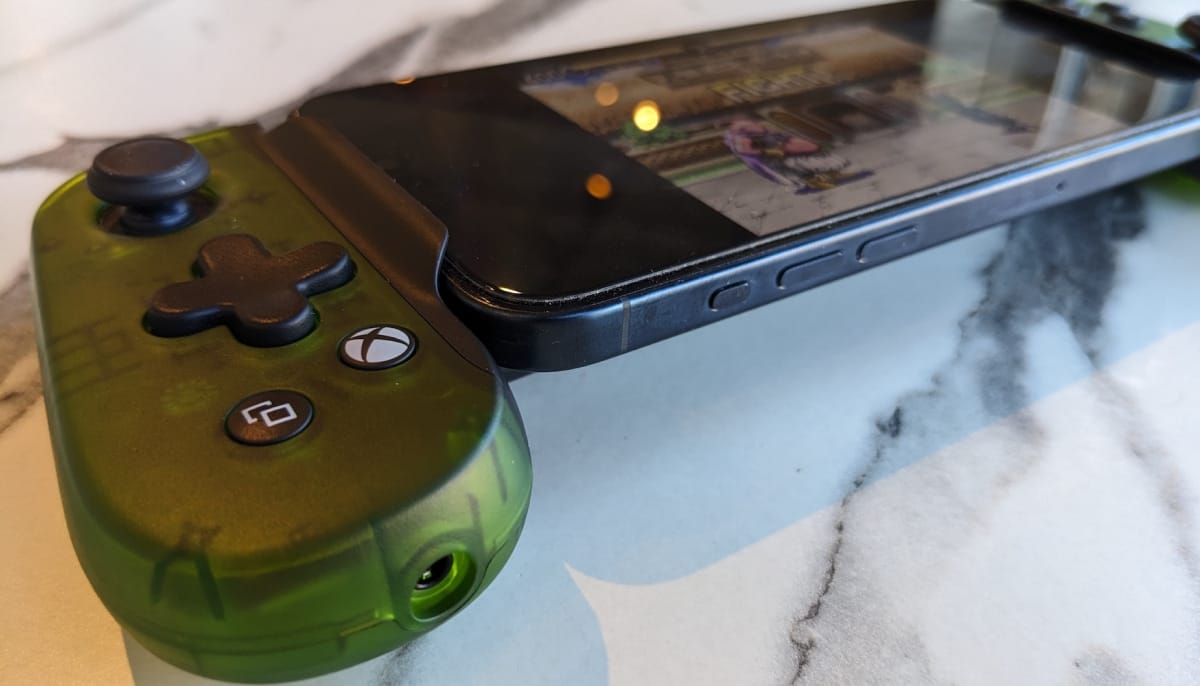
Gaming manufacturers like Backbone, GameSir, Razer, and more offer plenty of different forms of controllers — from ones that attach to iPhones and iPads via USB-C, to others that connect via Bluetooth. Each mobile gaming controller differs in the type of ergonomics and materials offered, making them unique and appealing to different players in the mobile esports scene. Every one of these also mimics the traditional layout that Nintendo, Sony, and Microsoft set decades ago, so as it stands, it’s purely down to personal preference as to what the competitors at esports tournaments want to bring.
There’s also the aspect of accessibility. Esports should be available to all, and despite a growing set of accessibility controllers offered, especially by Sony and Microsoft, there hasn’t been a push by esports organisers to see more of these controllers in mobile esports, so players with disabilities can enter.
Ultimately, we’re currently left in a fragmented landscape with controllers in mobile esports, where fairness and inclusivity aren’t guaranteed.
Why does mobile esports need controller standardisation?
Controller standardisation isn’t just needed for mobile esports; it’s overdue. For mobile devices, we’ve hit somewhat of a plateau. For every iPhone released each year, they’re getting harder to tell apart, and harder to justify a yearly upgrade for some customers. In the case of Android, Google’s mobile operating system is licensed to many manufacturers, which is why we see so many smartphones from Galaxy, OnePlus, Honor, and more.
Yet we’re also seeing the same designs, the same user interfaces, and improved hardware like faster chips and better cameras. But what remains the same, and has done for several years now, is how games are played on these devices. If you play Fortnite on a Samsung Galaxy S9 and an S25, the graphics may be different, but the inputs won’t. You’ll still need a controller to play the game, despite touch controls being offered.
For a competitive scene like esports, it can be problematic when any player can enter a tournament with a controller of their choosing. When you watch a football match in the World Cup, do you see a team choose the type of ball before a match begins? Instead, the ball is chosen by FIFA so that every match is played fairly. Even at EVO, the rules state, “Players are responsible for having a tournament-legal controller, arcade stick, or other input device on which to compete.” The same rules should apply to mobile esports for every event.
A defined list of tournament-legal controllers will help level the playing field for everyone. Players will know what controllers they’ll be using that could be supplied to them, or they can bring their own, but will be subject to a check-up to make sure every button hasn’t been tampered with.
This standardisation would also help towards accessibility, making sure that players with disabilities won’t be left out. An individual or a team could attend an esports event, and have the necessary procedures in place so that they could play Fortnite on an iPad like everyone else.
Ultimately, embracing controller standardisation has the potential to transform mobile esports from an unhinged category, when it comes to controllers, to a mature platform where skill exclusively wins out, in a sea of fairness and fun for all.
Roadmap
In order for controller standardisation to be achieved in mobile esports, it will require strict cooperation throughout the esports industry. This will include organisers for every esports event worldwide, developers, and controller manufacturers, so everyone has a common understanding.
The roadmap should be in three stages:
- A consortium of esports organisers and peripheral companies agrees to a set of terms.
- A set foundation is agreed upon that has a list of controller types for each genre in esports, followed by how a controller can meet the standard for esports, similar to legal rules in games like Street Fighter 6 and LoL.
- Standardisation occurs three years from the wide agreement, and is set in stone at every esports event; otherwise, a fee is charged to players and organisers for allowing non-sanctioned controllers.
Although each step seems straightforward, it will require a lot of invested parties to discuss and agree on every point, which could take several years. Indeed, a feedback session from mobile esports players and viewers would also be a benefit throughout the process. This will allow them to give their perspective on how mobile esports can benefit from controller standardisation, as they’re the ones who have the most experience in the category, and will help shape it for years to come.
Eventually, the framework, once agreed and implemented, would give every new or seasoned player a fair platform. With every step adhered to by every party, controller standardisation can be the backbone to future-proofing mobile esports, while enhancing accessibility to all.
Conclusion
Controller standardisation could be a seminal moment in mobile esports, but it’s not without risks. With plenty of peripheral manufacturers who supply a variety of controllers worldwide already, it could be a challenge to narrow which products would fit best for the genres set at every esports tournament.
However, with mobile esports still in its infancy, there’s a lot of potential to set the ground rules now, instead of years down the line when the category inevitably becomes even bigger. With mobile devices changing as foldables and wearables become more commonplace, a standard set of controllers is agreed upon sooner rather than later. This way, the playing field will be fair for everyone, with a clear understanding of what controllers can and cannot be used when connected to an iPhone, Android device at every competitive match.
FAQ
What is the best controller to use for mobile esports?
The Backbone Pro and Razer Kishi Pro are great controllers for iPhones, iPads, and Android devices.
Can the Switch 2 be used for mobile esports games?
No, as it’s classed as a ‘console’, due to games like Super Smash Bros and F-Zero being available on the Switch 2 and its predecessor.
References
- https://evo.gg/rules (Evo)