TL;DR
- There are 18 playable maps in VALORANT: 11 standard, five Team Deathmatch, and one practice map
- Each map has unique features like teleporters, vertical ziplines, triple bomb sites, or another element that influences playstyle.
- The current Competitive and Premier map pool includes seven rotating maps, updated with every Act by Riot Games.
- VALORANT maps are identical across PC and console platforms, ensuring a unified tactical experience.
- Mastering map layouts, callouts, and site control is key to improving your rank
VALORANT continues to be one of the premier FPS games in esports, thanks to tight gameplay, a diverse group of agents, and an intriguing map pool. Whether you’re warming up in Swiftplay or in the ranked grind, learning the many VALORANT maps is a key advantage, especially for those looking to climb all the way to the top at Radiant.
Every map has a unique layout, different sightlines, and strategies. Mastering everything a map demands is a key part of improving a player’s game sense.
With that in mind, we’ll be breaking down every VALORANT map name, what game mode they’re available for, key features, and tips about the layout so you’re ready for the ranked grind.
All VALORANT maps in 2026
VALORANT maps are where the battles take place, and their layouts shape each map, giving players different questions they need to answer. As of January 2026, there are 18 playable maps: 12 for standard play, five for Team Deathmatch, and one for practising your aim at The Range.
Below is a quick breakdown of all VALORANT maps, including their release dates, what game mode they’re available for, and their location on the globe. Note that all maps are located on Alpha or Omega Earth, fictional versions of the real Earth.
| Map Name | Release Date | Game Mode | Location |
|---|---|---|---|
| The Range | April 7, 2020 (Beta) | Practice | London, UK |
| Bind | April 7, 2020 (Beta) | Standard | Rabat, Morocco |
| Split | April 7, 2020 (Beta) | Standard | Tokyo, Japan |
| Haven | April 7, 2020 (Beta) | Standard | Thimphu, Bhutan |
| Ascent | June 2, 2020 (Patch 1.0) | Standard | Venice, Italy |
| Icebox | October 13, 2020 (Patch 1.10) | Standard | Bennett Island, Russia, Alpha Earth |
| Breeze | April 27, 2021 (Patch 2.08) | Standard | Bermuda Triangle, Atlantic Ocean |
| Fracture | September 8, 2021 (Patch 3.05) | Standard | Santa Fe County, New Mexico, USA |
| Pearl | June 22, 2022 (Patch 5.0) | Standard | Lisbon, Portugal |
| Lotus | January 10, 2023 (Patch 6.0) | Standard | Western Ghats, India |
| District | June 7, 2023 (Patch 7.0) | Team Deathmatch | Tokyo, Japan |
| Kasbah | June 7, 2023 (Patch 7.0) | Team Deathmatch | Rabat, Morocco |
| Piazza | June 7, 2023 (Patch 7.0) | Team Deathmatch | Venice, Italy |
| Sunset | August 29, 2023 (Patch 7.04) | Standard | Los Angeles, California, USA |
| Drift | December 5, 2023 (Patch 7.12) | Team Deathmatch | Thailand |
| Abyss | June 11, 2024 (Patch 8.11) | Standard | Sør-Jan, Jan Mayen, Norway |
| Glitch | October 22, 2024 (Patch 9.08) | Team Deathmatch | N/A |
| Corrode | June 24, 2025 (Patch 11.00) | Standard | Mont-Saint-Michel, France |
Every map in Unrated, Competitive, or Premier specifically, has the same core features: bomb sites (typically A and B), chokepoints, open areas, and verticality built into multi-level structures. There are a few VALORANT maps with unique environmental elements, such as interactive doors or teleporters. The flow of a match can change in the blink of an eye due to these elements, and learning strategies for both defenders and attackers is a necessity.
How are VALORANT maps selected?
VALORANT’s map selection is deterministic for its Competitive and Unrated matches. This means that maps aren’t chosen randomly, and instead, Riot aims to avoid repeating maps you have recently played, making your sessions more balanced with variety. While it is impossible to get a new map every single time, the odds of getting the same one back-to-back are reduced significantly from a purely random system.
Here’s the breakdown for Competitive and Premier:
- Competitive: The game picks one from seven maps in the current ranked map pool using the deterministic system. There are no map bans. Simply queue up and play.
- Premier: Each team takes turns banning maps from the current ranked map pool until there is only one map, and that becomes the map for the match.
For modes like Unrated, Swiftplay, and Spike Rush, the deterministic system is still in use, but it has the full 11 core maps to choose from. Team Deathmatch automatically rotates between the five maps, and, of course, no map selection is required for The Range.Now, let’s have a more detailed look at the standard VALORANT maps you’ll be playing Unrated, Competitive, and Premier matches in.
Bind
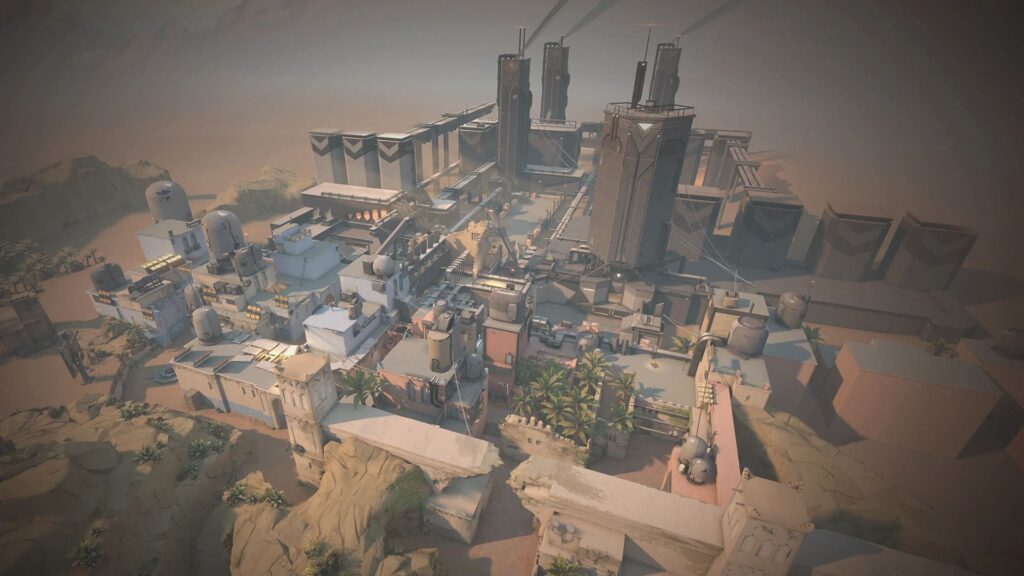
- Sites: Two
- Unique Feature: Two-way teleporters
Bind is one of the OG VALORANT maps, released in the game’s beta back in 2020. It’s a map that skips the traditional mid-lane and instead focuses on strong zone control through creative flanking through the two teleporter pads.
Fortune favours the bold on Bind, as players will need to factor teleporting into their plans on both attack and defence. These teleporters make sound cues that warn enemies, so use abilities like smokes or CC abilities to create distractions and openings. Bind also has narrow chokepoints and many angles onto sites – players will need to study the VALORANT maps’ layout carefully to avoid being caught out.
Split
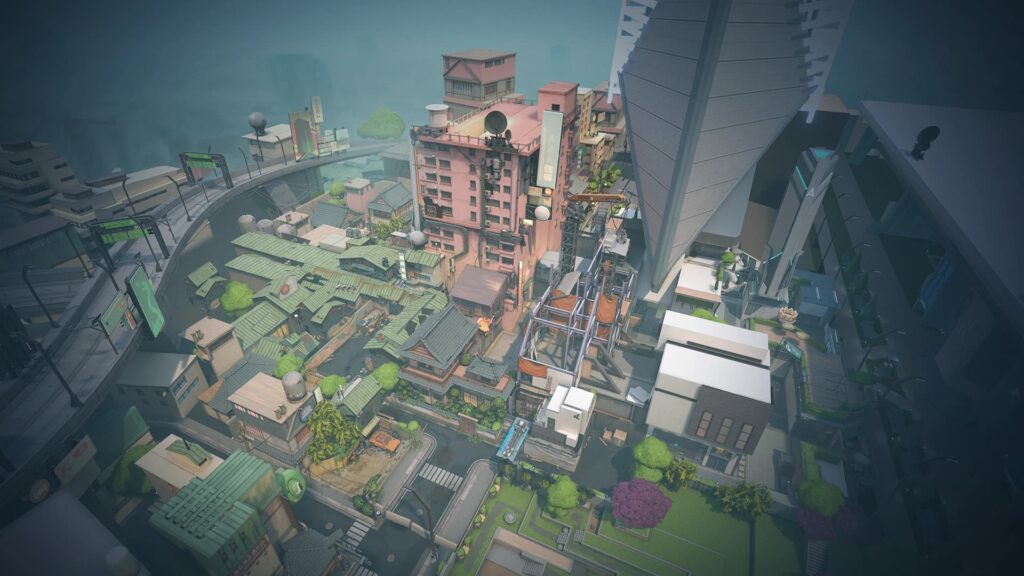
- Sites: Two
- Unique Feature: Rope Ascenders
Split is one of the best VALORANT maps in terms of design, thanks to its verticality and high vantage points. It’s also the first map in the game to use ascenders, allowing players to reach high ground.
Split is essentially a defender’s paradise, despite multiple balance changes since its beta release. There are only two spike sites and five chokepoints. These tight spaces are a nightmare for attackers to break through, especially when zoning abilities like Sage’s Wall are deployed.
Haven
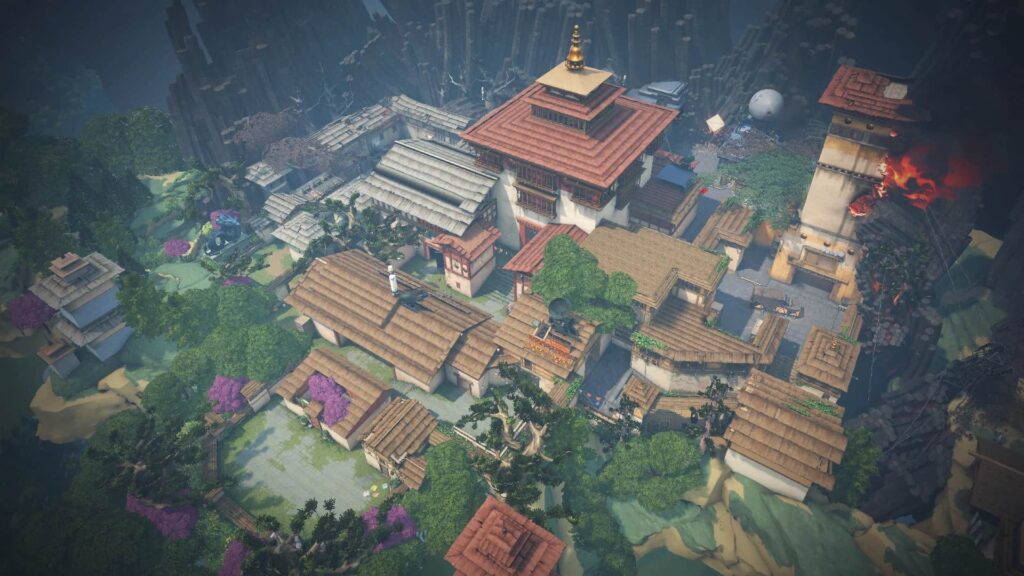
- Sites: Three
- Unique Feature: Only map with three bomb sites
Haven is one of the OG VALORANT maps, and the first to feature a triple site layout, instead of the usual two. This adds a layer of complexity to both attacking and defending teams, in particular stretching the defenders thin. Due to the additional site, quick rotations and map control and key on Haven – both teams must move quickly between sites to support their allies, so clear communication and coordination are a must.
Ascent
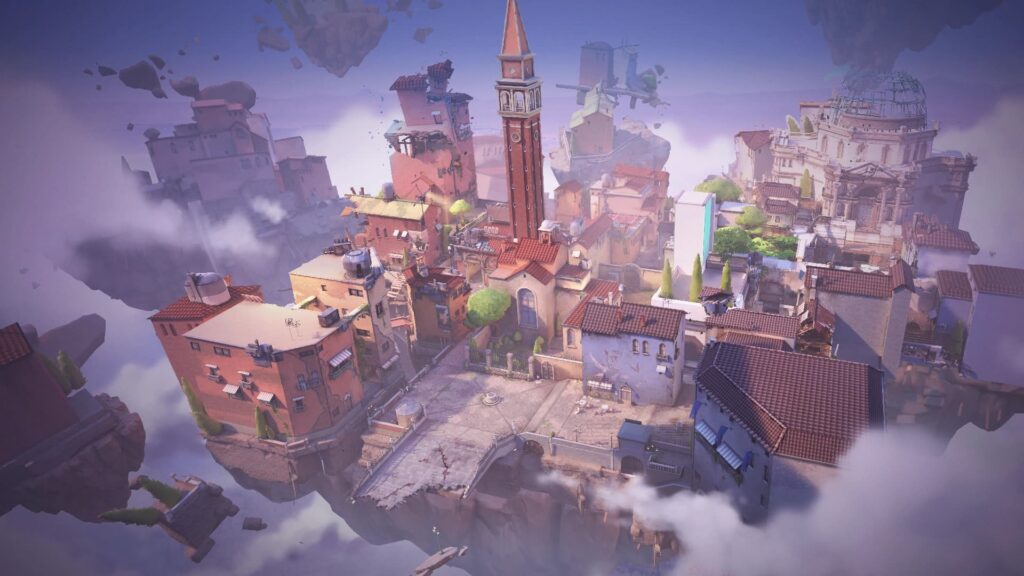
- Sites: Two
- Unique Feature: Mechanical doors at each site
The Ascent VALORANT map features a large, open mid space that’s crucial to overall map control as it leads to both bomb sites, A and B. The main feature of this map are the mechanical doors that can be opened or closed, adding an extra layer of strategy to each match as they can be used for defensive tactics or surprise attacks.
Ascent is widely considered by the community as one of the best VALORANT maps of all time, with little to no changes made since the map was released, going to show how good it actually is design-wise. It’s also well-balanced in comparison to some other maps, not favouring either attackers or defenders too much.
Icebox
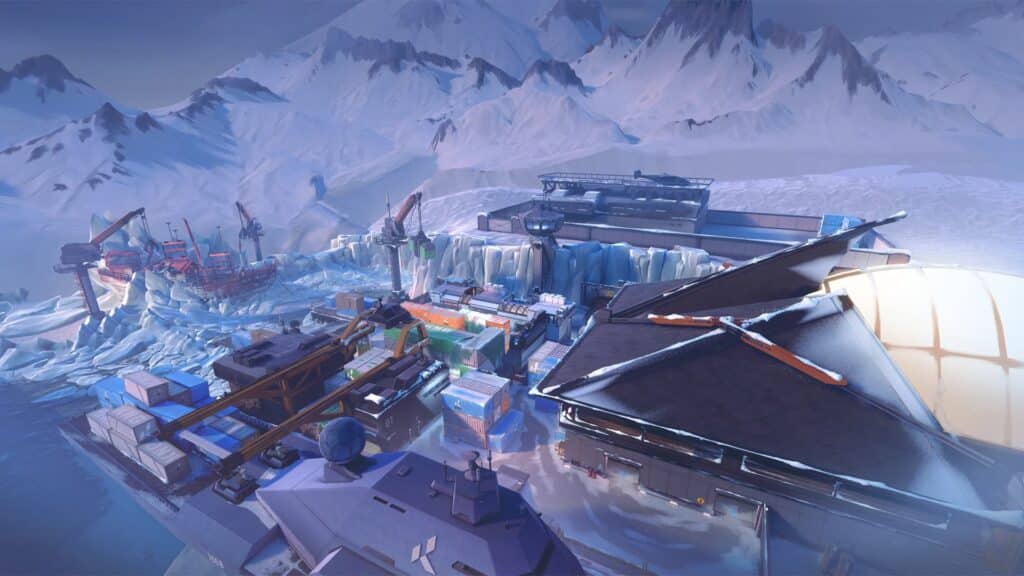
- Sites: Two
- Unique Feature: Horizontal ziplines
Icebox was the first VALORANT map to embrace multiple elevations, introducing horizontal ziplines for cross-map plays and surprise attacks. The layout with layered bunkers, tight corners, and high ground makes vertical fights common, so both teams will need to watch above and below before pushing ahead. Agents with abilities that can gather intel or zone off areas will perform well on this map.
Breeze
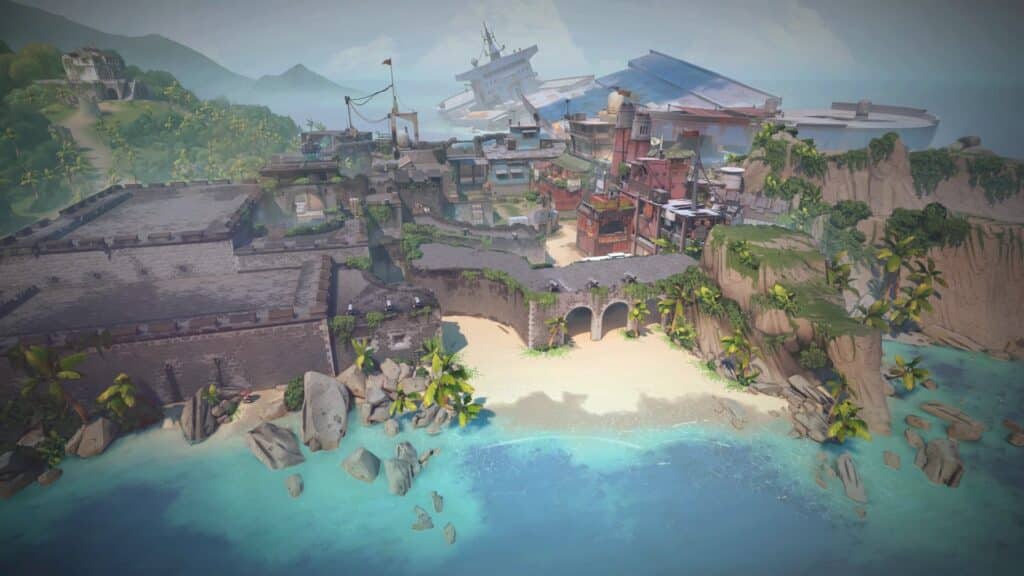
- Sites: Two
- Unique Features: Wide open areas and long sightlines
Breeze is by far the biggest map to date, featuring long sitelines and wide spike sites at A and B. It’s built for long-range duels, making it perfect for sniper plays and punishing those who prefer close-quarters combat. The multiple entry points, wide spaces, and lack of cover means precision is essential with no room for error.
Fracture
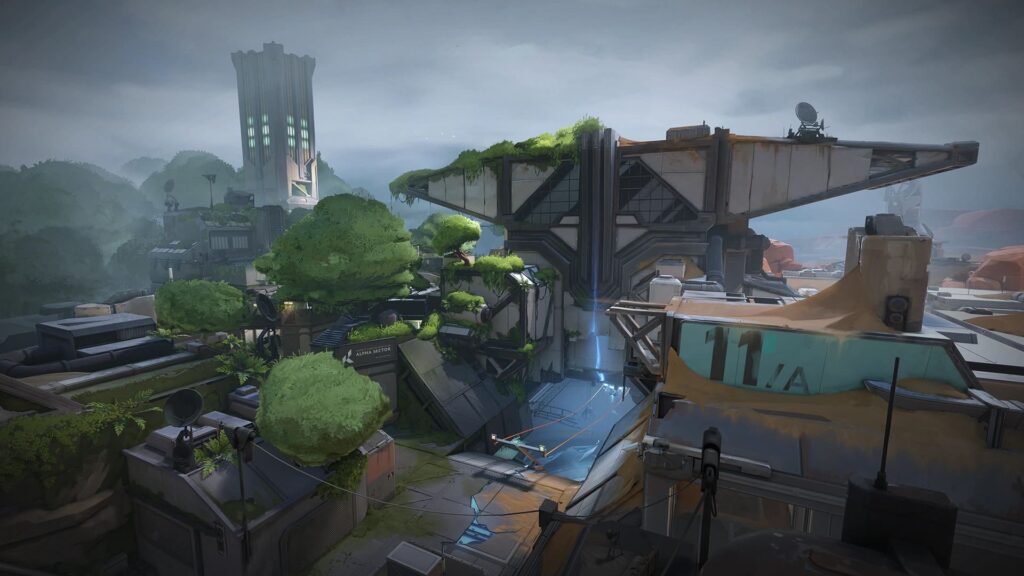
- Sites: Two
- Unique Features: Attacker split spawn, zipline underpass, and four ultimate orbs
Fracture breaks the mould of traditional VALORANT map layouts, thanks to its unconventional design. Its distinct H-shaped format and dual attacker spawn points encourage aggressive playstyles, favouring the attacking side. Interestingly, Fracture has four ultimate orbs instead of the typical two, impacting the game’s flow and adding an additional strategic element.
Pearl
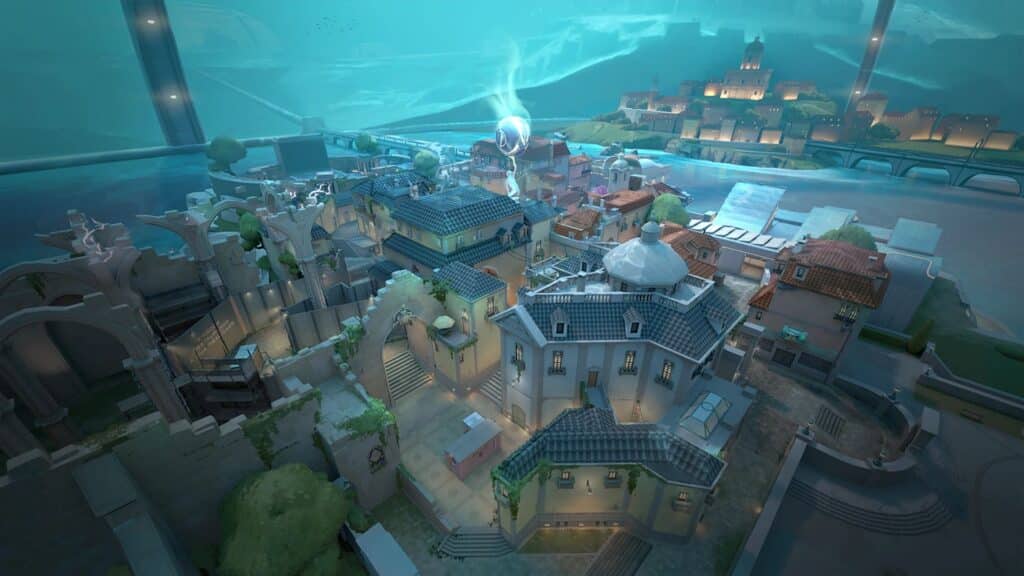
- Sites: Two
- Unique Features: Long sightlines
Pearl shines as one of the best VALORANT maps in terms of unique visual design. It’s set in an underwater battleground, with a geo-domed city. Unlike other maps like Bind or Icebox, there are no gimmicks like teleporters or ziplines. It instead relies on its classic tactical shooter design, with open and tight areas, long sightlines, and chokepoints, forcing players to rely on their tactical skill, teamplay, and strategy.
Lotus
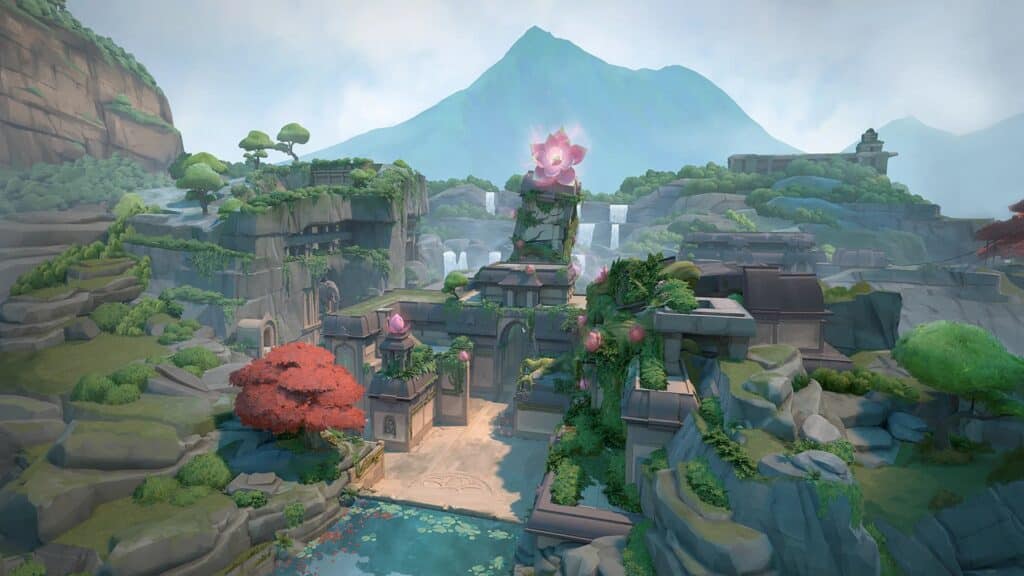
- Sites: Three
- Unique Feature: Rotating doors
Following Haven, Lotus is the second VALORANT map to have three spike sites to play for. It’s also packed with special features like spinning stone doors and breakable walls, which can be used to block vision or traverse the map quickly. Lotus’s unique geometry encourages creative plays, jukes, and quick shifts between all three sites. Linked to A Site, there’s a rope ascender and also silent drop when going from A Top to A Drop, offering the potential for some extra sneaky plays and flanks.
Sunset
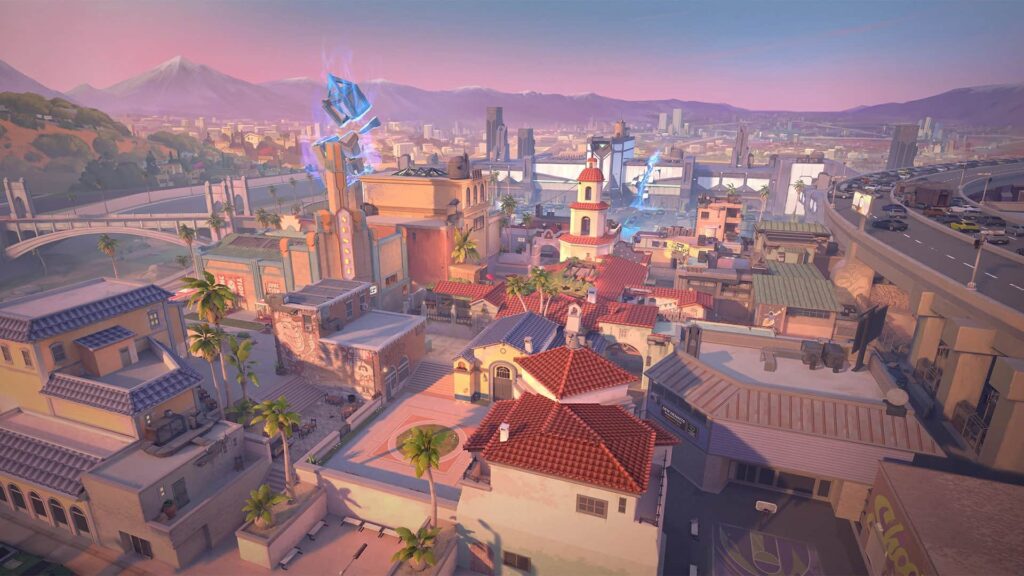
- Sites: Two
- Unique Feature: One destructible door near B Market
Sunset follows the classic three-lane style with two bomb sites. Aside from a single destructible door near B Market, there are no rogue gimmicks or shortcuts involved in this map. This makes Sunset perfect for CS2 players transitioning to VALORANT, as its straightforward layout rewards smart utility usages, coordinated team play, and sheer mechanical skill. The urban sprawl of the LA town lends itself towards high ground, so players should use that to find new angles and swoop in from above.
Abyss
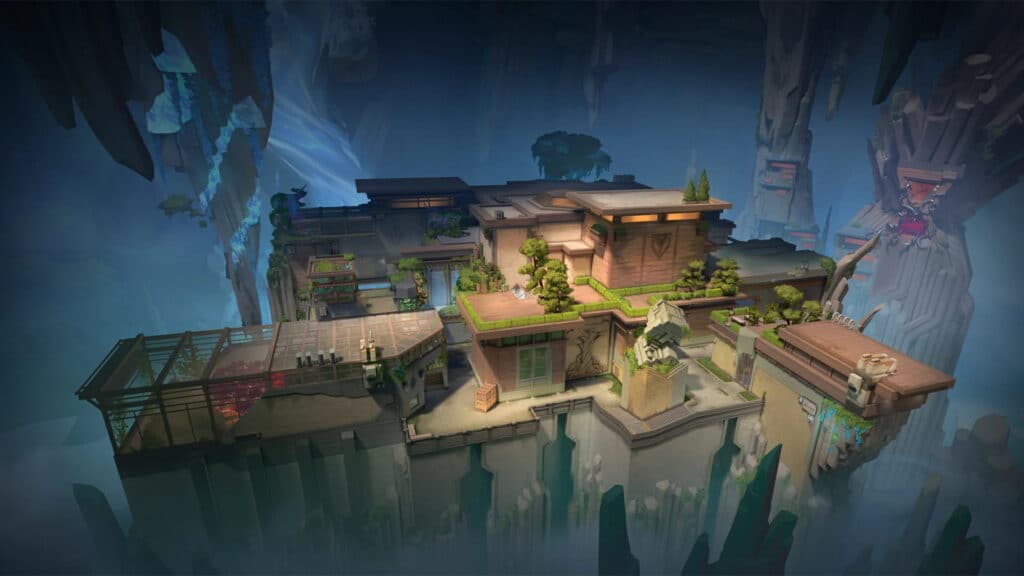
- Sites: Two
- Unique Features: No borders – players can fall off the map
Abyss is all about high risk and high reward. Released in 2024, the lack of borders means falling off the map will result in an instant, and very embarrassing death. With tight corners and plenty of verticality, choosing agile Agents like Jett, and knowing this VALORANT map layout is crucial for success.
Corrode

- Sites Two
- Unique features: None
Corrode is the new VALORANT map, released in June 2025. While it is the latest, Corrode is very traditional as tactical FPS maps go, with three lanes, two sites, and no gimmicks or unique features. As a result, it’s reasonably honest, although keep in mind that the midsection has long sightlines, so smokes are vital if you’re an attacker for this section. With plenty of verticality, it isn’t built for attackers to brute force their way through, as defenders get plenty of options and angles. Play smart and play patient on Corrode.
Team Deathmatch Maps
Team Deathmatch (TDM) in VALORANT has its own set of custom-designed maps, separate from the standard Competitive rotation and Unrated maps. These maps are specifically designed for fast-paced, close-quarters combat, often with tight corridors and spawn-based flow control.
Here’s the full list of VALORANT map names for Team Deathmatch. Although these maps resemble the design of Standard maps, they are not exactly linked to them.
- District
- Kasbah
- Piazza
- Glitch
- Drift
These maps are only available in TDM mode and offer a great way to warm up, practice gunplay, or just dive into pure action without the pressure of spikes and eco rounds.
The Range
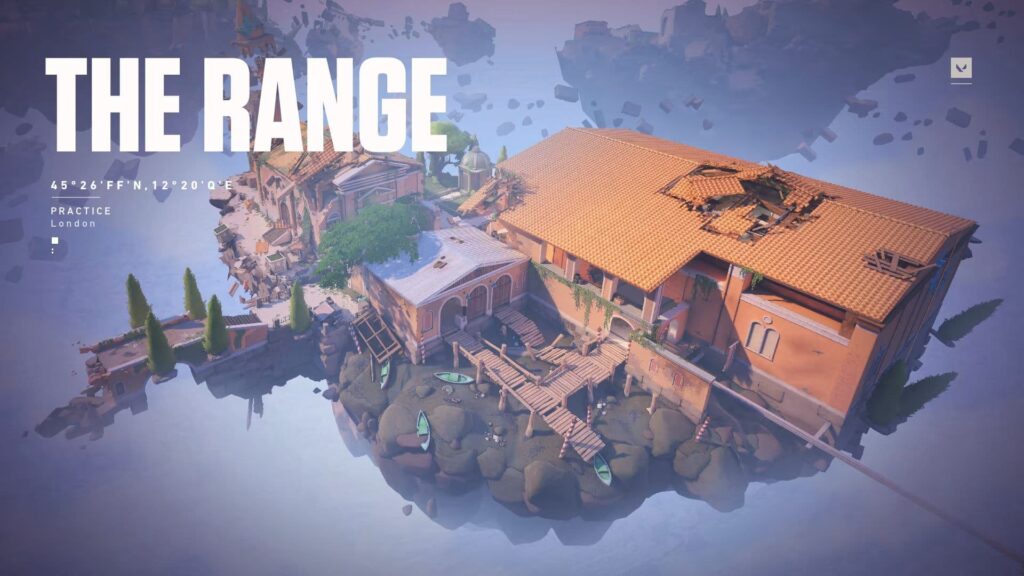
The Open Range map in VALORANT is designed for practice and can’t be played in any other game mode. You can explore the map and get a feel for how the game works, whether that’s developing your aiming skills on stationary and moving targets or trying out different Agents for the first time. The best thing about character switching is that you can test out meta characters or new Agents you haven’t even unlocked yet for some “try before you buy.”
The Range also comes with unlimited credits for purchasing guns, so you can switch between weapons at will to find your perfect loadout before taking it to a ranked game. If you’re more into aim-training, there are multiple practice zones available, including a shooting gallery, bot spawner, and spray control wall to test how each gun reacts to how you play.
VALORANT console maps
If you prefer your FPS games on console, don’t worry about learning different maps. VALORANT console maps are the same as on PC, although this wasn’t always the case. VALORANT officially launched on console in August 2024, beginning with a limited beta, then evolved to gradually expanding access across the PlayStation 5 and Xbox Series X/S.
Initially, VALORANT only had four maps on console: Ascent, Bind, Pearly, and Abyss, but this changed when the complete VALORANT map pool was added in patch 9.06.
It is clear that Riot Games wants a unified experience across console and PC players, as the map pools are identical on both platforms. This theoretically gives the two modes similar tactical depth, layout familiarity, and strategies; however, the inherent differences that come with a controller do change many aspects.
Controller gameplay will feel different, from movement to aim changes with Aim Assist. Still, this isn’t a problem with VALORANT console maps, as they are identical between console and PC. Any existing map knowledge will help you in both platforms.
VALORANT ranked maps
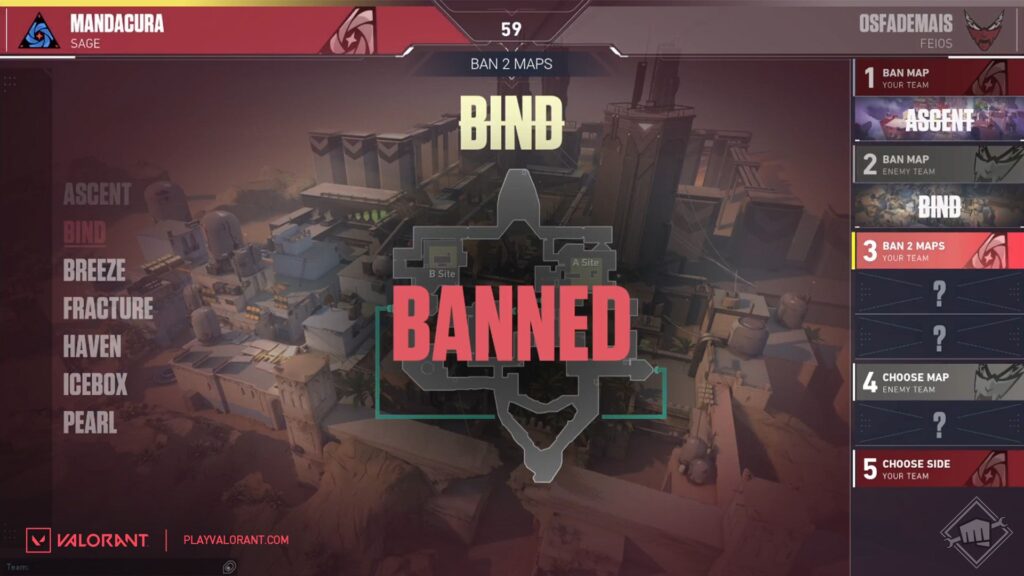
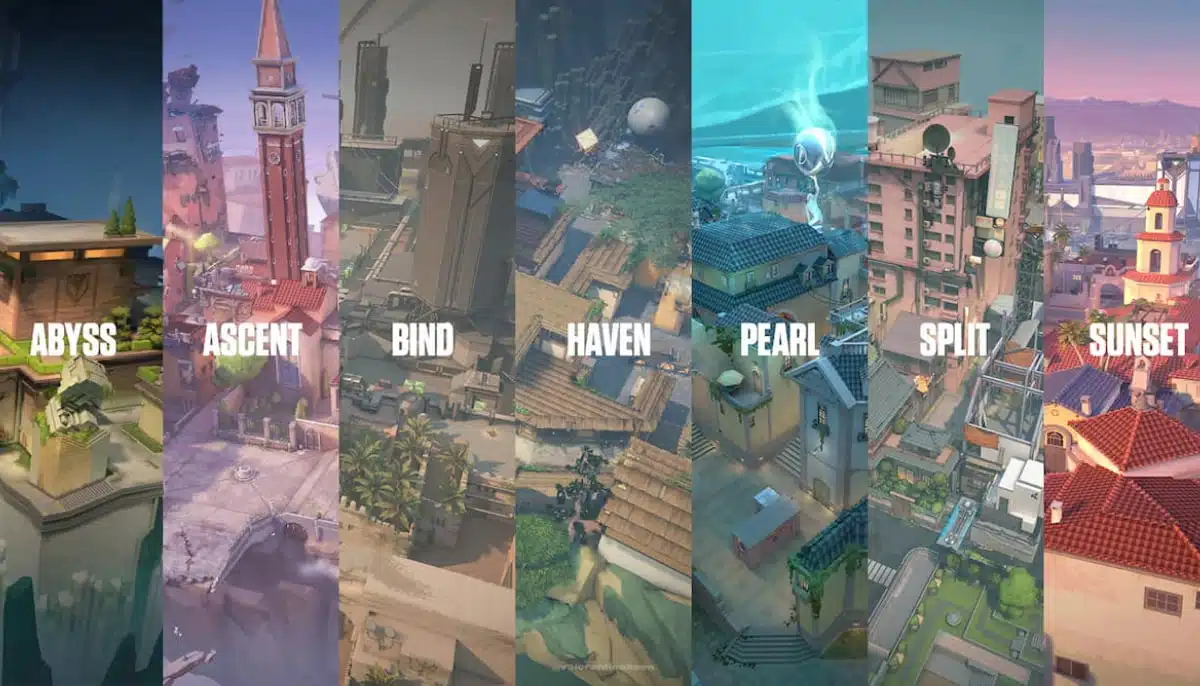
Similar to CS2, VALORANT comp maps pool is limited and rotates regularly, with the idea of keeping the gameplay fresh, competitive, and balanced in mind. Riot has featured seven maps in the Competitive and Premier rotation since June 2020, with this map pool getting updated every Act.
This is the current VALORANT ranked maps lineup as of V26 Act 1:
- Abyss
- Bind
- Breeze
- Corrode
- Haven
- Pearl
- Split
Those that have been taken out by the VALORANT map rotation, such as Ascent, Sunset, and Lotus, can still be played in Unrated or Custom modes. Theoretically, this system helps maintain a balance between variety and mastery, while also giving Riot Games the room to make tweaks.
This means that keeping up to date with the current map pool is vital to climbing the ranks, picking the right agents, and planning a strategy to take advantage of each map’s strengths.
Tips for mastering VALORANT maps
We will have a series of more detailed map guides to help you master all VALORANT maps in the future, but if you want to improve your skills in the meantime, here are a few general tips:
- Learn map callouts and common angles: Knowing each map’s key locations and sightlines can help you communicate more effectively.
- Control mid, always: Most VALORANT maps reward mid control by offering faster rotations and access to spike sites – don’t just tunnel-vision on objectives.
- Adapt to the map: Some Agents excel on certain maps (e.g., Jett on Sunset, Viper on Breeze), depending on the layout, whether it’s wide and open or with tight chokepoints. Pick in draft to adjust to the map’s strengths.
- Study pro play and match replays: Study how pro VALORANT players position themselves and rotate – this is easily one of the fastest ways to improve your own macro game.
- Optimise your settings: Dial in your settings for the maximum FPS – turn everything down to ‘Low’ and turn off V-Sync. If your game is still lagging, you may need to uninstall the game for a fresh reinstall.
Conclusion
You can’t excel at every VALORANT map with talent and skill alone. Knowledge of a map’s layout and proven strategies will take you far, if you’ve got the aim to back it up. While they can certainly look pretty, these maps are more than just eye candy, and having in-depth knowledge of maps is one of the best ways to climb the VALORANT ranks.
If you want to take improving seriously and reach another level, consider using a VALORANT maps planner or strategy tool, so you know the best smoke locations, scouting rotations, and have a walk-through for executions. VALORANT changes with every patch, so ensuring your knowledge is up to date with the meta is always going to help.
FAQs
What are the maps in VALORANT?
There are 11 core VALORANT maps, with seven in the current Competitive rotation. There are also exclusive maps for the Team Deathmatch game mode and The Range, which is designed for practice.
How many VALORANT maps are there?
There are 17 VALORANT maps in total across all game modes.
What are the biggest maps in VALORANT?
The biggest map in VALORANT is Breeze, with lots of open space and long sightlines.
Which VALORANT maps are banned?
The banned VALORANT maps vary per game, depending on what your team and the enemy team decide to ban. The most-banned VALORANT maps in pro esports are typically Bind, Fracture, and Breeze – especially in Premier mode, where teams can actively ban maps from the current pool. These maps are often removed due to their complex layouts, unique mechanics (like teleporters or split spawns), or team-specific weaknesses.
What maps are in rotation in VALORANT?
The seven maps in VALORANT’s rotation change with every update. As of patch 10.09, the current VALORANT comp map pool is: Ascent, Haven, Icebox, Lotus, Pearl, Split, and Sunset.
What maps are removed from VALORANT?
As of January 2026, Ascent, Fracture, Icebox, Lotus, and Sunset have been removed from the current VALORANT competitive map pool.
What are the best VALORANT maps?
The best VALORANT maps often come down to personal preference, but Ascent, Bind, and Haven are widely praised for their balanced design and depth. These maps offer a good mix of site control, flanking options, and agent flexibility, making them favourites in both ranked and pro play.
REFERENCES
- VALORANT Patch Notes 9.06 (Play VALORANT)