The League of Legends pro circuit used to have a drafting problem, but has Fearless Draft actually changed that?
In the past, you could finish game 1 of a best-of-five, load into game 2, and see half of the same champions again. Maybe they swapped sides or banned a priority pick, but more often than not, you are basically watching another version of the same draft.
Even at Worlds, things could get stale by the time we reached the knockout stage. Teams end up handshaking drafts, and suddenly, we’re watching the same boring Corki vs. Azir matchup in mid lane over and over again. Fearless Draft was supposed to change that.
On paper, the format inevitably creates variety. If a best-of-five series reaches game 5, 40 champions have already been removed through the previous picks before the regular bans even begin. But that raises a more interesting question:
Has Fearless Draft created genuinely different strategies, or are teams simply being forced to use weaker versions of the same compositions?
What is Fearless Draft and why was it introduced?
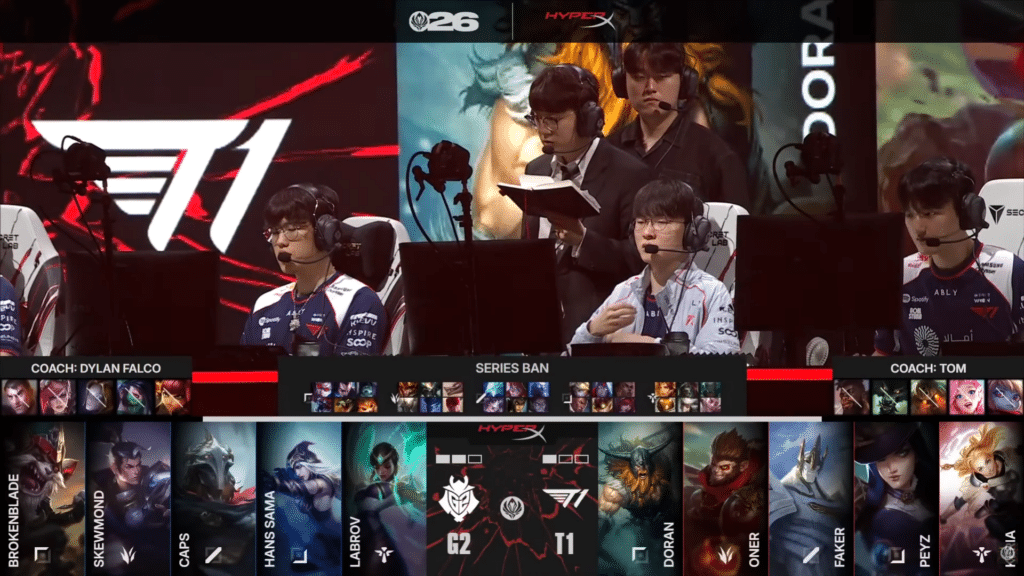
Fearless Draft — at least in its current format – is described by Riot as “an evolution of the traditional pick/ban system.” It follows one simple rule: once a champion is picked by either team, it cannot be picked again for the rest of the series.
Riot standardized the format across its tier 1 leagues in 2025, following earlier experiments with different versions of the format. In a Mar. 16 blog post, Riot said they wanted to create greater game-to-game variety while giving players more opportunities to demonstrate deeper and more unusual champion pools.
Fearless Draft has increased unique champion picks
To examine the numbers, we compared how drafts played out in the last three Mid-Season Invitationals (MSI).
These tournaments are particularly useful because they bring together different teams and meta tendencies from every major region. They were also similar enough in size to allow for a reasonable comparison.
What do the MSI numbers show?
MSI 2024 was played before Riot rolled out Fearless Draft, recording 78 games and 86 unique champions. MSI 2025 was roughly the same size with 80 games, but Fearless Draft was active, and the number of unique champions grew to 107. At MSI 2026, only 71 games were played, yet teams still picked 101 unique champions.
The increase from 86 champions in 2024 to 107 in 2025 means 21 additional champions appeared, reflecting roughly a 24% increase, despite the tournament having only two more games. Even MSI 2026, with seven fewer games than 2024, still featured 15 more unique champions.
Fearless Draft isn’t the only variable
Importantly, this is not a perfectly controlled comparison.
Balance patches, new champion releases, participating teams, and the broader tournament meta can all affect champion diversity. Nevertheless, seeing the same pattern across consecutive international tournaments makes it difficult to argue that Fearless Draft hasn’t had an effect.
However, while having more unique champion picks is a clear indicator of more diverse games, that might not be the most interesting metric.
Fearless Draft has killed endless repeated picks in League
Looking again at MSI 2024, K’Sante was picked 51 times in 78 games. That means he appeared in around 65% of the games played at the tournament. Similarly, Kalista and Senna both had a 91% pick/ban presence, while K’Sante was contested in 80.8% of games.
Now, let’s compare that to the Fearless Draft era.
At MSI 2025, the most-picked champion was Rell with just 18 picks across 80 games, meaning she appeared in 22.5% of games. At MSI 2026, Ryze topped the list with 19 picks in 71 games, which works out to about a 26.8% pick rate.
| Tournament | Most-picked champions | Picks | Share of tournament games |
| MSI 2024 | K’Sante | 51 | 65.4% |
| MSI 2025 | Rell | 18 | 22.5% |
| MSI 2026 | Ryze | 19 | 26.8% |
So the most-picked champion at MSI went from appearing in 65.4% of games to 22.5% and 26.8%, respectively — and this is where Fearless really wins.
Some of that decline is an unavoidable consequence of the rules, as even a near-universal priority pick cannot accumulate anything close to K’Sante’s 51 appearances in 2024. But that is precisely the point.
Teams can place enormous value on the same champions, but viewers no longer have to watch them appear repeatedly throughout the series.
- AI vs expert: Humanity chases a hat-trick in LEC week five, while the bots malfunction
- “Don’t waste your money”: Unraveling the stigma of esports degrees in higher education
- Who should be the next Hall of Legends inductee after Caps?
- “Before you do a pull-up, you should be able to hang on the bar”: NA pros and coaches aren’t worried about the East, they’re worried about fixing the path to pro first
Why unique champion counts don’t tell the whole story
So, it’s not just about getting some random champion played once during game 5 and increasing the total number of unique picks. The bigger change is that viewers no longer see the same six or seven champions every game, even when those champions remain central to the wider draft strategy.
And we have a really good example of why this matters from the LEC.
The 2024 LEC Winter Playoffs recorded 59 unique champions across 40 games. By comparison, the 2025 Winter Playoffs, using Fearless Draft, had 39 games and… 59 champions played again.
If you only looked at unique picks, you could say Fearless accomplished absolutely nothing. But Azir, the most-played champion across those two playoff samples, went from 23 picks in 2024 to only 13 in 2025. Both playoffs contained 14 series — that’s a drop of roughly 43%.
| LEC opening event | Games | Unique champions | Most picked champion |
| 2024 Winter Playoffs | 40 | 59 | Azir (23 picks) |
| 2025 Winter Playoffs | 39 | 59 | Azir (13 picks) |
| 2026 Versus Playoffs | 39 | 80 | Corki (13 picks) |
Fearless Draft still hasn’t removed the meta
Fearless doesn’t suddenly make all champions in League equally strong, either. At MSI 2025, Varus still had a 68.8% pick/ban presence, recording 14 picks and 41 bans, while Twisted Fate was sitting at around 66.3%. At this year’s MSI, Vi had a 71.8% presence, including 38 bans, while Jayce reached 67.6%.
So teams still clearly agree that some champions are stronger than others. The difference is what happens after one of those champions finally gets through a draft.
What happens if a priority champion gets through?
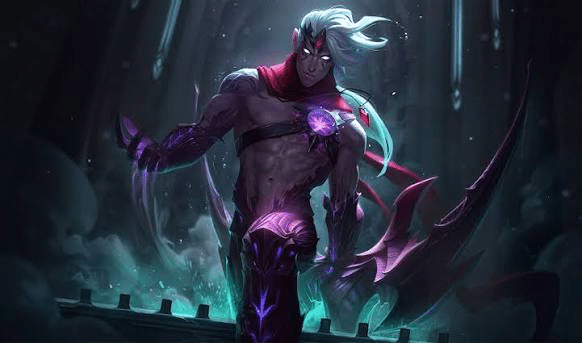
Let’s say Varus is considered completely broken. Under the old system, he can still get picked in game 1 and, unless somebody bans him, picked again in the rest of the series. Under Fearless Draft, once you use him, that’s it. From that point on, you need to find another answer.
And if the series keeps going, eventually, both teams will reach deeper into their champion pools.
This is the key distinction. The available data shows conclusively that Fearless has diversified the champions appearing on Summoner’s Rift. It does not necessarily show that teams have stopped agreeing on which champions are strongest or that the underlying composition archetypes have become equally varied.
Could Fearless Draft go even further?
As much as fans like Fearless Draft in League, there is a fair criticism of the format: it takes a while before it really becomes Fearless.
Nick ‘LS’ De Cesare, a prominent League analyst, co-streamer, and former coach, has been one of the format’s most vocal critics. Although he considers Fearless an improvement over the old system, he believes its impact is overstated because unusual drafts normally don’t arrive until games 4 and 5 — and many series never reach that stage.
Before Fearless Draft became the standard, LS complained about traditional drafts repeatedly cycling through familiar compositions, saying:
“It’s just the same comps, rotated over, and over, and over, on repeat.”
How would Ironman Draft work?
That sentiment remains part of his criticism of the draft system today. In best-of-threes, especially, teams can still cycle through the same small group of meta champions.
His solution is something called “Ironman Draft,” which takes the basics of Fearless Draft and makes it much more extreme. Picks still disappear after being played, but bans also carry over between games.
Instead of removing 40 champions before the game 5 draft, Ironman would remove 80 (40 picked, 40 banned). League has more than 170 playable champions, so that would leave roughly half of the roster available before the regular game 5 bans.
At the same time, the number of competitively viable champions within each role would be considerably smaller.
Another problem is that you could also end up with diversity for the sake of diversity. By game 5, teams might not be selecting champions because they have found some genius counter or creative composition. They might simply be playing the seventh-best option because everything else has been removed.
So, has Fearless actually improved champion diversity?
I think the answer is pretty clearly yes, but it depends on what we mean by “diversity.”
The MSI numbers show that the overall champion pool has indeed widened. We went from 86 unique champions in 2024 to 107 in 2025 and 101 in 2026. More importantly, the most-picked champion went from appearing in almost two-thirds of all games at MSI 2024 to roughly a quarter of games in the Fearless era.
That’s the part that matters most.
Fearless Draft hasn’t eliminated the meta, nor does this data prove that teams are producing entirely different composition archetypes. In some cases, they may simply be replacing an unavailable meta champion with the next-best alternative.
What the format has unquestionably changed, though, is the amount of repetition viewers experience per series.
It may have some flaws, and a drafting format alone cannot manufacture another all-time great moment like ROX Tigers pulling out Miss Fortune support against SKT in 2016. Still, the upsides of Fearless Draft clearly outweigh the downsides. There is still room to push the idea further, but for now, Fearless has solved one of pro League’s most boring habits.
Editor’s note: All tournament and champion statistics were sourced from Games of Legends and are accurate as of Aug. 25, 2026.