TL;DR
- Grind FACEIT ranking to make an impression.
- Join a team at your level to grow your understanding of team-based CS.
- Play ESEA League and LANs to build a portfolio.
- Pursue feedback from professional players.
- Market yourself through Social Media, advertising your skills online.
Many gamers dream of progressing through the amateur rankings and becoming professional esports CS2 players, but few understand the relevant pathways to achieving this goal.
While learning and improving at the game is the most important thing, we can look at examples from other players to see the typical pathway to pro and how best to stand out amongst the crowd in the competitive world of Counter-Strike 2 esports.
Climb FACEIT
“Nobody is getting to be pro in CS if they don’t have 10,000 hours” – Finn ‘karrigan’ Andersen
Grinding is the core tenet of any progression in CS esports, including progressing to pro. It’s no secret that organisations of all levels focus on FACEIT rankings. Players like Danil ‘donk’ Kryshkovets or Mareks ‘YEKINDAR’ Gajinskis caught the attention of orgs before their professional careers due to their abnormally high FACEIT rankings.
Subsequently, the players were invited to FACEIT Pro League (FPL), an exclusive FACEIT group of professional and high-level players. Though the importance of FPL has waned in recent years, FACEIT Elo remains a key indicator of talent for scouts wishing to find new talent in their scene.
While casual players like to joke around on their FACEIT profiles, accurate information like nationality and your typical username is vital for recruiters. Ensure your profiles are correct and up-to-date if you want to get noticed.
Learn the CS2 fundamentals at a competitive level
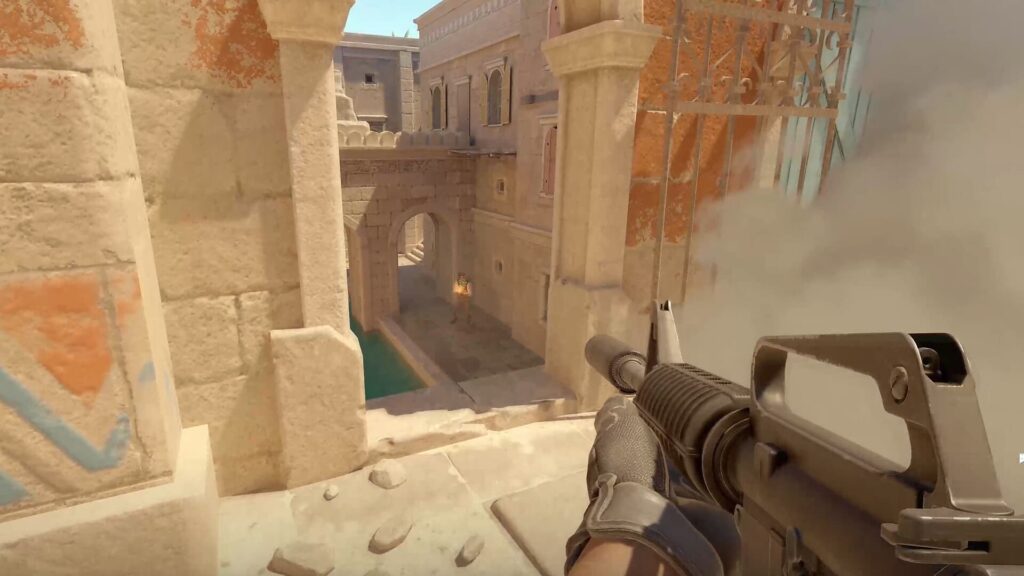
Individual level is an essential marker for a CS recruiter, but modern Counter-Strike is a tactically deep game that requires understanding roles, utility, protocols, etc. While your understanding of the game will continually develop with experience, it is worth going out of your way to grow your knowledge before joining a team.
Watching demos of professional matches will help you understand basics such as ‘Defaulting’, the practice of teams taking structured control of the map. From the Default, teams will react and adapt based on ‘protocols’ to what the enemy team is attempting or what space they are contesting.
Learning how the team CS functions and develops will be key when you step onto the server.
Choose and refine a specific role
“That’s the thing for me, I’m always trying to be self-reflective. Not self-critical but trying to understand why we didn’t win.” – Finn ‘karrigan’ Andersen
While your FACEIT rank and stats can effectively convey your ability, Counter-Strike is a team game, above all else. Knowing where you can best fit within a team will be vital to your success in the CS esports scene.
While you may have an intuitive sense of what roles and positions best suit you, it’s still important to experiment to find that perfect fit, as roles can be fluid and change on a map-to-map basis to get the best out of the team.
Generally speaking, more passive players shine in Anchor/Lurking roles, more aggressive players are better at Rotate/Opening roles, and those with tactical knowledge who prefer to support their teammates become the in-Game Leader (IGL).
Once you have identified where you want to play, start claiming that role in all your games to get the experience in those spots, so you know what’s coming when it matters. To evolve, a good tip is to watch the Demos of players who excel in those roles.
For example, to learn how best to Lurk, you can watch Robin ‘ropz’ Kool Demos for Vitality, to understand the strategies and timings involved. Learning Counter-Strike team roles is essential to knowing how to get ahead.
Apply for tryouts with amateur teams
“I think confidence comes mainly from experience.” – Fredrik “REZ” Sterner
The best way to learn team-based CS is to play it. Once you have established a decent FACEIT ranking, seek out teammates of your level. If you’re unfamiliar with your future teammates, you can try looking out for social media posts with terminology like ‘LF1’ (Looking for one). If they are looking for your roles and are at approximately your skill level, they might just be the team for you.
If you are accepted for tryout, you may be invited to play a few FACEIT ‘pugs’ with the team, or scrim against another team. Scrimming differs from games’ primary goal of testing and practising situations rather than winning.
Build a competitive portfolio

Once you have a team, you will likely compete in the ESEA League. For a decade, the ESEA League has been the main competitive pathway to pro in CS, with three seasons a year allowing advancement from ESEA Open to Advanced, which can qualify teams for the ESL Challenger League.
The lower ranks are generally amateur and can provide competition against similar-level teams to test you and your team as you grow and advance. Doing well in the ESEA League will expose you to organisations and give you a competitive portfolio to show off to recruiters.
Play in community and open tournaments

Keep up to date with your scene to see if any local or community tournaments are happening. Local/regional tournaments, charity tournaments, or cash cups can be a great way to get tournament experience and bulk up your CS CV.
Local LANs are a great way to get noticed in competitive CS. LANs provide a structure where you will play against many teams of different levels — tournaments like Fragadephia (NA), EPIC.LAN (UK) and Svenska Elitserien (Sweden) all feature a mix of professional, semi-pro, and amateur teams, meaning they are a great mixing pot for advancement up the ladder.
All LANs have a heavily social aspect, so make sure to make the most of LAN experiences by getting to know your fellow players and exploring upcoming opportunities in their rosters.
Build a personal brand on social media
Building an online presence will put you at the forefront of people’s minds. Players engaged in their community are likelier to be the first in an organisation or team’s mind when filling an open spot on a roster.
Content creation can be a key aspect of marketing yourself in esports. Players like FaZe’s Finn ‘Karrigan’ Andersen or Jonathan ‘EliGE’ Jablonowski have been among the pro players who have grown their brand through content creation, but the tactic is not limited to the top level.
While Counter-Strike players often want to focus only on the game, it is essential to remember that organisations are businesses first and foremost. If they see your potential as a vehicle to market their team and brand, they will be more likely to invest in you.
Get coaching or peer feedback

“Leave your ego aside and listen to people. They might know something you don’t know, so sit and listen to them. Live this game and sacrifice everything, including your ego.” – Shahar ‘FlameZ’ Shushan
Feedback is a vital part of competitive CS. Improvement is the goal at all levels, from the amateur to the top. If any player has one, their first port of call for feedback should be their IGL or Coach/Analyst. IGLs should have an overview of how they want the team to function, and ensuring they match those expectations is vital to team success.
Counter-Strike coaches are available for hire online if you want to improve individually or get some external feedback. You can also engage in community guidance, such as YouTube tutorials on how to play positions that best train aim.
How to create a Looking For Team (LFT) post
This is where you combine all of the above steps. Your experience and hard work reflect how you market yourself in an LFT post.
Make sure to include all the following information in your post:
- Step 1: Your Role(s).
- Step 2: Your FACEIT Rank.
- Step 3: Your Language(s).
- Step 4: Your Region.
- Step 5: The tournaments you’ve participated in and your respective rankings.
- Step 6: Your contact information, including socials, gamertags, etc.
Other information, such as your age, tendencies, or availability, can be helpful here, but is not always included.
🚨LFT🚨
— Tree60 (@Tree__cs) April 3, 2025
From today i'll be parting ways with @ALASKA_CS2
I'm hungry for a new full time opportunity going forward. I play mainly lurk and anchor roles but I'm open to playing any position.
Contact me via X or Steam, all relevant information is linked below. RTs appreciated❤️ pic.twitter.com/NUWM67X9B7
Understand the basics of team contracts
You should not expect to be offered huge salaries at the amateur and semi-pro level, but you can still leverage what is on offer to suit your advancement best. Organisations may not be able to offer you a salary at low levels, but they may provide you with support that pays off in the form of long-term development.
Such support can include:
- Step 1: Paying for ESEA League fees
- Step 2: Paying for LAN fees and/or travel costs
- Step 3: Paying for Third-Party software allows for advanced forms of practice or demo-reviewing
When progressing through higher and higher levels, the determining factor of your value will be based on those around you and what they are being offered, so make sure to keep up with your scene and how your peers are compensated.
Conclusion
CS2’s pathway to pro has become more professionalised in recent years, and as such, that roadmap can be understood and exploited by prospective pro players. While there is no guarantee of success, with commitment, teamwork, and a humble approach, you may find yourself in a pro-CS esports team.
FAQs
How do you get into the CS2 pro team?
Achieving a high FACEIT rank and climbing up the ESEA Leagues with amateur/semi-pro teams can be a pathway to a pro team.
What qualifications do you need for esports?
There is no formal qualification necessary to be an esports player. If you want to join esports in other roles, such as marketing and management, you may require degrees in the relevant areas.
How old do you have to be to join an esports team?
Though there is no formal age limit, the minimum age to play FACEIT or have a Steam account is 13, according to their TOS. Additionally, certain regional laws can prevent children under a certain age from participating in activities that involve prize money, such as esports tournaments.